33001 Change Attitudes and Behavior

If you are one of those Christians who are repeating a particular sin again and again–and if you would be glad to give it up if you only knew how–then Soul Prescription is for you.

You don’t necessarily need a counselor to confront you with your problems; you can do self-confrontation. Don’t delay and don’t make excuses about your problem, but instead begin today to apply the remedy for your behavior.

Soul Prescription offers the healing and hope you seek. With a unique, methodical, and biblically-based approach to eliminating sin habits, these abridged chapters will help you evaluate your behavior and attitudes in light of God’s standards. Then you can begin a five-step process of turning away from debilitating habits and embrace Holy Spirit–empowered virtues.

These proven principles are the result of decades of experience from the respected Christian leader Bill Bright and the well-known biblical counselor Henry Brandt. The principles are organized in an easily understood five-step process:

  • Adopt a correct view of God.
  • Revise your false beliefs.
  • Repent of your sin.
  • Defend against spiritual attacks.
  • Flee temptation.

The links on this page will show you how to apply the five steps of the Soul Prescription process so you can experience the freedom from sin’s power that God desires for you.

Chapter 1 – Dealing with Behavior Problems

Chapter 2 – The Secret to Lasting Health

Chapter 3 – Step One: Knowing God

Chapter 4 – Step Two: Embracing Truth

Chapter 5 – Step Three: Turning Around

Chapter 6 – Step Four: Defending Your Ground

Chapter 7 – Step Five: Preventing Setbacks

Chapter 8 – Your Sin Diagnosis

Once you have received your sin diagnosis, you can explore the links in the right column of this page to get your Soul Prescription for each area of need.

Soul Prescription is unique in the way it presents the universe of sins in ten families or clusters. These sin families help a reader to see how his or her most troublesome behavior is related to others. Each family has a core or parent sin, and for each core sin, there is a corresponding virtue. The Soul Prescription process includes not only eliminating sin but also implanting virtue in its place.

SinsVirtues
PrideHumility
AngerForgiveness
OverindulgenceModeration
DissatisfactionContentment
ImmoralityPurity
DeceitHonesty
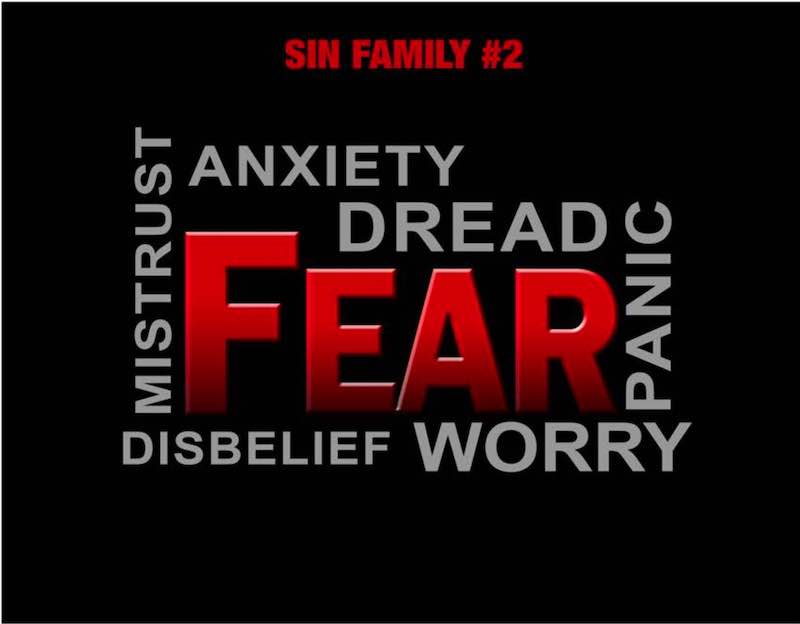
WorryFaith
ConflictHarmony
RebellionObedience
IrresponsibilityDiligence

Soul Prescription is realistic about the power of temptation. And the process presents no quick or easy solution. But for those who are serious about dealing with their disobedience and will persevere in the power of the Holy Spirit, the process works. They can, once and for all, put away the behavior problem that has been hurting their relationships and distancing them from God.

If you have struggled mightily against a behavior problem with little to show for it and have lost hope, now is the time to hope again. Victory really is possible. God loves us and does not want us to suffer the harm we bring on ourselves through our disobedience. He eagerly helps those persons who want to follow Him.

65502 2. The Secret to Lasting Health

If you feel yourself infected by sinful struggles in mind, body, or spirit, you are probably eager to be healed and have your life transformed. If so, your desire shows that your conscience is still alive and that the Holy Spirit is working inside you to will what God wills. What you are feeling is a godly restlessness—a dissatisfaction with the things of this world and a yearning for the things that are from above. The rest of this book is designed to help you achieve the spiritual health you desire. Before we get to the prescription for your soul, however, we want to present another key idea: you not only need to be cleansed of your sin, but at the same time you need to be filled with holiness. 

We may get rid of a compulsive thought, attitude, or behavior temporarily, perhaps through the exertion of willpower or by some type of therapy. That’s good as far as it goes. Yet if we do not cooperate with God to supply a new thought, attitude, or behavior to take its place, the sin is likely to come back into our lives with a vengeance.1 What a sad outcome! As Peter said, “And when people escape from the wickedness of the world by knowing our Lord and Savior Jesus Christ and then get tangled up and enslaved by sin again, they are worse off than before” (2 Peter 2:20). They are worse off than before because they have fallen more deeply into a sin habit.

In the past, have you had trouble making your resolutions to quit sinning stick? Maybe it is because you concentrated on the negative part of the equation (eliminating sin) and forgot about the positive part (adding holiness). Erwin Lutzer, the senior pastor of Moody Church in Chicago, has rightly said, “We cannot say no to temptation without saying yes to something far better.” It is like defeating cancer: doctors not only want to destroy the cancerous cells but also boost the body’s ability to replenish healthy cells. We need to tear down sin habits in our lives and replace them with virtue habits.

If we leave a vacancy in our spiritual lives, it will be filled with something. Either the same sin will return (perhaps grown more powerful) or another will come in to take its place. If you quit getting drunk, for example, you might start overeating. Instead of that kind of setback, let’s allow holy qualities to flow in and fill the space vacated by a sinful practice. That is the biblical way.

Dressed for Godliness

The Bible pairs the idea of eliminating sin with the idea of adopting holiness so consistently that we must take it to be an important principle of the Christian life. One of the clearest examples occurs in the letter to the Colossians. Here Paul used the image of taking off the old clothing of sin and putting on the new clothing of holiness (notice especially the emphasized phrases below).

Put to death the sinful, earthly things lurking within you. Have nothing to do with sexual sin, impurity, lust, and shameful desires. Don’t be greedy for the good things of this life, for that is idolatry. … Get rid of anger, rage, malicious behavior, slander, and dirty language. Don’t lie to each other, for you have stripped off your old evil nature and all its wicked deeds. In its place you have clothed yourselves with a brand-new nature that is continually being renewed as you learn more and more about Christ, who created this new nature within you. … Since God chose you to be the holy people whom He loves, you must clothe yourselves with tenderhearted mercy, kindness, humility, gentleness, and patience. You must make allowance for each other’s faults and forgive the person who offends you … The most important piece of clothing you must wear is love … Let the peace that comes from Christ rule in your hearts … Always be thankful.
—Colossians 3:5-15

Nobody in their right mind would take off their clothes without sooner or later putting clothes on again. In the same way, figuratively speaking, we cannot take off the rags of sin without putting some clothes back on. Either we will don the shining new garments of holiness or we will put those dirty rags of wickedness back on.

In case you might consider all this to be merely theoretical, let us challenge you with a few practical questions:

  • Do you tend to be lazy at work, at home, or at church? If so, you need to take off the garment of sloth and put on the garment of diligence.
  • Do you gripe, grumble, and complain when things do not go your way? In that case, take off the garment of dissatisfaction and put on the garment of contentment.
  • Do you always bring a conversation back to yourself and what you have accomplished? If so, take off the garment of pride and put on the garment of humility.

As we all know, old clothes can sometimes be the most comfortable. And in the same way, our old habits of sin can seem easiest for us to wear. The problem is that they are morally shabby and are inappropriate attire for one who wants to enter the presence of the King. We need to judge our sin by the objective standard of Scripture, not by the temporary pleasure or comfort it might give us. Otherwise, we might not see its destructiveness until it is too late. The “comfortable” clothes always become restrictive in the end. Whatever your particular sin problem might be, therefore, you need God’s grace to remove it from your life and then begin to “wear” a new, holier attitude in its place.

And how do you do this? First, you identify your sin. Then you ask God for His help in defeating the sin once for all. You also seek the Spirit’s transforming power to establish new and better habits in your life. (Note: These are just the basics. We will be introducing a more thorough process for healing a sin habit at the end of this chapter.) Of course, in practice, the putting off/putting on process looks a little different in everyone’s life.

Years ago, when I (Henry) was speaking at a Christian conference in the Midwest, a young man named Tim LaHaye was attending the event. (This was long before Tim became well-known as coauthor of the Left Behind series of books.) He had a problem with anger and, in fact, when he sat down to listen to my message, he had just been arguing with his wife, Beverly. In my message, I happened to read the verse that says, “Put off all these; anger, wrath, malice.…”

At that, Tim got up from his seat and went to a tree outside the conference hall to weep and pray to God for the forgiveness of his anger problem. Though he was an angry person, his heart was still tender enough toward God that he had been convicted of his need to put off his sin of anger and put on the virtue of mercy. That’s how the process worked in one life at one point in time. It may look different in your life—but it has to be there if you are to be spiritually transformed.

This biblical image of changing clothes is a memorable one. An even more familiar image from the Bible—namely, fruit-bearing—makes the same point, though with a twist.

Fruitful for God

Many Christians would name Galatians 5:22-23—the passage about the “fruit of the Spirit”—as among their favorite verses in the Bible. But are you aware that Galatians 5 refers not to one kind of fruit but to two? The Spirit produces love, joy, peace, and all the rest, surely enough, but before that our old nature produces a welter of shameful sins.

When you follow the desires of your sinful nature, your lives will produce these evil results: sexual immorality, impure thoughts, eagerness for lustful pleasure, idolatry, participation in demonic activities, hostility, quarreling, jealousy, outbursts of anger, selfish ambition, divisions, the feeling that everyone is wrong except those in your own little group, envy, drunkenness, wild parties, and other kinds of sin . . .

But when the Holy Spirit controls our lives, He will produce this kind of fruit in us: love, joy, peace, patience, kindness, goodness, faithfulness, gentleness, and self-control. —Galatians 5:19-23

The fruit of the sinful nature corresponds to the filthy clothing we are to remove, while the fruit of the Spirit corresponds to the clean clothes of righteousness.

The twist is this: while the Colossians 3 passage about changing clothes implies that we have to make a personal effort at combating sin, the Galatians 5 passage about fruit-bearing brings out more strongly the role of the Holy Spirit in our godliness. If the Spirit has control of our lives, we will live in a way that reflects the holiness of God. It is as natural as a healthy grapevine bearing big, juicy grapes.

As you seek to substitute holiness for the habitual sin in your life, remember that the effort is a cooperative endeavor between you and God. Of course, you have your own part to play—you have to decide to act in accordance with God’s holy commands and then follow through. But even more importantly, the Holy Spirit is at the same time working in you to help you stop doing what is wrong and start doing what is right. His help is primary and crucial to your deliverance from sin. His power is what makes it happen.

Pastor John Ortberg said, “Spiritual transformation…involves both God and us.”

I liken it to crossing an ocean. Some people try, day after day, to be good, to become spiritually mature. That’s like taking a rowboat across the ocean. It’s exhausting and usually unsuccessful. Others have given up trying and throw themselves entirely on “relying on God’s grace.” They’re like drifters on a raft. They do nothing but hang on and hope God gets them there.

Neither trying nor drifting are effective in bringing about spiritual transformation. A better image is the sailboat, which if it moves at all, it’s a gift of the wind. We can’t control the wind, but a good sailor discerns where the wind is blowing and adjusts the sails accordingly.2

In other words, as we head toward our destination of holiness, the Spirit will be the wind that pushes us there.3

Of course, all this presumes that we are filled with the Holy Spirit in the first place.

Filled with Power

Years ago, I (Bill) met a young man who had come home from the mission field in defeat. The young man described his frustration and despair. It was clear to me that he had been trying to obey God through his own efforts, not through the power of the Holy Spirit, and that this was what had led to his failure. I explained this perspective to the young man and told him that he desperately needed to be filled with the Spirit.

His response was an angry one. Had he not been serving on the mission field for years? Had he not given of himself sacrificially to reach people for Christ? He stormed out of my office.

After deeper consideration, he called me and asked for a second meeting. Of course, I agreed, and at this second meeting, we continued our discussion of the Holy Spirit. A few days later I heard from the young man by mail. My friend said he had invited the Holy Spirit to fill him, and he shared with me the joy and excitement of his new discovery.

Maybe you need a new filling of the Holy Spirit so that you can reengage your enemy (your sin habit) with a powerful ally (the Spirit) by your side. In the words of P. T. Forsyth, “Unless there is within us that which is above us, we shall soon yield to that which is about us.”

We all receive the Holy Spirit when we come to believe in Christ. But each of us can receive a fresh filling of the Spirit from time to time if we will seek God for it. Ask God to send His Spirit to you in greater fullness than ever, then attune your spirit to what God’s Spirit is telling you. (See How to Be Filled with the Holy Spirit)

Our prayer for you is the same as Paul’s for the Ephesians: “I pray that from His [the Father’s] glorious, unlimited resources He will empower you with inner strength through His Spirit” (Ephesians 3:16). Mighty inner strength—think about it! Wouldn’t that be great to have as you seek to be healed of a sin habit and establish holiness in your life? God’s power is available to you if you will ask for it.

Personal effort is part of the solution. But nothing helps in the battle to be sin-free and virtue-full more than the Holy Spirit. “Wherever the Spirit of the Lord is, He gives freedom” (2 Corinthians 3:17). Indeed, freedom from sin and the freedom to be holy can be yours only through the Spirit.

In this book, we will be discussing not only sins that sadden God’s heart but also virtues that please God. You will find that a complete definition of victory over sin includes the institution of new, holier practices in your life that will prevent you from going back to your old, sinful ways. If your problem is with deceit, for example, cooperate with the Spirit to become a person of unshakable honesty. Or if your problem is causing conflict, seek God’s help to become someone who is known for creating harmony among people.

Becoming a person of virtue means not only taking off the rags of sin but also putting on robes of righteousness. It means not only pruning away the fruit of the sinful nature but also letting the fruit of the Spirit ripen to perfection.

Does that sound like something that’s easier said than done? Well, you are right. But there is a way to do it, and it is through a process called “spiritual breathing”.

Spiritual Breathing

Some time ago, a young Christian came to share his problems with me (Bill). This young man was frustrated and confused, and he spoke of the constant defeat and fruitlessness he experienced in the Christian life.

“You don’t have to live in defeat,” I said to him.

The young man looked surprised.

“You can live a life of victory, a life of joy, a life of fruitfulness,” I assured him. And I went on to tell him the lesson I have learned in more than twenty-five years as a Christian. It is “spiritual breathing.”

“I have grieved and quenched the Spirit at times with impatience, anger, or some other expression of the flesh,” I confessed. “But when I grieve the Spirit, I know exactly what to do. I breathe spiritually. I confess my sin to God and immediately receive His forgiveness and cleansing, and by faith, I continue to walk in the fullness and power of the Holy Spirit.”

In the process of breathing, our lungs expel carbon dioxide (dangerous to our health) and take in oxygen (needed for proper tissue function). Similarly, spiritual breathing is “exhaling” guilt through confession and “inhaling” grace through filling by the Holy Spirit. Whenever we have sinned, we can “breathe” in this way.

The main difference between the two kinds of breathing is this: physical breathing is automatic, while spiritual breathing is voluntary. We choose to breathe spiritually. (See appendix C: “Spiritual Breathing.”)

The key to spiritual breathing is stopping a sin as soon as we are convicted of it. Otherwise, we will just reinforce a sin habit. Rather than letting the sin go on, we bring it before God and ask His forgiveness. Assuming our repentance is real, we can be confident that He will forgive. “But if we confess our sins to Him, He is faithful and just to forgive us our sins and to cleanse us from all wickedness” (1 John 1:9).

But we do not stop there. We seek God further for grace to obey Him in the future. As the apostle John said, “My dear children, I am writing this to you so that you will not sin. But if anyone does sin.…” (1 John 2:1). In other words, while we may be freed from habitual sins, we will never be free from temptation and human weakness as long as we live in this world. Sin always remains a possibility, and so we never outgrow the need for grace.

God is faithful. He is like a kind father who gives his children what they need.4 Our God gladly gives us what we ask for, as long as it is in line with His will, and so of course He gives the resources we need to escape temptation. His mercy is what makes it possible for us to be filled with virtues where formerly we were full of sin.

Spiritual breathing does something wonderful for us. It helps us achieve and maintain holiness. And holiness is another name for Christlikeness.

Quest for Christlikeness

Kay Arthur begins her book As Silver Refined by describing a metal worker patiently refining the ore to produce pure silver. He begins by crushing the lump of ore into smaller pieces, then places them in a crucible and sets it in a fire. Gradually, the impurities rise to the top of the molten metal, and the metalworker skims off this dross. He repeats the process again and again throughout the day, keeping a watchful eye over the metal. Finally, “he bends over the crucible, and this time he catches his breath. There it is! In the silver, he sees what he has waited for so patiently: a clear image of himself, distinct and sharp.”5

That is what God hopes to see in us as He purifies us of sin: an image of Himself.

Hebrews 1:3 states that “The Son radiates God’s own glory and expresses the very character of God.” While we sinners have had the image of God in us marred by sin, Jesus Christ perfectly reflects the image of God. This is not surprising—since He is God!

Meanwhile, it is God’s will that we conform ourselves to Christ. He chose us “to become like His Son” (Romans 8:29). How does that happen? “So all of us who have had that veil removed can see and reflect the glory of the Lord. And the Lord—who is the Spirit—makes us more and more like Him as we are changed into His glorious image” (2 Corinthians 3:18).

So we are back to the role of the Holy Spirit. We become holy with the help of the Holy Spirit. And as we become more holy, we become more like our Savior, Jesus Christ. Thus the process of replacing virtues for vices is a part of our God-ordained goal of Christlikeness.

Preeminent among the Christlike virtues is love.

LOVE: The Main Virtue

Every virtue is important, but none other is so important as love. To Jesus, love for God and love for people represented the sum of all obedience. (See Matthew 22:34–40.) When Paul talked about taking off the rags of sin and putting on new garments of righteousness, he commented, “Above all, clothe yourselves with love, which binds us all together in perfect harmony” (Colossians 3:14).

The same preeminence of love is supported in 1 Corinthians 13, where we see love split into its elements the way a prism separates light into the spectrum of color.

Love is patient and kind. Love is not jealous or boastful or proud or rude. It does not demand its own way. It is not irritable, and it keeps no record of being wronged. It does not rejoice about injustice but rejoices whenever the truth wins out. Love never gives up, never loses faith, is always hopeful, and endures through every circumstance.
—1 Corinthians 13:4–7

It has been said that the description of love in 1 Corinthians 13 is a portrait of the character of Jesus. That’s true. And since for us becoming more holy means becoming more like Christ, 1 Corinthians 13 also describes the character that God wants to instill in each of us. We should see ourselves reflected in the biblical description of love.

In this book, we present ten different sin families. But there is a virtue family too, and its parent is the virtue of love. Just as you will seek the Holy Spirit’s help to implant moderation or purity or other virtues into your life, so you should seek His help to make you more loving. Your life will not be fully healed until you exhibit Christlike love for all.

Friend, we know that you want to become more loving and therefore more like Jesus. But at the moment you are feeling less like Jesus than like a sufferer from chronic sin sickness—that’s why you are reading this book. It is time to turn to God’s prescription for healing.

The Soul Prescription

Today the smallpox virus is believed to exist only in a small number of lab samples, which are guarded more carefully than a nuclear bomb. At one time, though, the “speckled monster” was as deadly a disease as cancer or heart disease is today. Smallpox cases were characterized by fever, headache, backache, and vomiting, followed by a skin rash and blisters. In severe cases, patients died of blood poisoning, secondary infections, or internal bleeding. Smallpox killed as many as 20 percent of the population of some towns and cities and in some years was responsible for one in three deaths of children.

The beginning of the end of smallpox occurred in the late eighteenth century when British physician Edward Jenner used the milder cowpox virus to inoculate patients against smallpox. (Jenner coined the term vaccine, using the Latin word for cow, vaca.) Improved vaccines were developed over time, and in 1967 the World Health Organization (WHO) started a worldwide campaign to eradicate smallpox. The last person on earth to contract smallpox was a Somali hospital worker in 1977. WHO officials literally sat on his doorstep, letting no one go in or out until the patient had fully recovered. On May 8, 1980, the WHO officially declared that smallpox was dead, having become the first major infectious disease to be wiped from the planet.

Like the World Health Organization, we need a plan for healing—that is, a plan of healing from the destructive sin choices that plague our lives. We need to wipe out the lust or gluttony or conceit or other sin that has gotten a hold on our life.

God, in His Word, has provided principles for defeating the sins that trouble us. What we have done in this book is to organize these principles into a five-step process that can help put an end to your sin habit. Here are the five steps in an overview:

Step 1. Adopt a correct view of God.
Step 2. Revise your false beliefs.
Step 3. Repent of your sin.
Step 4. Defend against spiritual attacks.
Step 5. Flee temptation.

Underlying all of these steps is a prayerful relationship with God through Christ. Prayer starts the healing process, keeps it going, and ensures its lasting effect. Prayer is the means by which we gain God’s perspective on our life, and it opens us to His influence on us.6

Along with generous doses of prayer, then, the five steps constitute our prescription for your life. It is a proven treatment plan, and many ex-sufferers can testify of its ability to cure the sickness of sin. We urge you to try it if you want to be healed from the soul weakness that a sin habit has given you and to be transformed.

Of course, there is much more to each of these five steps and their implementation than the overview reveals. In the following five chapters we will take each of the steps in turn and explain it in depth so that you will understand thoroughly what it means. This will provide the complete prescription for your healing.

We begin with a step in the process that many people overlook but that is nevertheless foundational to a lasting liberation from sin—and a lasting establishment of holiness. We must see God for who He really is.

Life Reflection

  1. Have you reached a point in your life where you are willing to give up your sin and pursue holiness? Why or why not?
  2. How would you describe what it means to be filled with the Holy Spirit? What appeals to you about that, especially as it applies to your struggle against sin?
  3. How would you describe spiritual breathing? How can it help you overcome sin?

Visit www.SoulPrescription.com for more insights and resources, and to download a free leader’s guide for small group Bible studies.

65501 1. The Heart of the Problem

Frank sat behind the wheel, fuming. It was bad enough that every light was red, but then the guy in the pickup had changed lanes without using his turn signal. Frank checked his rearview mirror, hit his turn signal, and whipped into the left lane, accelerating past the slow-moving truck. As he picked up speed, exceeding the limit and barely making it through the intersection before the light turned red, Frank remembered the fish on the back of his car and felt the conviction of once again losing his temper.

It had been a bad night at the slot machines. Where had the hours gone, and more importantly, where had her paycheck gone? Maria tried to come up with a believable story on her way home. But then, she realized it was no use; her husband had heard them all before. She had tried to quit gambling several times and had even gone to one of those twelve-step groups at church for a while. Nothing seemed to work. She just could not resist dropping quarters into the machines.

His face was hot, and Donald knew it was red. There was no place to hide and no use denying what had just happened. He had been checking out the new girl in the jewelry department, and his imagination was running wild when his Bible study partner, Jerry, caught him at it. Jerry and Donald both looked down, embarrassed. On the way out of the store, Donald kept telling himself that his fantasizing was harmless, but he knew better. He just could not seem to stop.

Frank, Maria, and Donald have something in common with each other, and with many other Christians—they have a sin habit. They do not just slip up occasionally, in different ways, and then correct themselves. No, they all have a particular sin of mind, heart, or action that causes them to go back again and again—even though a part of them would like nothing better than to be free from the prison of their habit. Can you relate to them?

You may not have a problem with rage, gambling, or sexual fantasy, but you may find yourself in another type of sin rut and want desperately to be free. What is it for you? Do you repeatedly drink past the “safe limit” you had set for yourself and wind up drunk? Are you the prickly type of person who is always starting arguments? Are you bearing a grudge because you just could not stand to let the other person off the hook?

You do not have to admit your habitual sin to us. God knows the truth, the whole truth about who you are and what this sin is doing to your life. He also sees the problems that sinners bring upon themselves, including self-loathing, guilt feelings, discouragement, damaged health, ruined reputations, broken families, impaired relationships with God, and diminished ministry effectiveness. (And that’s a partial list!)

Having learned a few things about the defeat of sin problems over the years, both in our own lives and through the experiences of those we have counseled, we wish to share our insights through the vehicle of this book. Consider what you find on these pages—the fruit of two long lives of ministry. We hope and believe that here you will find help for your sin problem, not because we are so wise, but because we will point you to the only One who offers healing to the soul.

We do not promise that this book will lead you into sinless perfection. After all, each of us remains vulnerable to temptation throughout our lives on this earth as the sinful nature we were born with strives to manifest itself in many different ways. Nevertheless, we do believe that we can help you if you are struggling with a particular sin, especially those that you repeat again and again almost as if it were involuntary (it really is not). This book will also be helpful to you in informally counseling a friend or loved one who is also struggling with particular sin areas.

If you are serious about healing from sin, please read carefully all the chapters in part 1 of this book. Here is where we lay out the spiritual healing process. Then, when you get to part 2, you can pick and choose among the chapters, reading the ones that most clearly apply to your own particular struggles. That is where you will be able to personalize the process for yourself.

Our primary tool throughout the book will be the unchanging Word of God, the Bible. Why? “For the word of God is alive and powerful. It is sharper than the sharpest two-edged sword, cutting between soul and spirit, between joint and marrow. It exposes our innermost thoughts and desires” (Hebrews 4:12). The use of this tool may be painful at times, but it is effective like no other.

If you have struggled mightily against sin with little to show for it and have lost hope, now is the time to hope again. Victory really is possible for the Franks, Marias, and Donalds of this world. God loves us and does not want us to suffer the harm we bring on ourselves through our sin. He eagerly helps those persons who want to stop sinning. One such person was named Harry.

Feeling Miserable?

Harry gave every indication of being a joyful, fruitful Christian. He was active in every major event of his church and in many citywide Christian efforts. He always maintained high visibility, and because of his outgoing personality, he came across to many as a model Christian. But then one day I (Bill) got to see the real Harry.

In a private conversation, Harry confessed to me his struggles with habitual sin. He had real integrity problems. For instance, he embezzled money from a major evangelistic campaign that he served as treasurer. (He was actually pulling money out of the till while the choir was singing its altar call hymn!) He was also having an affair with his secretary.

After confessing these wrongs and others, Harry blurted out, “I’m a hypocrite—miserable, defeated, frustrated. I’ve lived a lie and worn a mask all my life, never wanting to reveal my true self. But I need help. I’m seriously thinking of committing suicide. I just can’t live the Christian life, no matter how hard I try.”

At this, I pulled out my Bible and began reading Romans 7:15–24, a passage in which the apostle Paul agonized over his own sinful tendencies in words so raw that we can almost hear the frustration in his voice:

I don’t really understand myself, for I want to do what is right, but I don’t do it. Instead, I do what I hate. But if I know that what I am doing is wrong, this shows that I agree that the law is good. So I am not the one doing wrong; it is sin living in me that does it.

And I know that nothing good lives in me, that is, in my sinful nature. I want to do what is right, but I can’t. I want to do what is good, but I don’t. I don’t want to do what is wrong, but I do it anyway. But if I do what I don’t want to do, I am not really the one doing wrong; it is sin living in me that does it.

I have discovered this principle of life—that when I want to do what is right, I inevitably do what is wrong. I love God’s law with all my heart. But there is another power within me that is at war with my mind. This power makes me a slave to the sin that is still within me. Oh, what a miserable person I am! Who will free me from this life that is dominated by sin and death?

Harry was nodding in agreement by the time I was done reading this passage. “That is my biography, the story of my life,” he said. “I’ve done everything I know to find victory—to live the Christian life as I know I’m supposed to live it. But everything fails for me.”

In spite of Harry’s evident distress, I could not help smiling at his response. I have seen it time and again: people who feel trapped by sin find their condition accurately reflected in the way the Bible describes the struggle against sin. Paul’s anguish is their anguish. “Oh, what a miserable person I am!” they cry together. Healing begins simply by knowing that God understands our predicament. He must! The book He gave us is so realistic about the human condition. A part of us wants to do what is right, but we go ahead and do what we know is wrong anyway.

An important question for us to consider is, what causes us to do wrong?

The Blame Game

If we listen to the “experts” or even to the ordinary folk we live with every day, we hear many different explanations for why people do bad things. What most of these explanations have in common is a tendency to say that the behavior is not really the fault of the one who does it.

  • Do you have a problem with rage? Maybe you can lay the responsibility for it at the feet of your father, who mistreated you when you were a kid.
  • Do you feel a desire to engage in sex with persons of your own gender? It might be that you have a “gay gene.”
  • Do you steal things? Maybe the fault lies less with you than with a society that stacks the deck against the poor.
  • Do you drink too much? It could be that you have alcoholism disease.
  • Do you have a hatred for men? Maybe it is all due to the date rape you suffered when you were younger.

We do not mean to make light of the hardships that people endure—not in the least. Victims of abuse and misfortune deserve our concern and support. And we should recognize that they really do have to deal with the consequences of what has been done to them through no fault of their own.

On the other hand, we do mean to point out the ways that people tend to shift some, if not all, of the blame for their behavior problem away from themselves. This all-too-human tendency goes back to the first couple, for when God tried to get Adam and Eve to fess up to the fruit-eating incident, Adam blamed Eve—and Eve blamed the serpent!¹

The practice of blaming bad behavior on a variety of factors other than sin is certainly understandable—who would not like to avoid responsibility for their behavior problems if they could? But it is an unfortunate manifestation of the sinful nature nevertheless.

In some instances, the blame is completely misplaced. In other instances, the blaming does manage to identify a contributing factor to someone’s poor behavior. But even in such cases, the contributing factor does not constitute the heart of the problem. The blaming misses what is really going on.

Sadly, everyone loses at the blame game. Worst of all, blaming poor behavior on secondary factors results in reliance upon solutions that do not work.

Coping or Cure?

People naturally seek treatments suitable to the causes they believe are driving their bad behavior. Today, people seem to rely most upon such methodologies as medical treatment, psychotherapy, and education.

Coping skills like those offered by such treatments can be effective in the sense that they may squelch the conscience and help people feel better temporarily. But a cure, not coping, is what you want, is it not? Certainly, a cure is what we want to help you find.²

In Soul Prescription, we refer to sin frequently as “sickness.” But we do not mean by this that our sin is something for which we do not bear responsibility. We are not victims of our sin; we are the perpetrators. The analogy of sickness is useful because it describes the way our spiritual system becomes disordered through sin.

We are not interested in helping you live with your problem—we want you to be fundamentally transformed. And a cure like this is possible only if we get to the heart of the problem.

Long ago, when Israel’s prophets and priests failed to deal with the people’s rebellion against God, the Lord said of these religious professionals,

“They dress the wound of my people
as though it were not serious.
‘Peace, peace,’ they say, when there is no peace.”
—Jeremiah 6:14, NIV

Learning a lesson from this, we must do more than administer superficial treatments for our chronic behavior problems expressing our sinful nature. We cannot delude ourselves into thinking we are at a place of spiritual peace when actually war is raging in our hearts.

As Jesus approached the end of His time on earth, He told His disciples, “I am leaving you with a gift—peace of mind and heart. And the peace I give isn’t like the peace the world gives” (John 14:27). In part, He was saying that there is a kind of worldly peace. This is the peace that can come through coping strategies that make us feel better for a while. But Jesus’ peace is qualitatively different. It is based on a real, heart-level change that can come only through the work of the Holy Spirit. In the words of one Old Testament prophet, “righteousness will bring peace” (Isaiah 32:17).

Unfortunately, it is easy to mix up the two kinds of peace: worldly and godly. I (Henry) know a Christian businessman who was furious when he lost his job. To deal with his anger problem, he took up knitting. And do you know what? He started to feel better. He has gone on to start a new business, and he credits knitting with giving him the peace of mind to do it. “Peace is peace,” he says. We are not interested in helping you live with your problem— we want you to be fundamentally transformed. But is that right? Was the peace he got from knitting the kind of peace God wanted him to have?

You may find that going to a counselor or a doctor will give you some relief or help you address contributing factors to your problems. But what we are doing with Soul Prescription is something much more basic and direct: we want to help you deal with the heart of your problem. And you know what that is. It is sin.

Sin really is the heart of the problem, because in the end each of us is responsible for our own behavior. Regardless of the influences that may be acting upon us, sin is an act of the will. We choose to do what we know is wrong. As John Bunyan—author of The Pilgrim’s Progress—said, “There is no way to kill a man’s righteousness but by his own consent.” This is true even when the sin has become habitual.

We have to tell you (in case you do not already know) that it is never safe to try to live with a sin problem. Sin is like cancer: it grows in seriousness over time. A little entertaining of lust, for example, can grow to encompass pornography use, adultery, and even crimes like rape. Furthermore, sin is like a contagion: it spreads from one person to another. If your problem is a quick temper, your lashing out at a coworker might cause her to overreact to her child at home. Then the child becomes upset and acts cruelly to a playmate. And so on.

If you throw a rock in a still pond, the ripples spread out and gradually die away. But if you commit a sin, the ripples it sends out may not die out; they may continue spreading within your own life or the lives of those around you. The harm they can do is incalculable. Now, we ask you, is this not a good reason to seek real healing for your sin problem and not just learn to live with it?

Soul Prescription is not for people who want to dodge their sin problem or merely cover it up or make it better but not get rid of it. It is for people who are sick and tired of their sin problem and are filled with a drive to get rid of it once and for all. They are ready, at last, to say, “I can’t do this on my own. I need God’s help to deal with my sin.” This approach requires courage and faith, but it has the virtue of dealing with the real problem.

The Real Problem You Face

While society looks to DNA or abuse or social conditions as causes for bad behavior, the Bible gives a completely different explanation. Why is the world so messed up? Why do people hurt themselves and others? How can an evil tendency become so ingrained in us that we cannot seem to get rid of it no matter how hard we try? It is all because, at the beginning of human history, a change came over our race that marked us with sin.

Read Genesis 2 and enjoy the picture of human beings who knew the delight of living in untroubled communion with God and nature. Linger over it, because it does not last for long. By the next chapter, we see how Adam and Eve chose to violate the one restriction God had placed upon them. As a result, God decreed that they and their descendants would struggle with sin and its consequences as a captured bird struggles in a net. “Because one person [Adam] disobeyed God, many people became sinners” (Romans 5:19).

Sometimes we will hear someone say, “I believe human beings are basically good.” Don’t you believe it. A scan of the headlines should be enough to disabuse a person of this notion. Think of rape. Think of torture. Think of terrorism. In fact, think of your own troublesome sins. Paul had a realistic outlook on humanity:

“No one is righteous
—not even one.
No one is truly wise;
no one is seeking God.
All have turned away;
ask gave become useless.” —Romans 3:10-12

Human nature after Adam and Eve includes a bent toward wickedness that we can never straighten out on our own.

When God formed a special nation on earth—the Hebrews—to advance His plan of redemption, He gave them tools for dealing with their sin problem. First, He gave them rules to live by, collectively known as the law. We find the law preserved still today in the first five books of the Bible. Second, he gave them guidelines for burning sacrifices on an altar as a symbolic means of expressing repentance and receiving forgiveness. But of course, the deaths of lambs and goats could not really eliminate guilt; something more was needed.

Enter the Lamb. “He is Jesus Christ, the one who pleases God completely. He is the sacrifice for our sins. He takes away not only our sins but the sins of all the world” (1 John 2:1-2). Since we were unable to defeat sin on our own, God became one of us in the form of Jesus and took our sins upon Himself, paying the penalty for them on the cross.

The forgiveness available in Christ does not, however, automatically go into effect. We must each individually climb off the throne of our lives and invite Christ to take His rightful place there. If you have never done this, you must do so if you ever want to be free of sin and be accepted by God. All it takes is a sincere prayer of confession and commitment to God. (see Know God Personally)

Once we are believers in Jesus Christ, God does a remarkable thing: He accepts Jesus Christ’s righteousness as our righteousness. “We are made right in God’s sight when we trust in Jesus Christ to take away our sins” (Romans 3:22). That is how we can experience God’s offer of forgiveness.

But of course, in practice, we are not as righteous as Jesus. We sin. Usually, it is like entering a revolving door: we first entertain the idea of sinning. This is the point of temptation. At this point, we can choose to enter into the sin or to keep going around in the revolving door until we exit. All too often we choose to enter. This is where individual sins and sin habits start. “Temptation comes from the lure of our own evil desires” (James 1:14).

Despite our failures, however, we can work at bringing our behavior into line with our position before God. “Dear friends, let us cleanse ourselves from everything that can defile our body or spirit. And let us work toward complete purity” (2 Corinthians 7:1).

In this we have one great advantage: we are not at the mercy of sin like we were before our salvation. Why? Because “the power of the life-giving Spirit has freed you through Christ Jesus from the power of sin” (Romans 8:2). To repeat: the power of sin over us is broken. It is a tiger with its teeth and claws removed.

At the end of the American Civil War, some African Americans kept on living as slaves. In some cases, they had not heard about the Emancipation Proclamation, because at that time news spread slowly. In other, still sadder cases, they had heard about the ending of slavery, but they would not believe it at first. They were so used to the slavery system that they could not imagine themselves as free.

That’s similar to our position. We can be free from sin through the power of Christ if we will believe it—and will act on our belief.

The Answer

Repenting and turning to God for help are the first steps toward the freedom from sin that we so desperately desire. But as we have said, that requires facing up to the fact that sin is at the heart of our problem. We have to come to grips with sin.

Christians in earlier centuries identified what they called the “seven deadly sins,” namely anger, sloth, gluttony, envy, greed, lust, and pride.³ In Soul Prescription, we have done something similar in defining what we call “parent sins.” These are sins that seem to be widespread in the human population in every generation. If you check out the list, chances are that you will find some of your own thoughts, attitudes, or behaviors reflected there.

Actually, each of these ten parent sins is at the head of a family of sins. For example, along with the parent sin of pride, we find the related sins of conceit, boasting, and vanity. The sin families will help you zero in on your sin problems.

For now, just begin thinking about how the different parent sins correlate with your own sin problem. Those are the areas where you will need to seek God’s help to free you from the chains that bind you. And as you think about your sin, do not be discouraged! We are just beginning this journey of soul healing together. There is hope for you.

Our next step, though, is to redirect our attention temporarily away from sin and onto its opposite: holiness.

Do you remember Harry—the man who so identified with Paul’s anguish over doing wrong when he wanted to do right? I (Bill) did not leave him in his quandary. I turned to Romans 7 a second time and repeated the question with which Paul concluded his cry of anguish: “Who will free me from this life that is dominated by sin and death?”(Romans 7:24). Then I went on to read verse 25: “Thank God! The answer is in Jesus Christ our Lord.”

The answer for Harry—and for us—is in Jesus Christ.”This High Priest of ours understands our weaknesses, for He faced all of the same testings we do, yet He did not sin” (Hebrews 4:15). At the same time, He is God, and so He has the power to heal us of sin.

Throughout this book, we will connect you with the aid Jesus wants to give you. With Paul, you can be praising Christ for supplying the answer to your tough sin problem. Soul Prescription will help you get there. Our next step, though, is to redirect our attention temporarily away from sin and onto its opposite: holiness.

LIFE REFLECTION

1. What sin (or sins) do you habitually commit?

2. In what ways have you tried to cope with your sin problem instead of seeking a cure for it? Do you understand the difference between coping and curing?

3. Do you have a personal relationship with God? If not, are you prepared to receive Christ today through faith? If you already know Christ, how can your relationship with Him serve as the foundation for dealing with your sin problem?

Visit www.SoulPrescription.com for more insights and resources, and to download a free leader’s guide for small group Bible studies.

65503 3. Knowing God (Step 1: Adopt a correct view of God)

If we want to stop committing a habitual sin, we should first look at what we are doing and then develop strategies for changing our behavior, right? Wrong. The first step should be to start at the other end—not with ourselves but with God. That is why step one in breaking a sinful habit is to adopt a correct view of God. The more fully we understand the nature of God, the better we will understand how we should live in this world.

In general, we make our decisions on a rational basis. We try to understand the facts and then make a reasonable choice based on what we know (or what we think we know) as well as on what we feel. This is true in all areas of life. For example: 

  • If we believe that hard work leads to success, then we are more likely to be diligent on the job. 
  • If we believe that for a democracy to work best it requires the participation of all its citizens, then we will probably vote. 
  • If we believe that rich relationships are among the greatest blessings of life, then we will be more inclined to invest time in our friendships.

In short, our convictions influence our behavior. For this reason, it is important that we have the right convictions in the first place. And since our convictions about God are above our convictions in all other categories, it is supremely important that we have the right convictions about Him.

We may get our ideas about God from many sources—pop culture, religious teaching in our childhood, the example of human authority figures, conversations with our friends, the latest “spiritual” book on the bestseller list, and so on. Sadly, these sources often provide flawed concepts of God and skewed attitudes about Him. The result is that we act upon mistaken notions of who God is and how He behaves toward us.

One of the most tragic trends in our churches today is the faulty way believers view God. It accounts in large measure for the fact that so many Christians are living with sin in their lives. A. W. Tozer wrote in his book The Knowledge of the Holy:

The low view of God entertained almost universally among Christians is the cause of a hundred lesser evils everywhere among us.…

It is impossible to keep our moral practices sound and our inward attitudes right while our idea of God is erroneous or inadequate. If we would bring back spiritual power to our lives, we must begin to think of God more nearly as He is.1

In fact, everything about our lives—our attitudes, motives, desires, actions, and even our words—may be influenced, at least indirectly, by our view of God. An improving view of God, then, means we may be energized to recognize our sin and to deal with it in a godly way. Consider these examples:

  • Someone who is learning that God is a Father who promises to provide for His children (Matthew 6:32–33) may worry less about getting enough of this world’s goods.
  • Someone who has discovered that “God is not a God of disorder but of peace” (1 Corinthians 14:33) might reconsider her irresponsible, disorderly way of life.
  • Someone who is beginning to sense that God is not distant but always near to him (Psalm 139:7) might hesitate before indulging in his “hidden” sin of sexually fantasizing about women.

Such examples show that theology (literally, “the study of God”) is a most practical exercise. We do not all have to be experts in doctrine, but we do have to have a sound idea of who God is if we are going to act as we should. So, how do we go about knowing God?

God’s Self-Portrait

As we begin our attempts to know God better, we should admit one fact: God is beyond our ability to fully comprehend Him. “My thoughts are nothing like your thoughts, says the LORD. And My ways are far beyond anything you could imagine” (Isaiah 55:8). In the end, God remains a marvelous mystery. Praise God for His incomprehensible greatness!

Yet at the same time, this God is a God who wants to be known. He reveals to us everything about Himself that we really need to know. And He bids us come looking for Him. An honest search for Him is one that He readily rewards with disclosure of Himself. He promises, “If you look for me in earnest, you will find me when you seek me” (Jeremiah 29:13).

The apostle Paul, in establishing the guilt of sinful people who did not have the advantages of being a part of the Jewish community, explained that God has placed clues about Himself both inside each person and all around us.

The wrath of God is being revealed from heaven against all the godlessness and wickedness of men who suppress the truth by their wickedness, since what may be known about God is plain to them, because God has made it plain to them. For since the creation of the world God’s invisible qualities—His eternal power and divine nature—have been clearly seen, being understood from what has been made, so that men are without excuse. —Romans 1:18–20 niv

Instinctive knowledge of God placed in our hearts: that is the witness of our conscience. God’s invisible qualities are displayed in the earth and sky and all He has made: that is the witness of nature.

But conscience and nature can only tell us so much about God. They reveal generalities and not specifics. To live life in a fully God-pleasing manner, we need more detailed information about who God is and what He wants of us.

The Bible is our most comprehensive guide to the nature of God. It was “inspired by God” (2 Timothy 3:16), and so it preserves God’s own witness to who He is. It is His self-portrait. Above any other source, then, we need to find out what God says about Himself in the Bible. If we will take the time to study what Scripture says, we can arrive at a picture of God that certainly is not complete but that is more than adequate for our needs.

Moreover, we can trust that the God who appears in the pages of Scripture is the same God we are seeking to know better today. “I am the Lord, and I do not change,” He testifies (Malachi 3:6). What He says specifically about Himself in Scripture, and what He demonstrates about Himself through His actions recorded in Bible stories, reveals the real God.

We need to be willing to open up our minds to the biblical picture of God. If we ask the Holy Spirit to reveal truth to us from the Bible, He will do so. And as we study Scripture, its picture of God will crowd out our old, mistaken view of God and establish a truer picture in its place.

The Purification Process

The ways in which people have gone wrong in their opinions about their Creator are almost as numerous as the human race itself. The diversity of religious beliefs in the world bears witness to how we can be misled about God.

First of all, of course, it is important to believe that God exists. “Anyone who wants to come to Him must believe that there is a God” (Hebrews 11:6). Certainly atheism has been responsible for some of the most dreadful abuses in history, as people have gone astray through the rejection of God. The psalmist was right:

Only fools say in their hearts,
“There is no God.” —Psalm 14:1

But of course, most people in our land do believe in God. In fact, only 8 percent of Americans describe themselves as atheists or agnostics.¹ Naturally, though, this does not mean that 92 percent of us have an accurate or adequate view of who God is. Misunderstanding about God’s nature, even when it comes to the basics, is widespread, despite the prevalent belief in the existence of God.

One key reason why so many misunderstand God today is the current do-it-yourself approach to religion. At one time, Christianity was the starting point for the theology of most Americans (whether or not they actually had saving faith in Christ). Today, though, many put together pieces of Christianity, New Age spirituality, and whatever else appeals to them, then endorse the resulting hodgepodge as their theological doctrine. Consequently, while they may be enthusiastic about “God,” the God they have in mind bears little resemblance to the God of the Bible.

If you are reading this book, most likely you are not an atheist. However, there is a good chance that your image of God has been distorted in some significant ways with additions from worldly sources. So prepare to go through a purification process as you filter out mistaken notions about God that you have acquired.

Having flawed convictions about God is not necessarily a sin in itself—your education in this area may have been at fault. But do not let yourself become comfortable with unexamined convictions. Get to know God better in His self-portrait, the Bible, and start erasing those parts of your image of Him that do not fit what He says about Himself. Then fill in the picture with true ideas about God’s nature. You will benefit from knowing more about both who God is and how He acts toward you.

Transformation of your heart, soul, and will occurs as you choose to discover and believe the truth about God.

Who God Is

Some years ago I (Bill) wrote a book about the attributes of God, called God: Discover His Character.² I got the idea for the book as a result of being interviewed by Dr. James Montgomery Boice on the Bible Hour radio program. One of the first questions Dr. Boice asked was “What is the most important truth to teach any follower of Christ?”

No one had ever asked that question of me before, so for a moment, I was speechless. Finally, I answered, “The attributes of God.” Later I thought about my answer (prompted, I believe, by the Holy Spirit) and realized that it really was true. Human problems are commonly due, at least in part, to a faulty or inadequate understanding of God.

This is why I would urge you to learn more about the attributes of God. These attributes are primary qualities or characteristics belonging to God.

  1. God is all-powerful. “Lord, there is no one like You! For You are great, and Your name is full of power.” —Jeremiah 10:6
  2. God is ever-present. “I can never escape from Your Spirit! I can never get away from Your presence!” —Psalm 139:7
  3. God is all-knowing. “How great is our Lord! His understanding is beyond comprehension!” —Psalm 147:5
  4. God is sovereign. “Everything in the heavens and on earth is Yours, O Lord, and this is Your kingdom.” —1 Chronicles 29:11
  5. God is holy. “Holy, holy, holy is the Lord Almighty! The whole earth is filled with His glory!” —Isaiah 6:3
  6. God is truthful. “It is impossible for God to lie.” —Hebrews 6:18
  7. God is righteous. “Everything He does is just and fair. He is a faithful God who does no wrong; how just and upright He is!”
    —Deuteronomy 32:4
  8. God is just. “Mighty king, lover of justice, you have established fairness.” —Psalm 99:4
  9. God is loving. “See how very much our heavenly Father loves us, for He allows us to be called His children, and we really are!” —1 John 3:1
  10. God is merciful. “God is so rich in mercy, and He loved us so very much, that even while we were dead because of our sins, He gave us life when He raised Christ from the dead.” —Ephesians 2:4-5
  11. God is faithful. “Your faithfulness extends to every generation, as enduring as the earth you created.” —Psalm 119:90
  12. God is unchanging. “He never changes or casts shifting shadows.”
    —James 1:17

For you as someone who is seeking to overcome a habitual sin, these attributes of God all relate to the issue of trust. Can you trust God to help you with your sin problem? In what ways is He trustworthy? Only when you know God will you be able to trust Him with all your heart.

“How do I know I can trust God?” you might ask. Well, how do you determine if you can trust people when you have a need?

For example, if you needed a ride home from a party late at night and someone said, “I’ll take you,” you would quickly assess whether you could or could not trust that person. First, you might consider that person’s ability. Does he have a car and a driver’s license? Next, you might look at that person’s integrity. Does he keep his promises? And finally, you might think about his commitment to you. Does he care enough to want to help?

God is able (He is all-powerful, ever-present, all-knowing, and sovereign). God has integrity (He is holy, truthful, righteous, and just). And God is committed to you (He is loving, merciful, faithful, and unchanging). You can trust Him as you make choices day by day.

How God Acts Toward Us

Learning about the nature and attributes of God, as revealed by the Bible, is far from being a mere academic exercise. We discover in the process a God who cares about us, who is intimately involved in our lives, and who wants to help us heal from our sin problems.

Let’s consider the twelve attributes of God listed above in terms of how they relate to our problems with habitual sin. Each attribute should be an encouragement to us.

  1. Because God is all-powerful, He is stronger than the hold that sin has over us.
  2. Because God is ever-present, He is always with us in our struggles against temptation.
  3. Because God all-knowing, we can go to Him with all our questions and concerns about becoming holy.
  4. Because God is sovereign, we can submit to His will for our ethical actions.
  5. Because God is holy, He offers the model of morality we strive to copy.
  6. Because God is truthful, we can believe what He says about sin and holiness and live accordingly.
  7. Because God is righteous, He provides the standards we seek to live up to.
  8. Because God is just, He always treat us fairly, even when we disappoint Him.
  9. Because God is loving, He is unconditionally committed to our spiritual well-being.
  10. Because God is merciful, He forgives us of our sins when we sincerely confess them.
  11. Because God is faithful, we can trust Him to always keep His promises to help and to forgive.
  12. Because God is unchanging, His commitment to our spiritual health is fixed and dependable.

What a God we serve! His every quality is suited to drawing us nearer to Him and to helping us become the kind of people He wants us to be.

Furthermore, the fact that God is a Trinity—Father, Son, and Holy Spirit together—teaches us that God values fellowship. God enjoys fellowship among the three Persons that make up the unity of the Godhead, and He enjoys fellowship with us, His most beloved creatures. And so the three divine Persons work together to solve our sin problem: The Father established the standards of justice. The Son sacrificed Himself to earn our forgiveness. And the Spirit comes alongside us to aid us in our attempts at living holy lives.

Isn’t this a God you want to know better? We promise that as you get to know Him more fully, He will begin to change your thoughts and feelings in ways that will make you more ready to part with your habitual sin and to embrace holiness.

How good it is to know God as He really is! A revolution in our view of God can start a revolution in our behavior, but adopting a correct view of God is only the beginning. We move from there to evaluating other ideas and feelings that may underlie our sinful behavior.

One person who is starting that journey is a former military officer named Eldon.

God and Holiness

A retired lieutenant colonel in the Air Force, Eldon prided himself on his strength of will and self-reliance. That is why it hit him so hard when he could not beat the habit of taking painkillers.

It all started innocently enough when his doctor prescribed pain medication following back surgery. Later, even though the back pain was gone, Eldon felt out of sorts once the pill bottle was empty. His thoughts kept returning to the pills and the way they had made him feel. So he found a black-market supplier and bought the pills illegally.

For a while, Eldon told himself that he needed the pills for medicinal reasons. But before long his natural honesty kicked in and he woke up to what he was really doing. He realized that he was taking the pills simply because he wanted to, not because he had to.

Eldon defined his problem as an addiction. But at the same time, he realized that what he was doing was a crime and a sin. As a longtime Christian, Eldon knew he was to blame before God. He felt a shame unlike any he had known before.

True to his character, Eldon tried to break the habit by going cold turkey. And more than once he thought he had succeeded just by “gutting it out,” as he described it. But then—somehow—he always found himself calling his supplier once again.

Then one time, unbeknownst to Eldon, his supplier was under surveillance by a plainclothes police officer when Eldon drove up for a buy. The humiliated colonel was arrested with a bag of pills in his automobile’s glove box.

As part of his sentencing, Eldon was ordered to see a counselor. He chose a Christian counselor who, among other things, delved into Eldon’s attitudes toward God.

It turned out that Eldon viewed God as distant, rather like his father had been. God judged, but God did not help. This was not so bad when Eldon was behaving properly, but such a conception of God plunged Eldon into guilt and fear when his considerable willpower was not enough, as with the pills.

“Has it ever occurred to you that God aches when He sees you returning to your drug habit?” asked the counselor one time.

“Oh, no,” replied Eldon without hesitation. “He must be angry with me. How could He be otherwise? I was doing something wrong.”

On another occasion, the counselor inquired, “How do you seek God’s help with your problem?”

“I don’t. It’s not His place to reach down and get involved in my petty problems. That’s my job.”

The counselor urged Eldon to work with one of the pastors at his church to learn more about God as He is portrayed in the Bible. The counselor said goodbye to Eldon at the end of that session in the hope that he would learn that God is merciful as well as righteous, involved in our lives as well as reigning above us.

How good it is to know God as He really is! A revolution in our view of God can start a revolution in our behavior, making us more holy like the holy God. But adopting a correct view of God is only the beginning. We move from there to evaluating other ideas and feelings that may underlie our sinful behavior.

Life Reflection

1. What words would you use to describe the qualities you see in God? What do you think may be the connection between your view of God and your sin?

2. Do you trust God to help you with your sin problem? Why or why not?

3. What do you need to do to learn more about what God is really like?

Visit www.SoulPrescription.com for more insights and resources, and to download a free leader’s guide for small group Bible studies.

65504 4. Embracing Truth (Step 2: Revise your false beliefs)

One time a man named George came to me (Henry) for counseling. Actually, I was the second counselor this man had gone to. George wanted me to interpret what the first counselor had said. 

George’s perceived problems included feeling bored with church, dissatisfied with his wife, and annoyed with his colleagues at work. He had a gnawing sense of anxiety and unhappiness that he hoped to clear up. But he did not know what lay at the bottom of it all. 

The first counselor pressed George to say what he was angry about. George kept insisting that he had no antagonism—until suddenly he blew his top about some things that had been bothering him. The counselor told George he was filled with hate and anger. 

George came to me and explained the situation. He said, “Ever since this counselor forced me to blow up, I’ve been nasty to a lot of people. What did he do to me?” 

I pointed out to George that the other counselor had forced him to face the facts about himself. George had been pretending to be a happy man and had even believed he was. He had acted like a kind, loving person, when in reality he was annoyed, bitter, and even hateful. What George was dealing with now was the truth.

The truth. It is sometimes hard to discover and even harder to accept. As much as we may like to think that we are smart people who have got life all figured out, we actually get off base in our thinking or our feelings in many ways. As we have already seen (chapter 3), we may have a distorted image of God. But it goes beyond that. We may also have false convictions about ourselves, about others, and about life in general. These false convictions can contribute in a major way to our sin problem, as they did for George.

We might say that wrongdoing starts with wrong thinking. Step two in the process of breaking a sinful habit, therefore, is to revise your false beliefs. We need to start believing what is true. Being mistaken is not necessarily a sin itself (we might have just had an honest misunderstanding), but it can lead to sin. That’s why having convictions based on truth is so important.

But someone may jump in here to ask, “Can we really know what is ‘true’? I mean, is your truth necessarily the same as my truth?” Let’s consider that.

How True Is Truth?

If we had written Soul Prescription fifty years ago, we would not have needed to defend the concept of truth. Back then, if anyone had been asked, “Do you believe there is such a thing as absolute truth?” he or she would almost certainly have replied, “Well, sure there is.”

Today that is not the case. It is far more common nowadays for people to think of truth as an unstable quality, varying from situation to situation and from person to person. Ideas about truth develop differently within different cultures, relativists insist, and therefore what anyone believes to be true is just that person’s opinion. Truth is a human “construct,” not an objective reality.

Is this perspective—dare we say it—true?

First let’s make some admissions. To some extent, one’s upbringing and culture do color how one looks at the world. Also, there are areas where the issue can be one of preference rather than rightness. Sometimes people are too dogmatic, close-mindedly promoting a certain viewpoint even though what they are talking about lies in a genuine gray area. We do not know all the facts, and in any case, facts always require interpretation. Even when we know the truth for certain, our attitude in defending it can turn others off because it contains none of the love and respect that we ought to have for those who disagree with us.

Nevertheless, we have to accept that there is such a thing as absolute truth, or what the twentieth-century theologian Francis Schaeffer called “true truth.” This is truth that is true for all people at all times and in all places. As a matter of fact, we cannot go forward in addressing our sin problems unless we believe in this kind of truth. And we have good reason for such a belief.

When relativists declare, “There is no absolute truth,” they are making an absolute statement. Theirs is a self-refuting claim. If everything is relative, then the idea that everything is relative is itself relative.

Furthermore, no one can consistently live according to the belief that truth is relative. Law, society, and relationships are impossible to sustain in an environment of thorough relativism. We cannot invent reality for ourselves at every turn.

The way it usually works is that people trot out relativism when they want the freedom to do something that deep down they know is morally wrong. In fact, there is a close connection between a relativism of truth and a relativism of morality—this is a valuable warning for those of us who want the wickedness rooted out of our lives.

There really is such a thing as absolute truth. If there were no God, then perhaps human beings would have to make up their own “reality.” But since there is a God, He is the determiner of truth and reality. Truth is rooted in His unchanging nature. “I am … the truth,” said Jesus (John 14:6). It is no wonder, then, that “the word of our God stands forever” (Isaiah 40:8).

Furthermore, because God’s nature is truthful, people who have entered into a relationship with Him through His Son can know truth. “Jesus said to the people who believed in Him, ‘You are truly My disciples if you keep obeying My teachings. And you will know the truth, and the truth will set you free’ ” (John 8:31-32, emphasis added). Faith enables us to have convictions based on truth.

More specifically, we believers have God’s personal guidance in knowing what is true. Before departing this world, Jesus said that He would send the Counselor, or the Holy Spirit, to dwell in the hearts of His followers. Jesus added, “When the Spirit of truth comes, he will guide you into all truth” (John 16:13).1

The primary way the Holy Spirit guides us into truth is by opening our minds and hearts to the truth that God has inscribed in His Word, the Bible.

A Strategy That Works

In this life “we see things imperfectly as in a poor mirror,” admitted Paul the apostle. Mirrors at the time Paul wrote were mere polished pieces of metal, and so their imperfect reflection, especially in the worst of them, well represented how the truths about life are often murky or incomplete to us. At death or when Christ returns, whichever comes first, we will “see everything with perfect clarity” (1 Corinthians 13:12). But how about until then?

On one of his missionary journeys, Paul and his companion Silas preached to a community of Jews living in a town called Berea in Greece. These people listened eagerly to the preaching, then “searched the Scriptures day after day to check up on Paul and Silas, to see if they were really teaching the truth” (Acts 17:11). They saw that the two men were in fact teaching the truth, and these Bereans believed in Christ.

This gives us our procedure. We can search the Word, not only to test what others are saying, but also to check up on what we ourselves think and feel about things. After all, we pick up ideas from many sources, and these may or may not be accurate. Some older translations of the Bible describe the Bereans as “noble.” It is a noble thing to test all our convictions by biblical revelation.

The Bible lets us see into the areas where we have blind spots. The Bible “is useful to teach us what is true and to make us realize what is wrong in our lives. It straightens us out and teaches us to do what is right” (2 Timothy 3:16). In fact, we will not know that we are mistaken in our convictions until the Scriptures reveal our error. The Bible is a great gift that God has given us for our betterment.

The word canon—often used for the body of biblical writings—means “measuring stick.” Of course, each one of us has his or her own measuring stick for what is right, but our own measuring stick is never as reliable as that of Scripture. Let’s measure our beliefs by the Bible, identifying our false convictions and correcting them according to biblical truth. As our thinking and feeling become more godly, so will our acting. By correcting our convictions about ourselves, others, and life in general, we will be well on our way to beating the sin habit.

What Do You Believe about Yourself?

There are many false ways of seeing ourselves. These perspectives are fueled by guilt, insecurity, selfishness, pride, hate, and numerous other negative emotions. The input of others can serve to establish and reinforce these beliefs. Events in our lives may also seem to validate what we believe and have been told about who we are.

For example, a single person who looks at life from a fatalistic or “destined to fail” perspective might reason, I’m unattractive and I’ll never get married. I might as well get all the loving I can while I can, because this is as good as it’s going to get. This person’s projection of a lonely future might lead him to indulge his sexual drives in improper ways.

Another person who has risen in the ranks of her profession might come to think of herself as superior to others. She might think, I have accomplished all this by my own brains and hard work. If others were as capable as me, they could have done as much. But they have not. So she tyrannizes her employees and makes others around her feel small.

A third person might feel it is not his fault that he gets into fights. My father was a violent person. My grandfather was a violent person. And my grandmother was even worse! he thinks. It’s in my blood. So he excuses himself when he resorts to using his fists at the slightest provocation.

The list of possible convictions about ourselves is almost endless. But are these convictions biblical?

We need to develop a scripturally based view of who human beings are. On the one hand, God loves us and has fashioned us in His own image. So we have great worth. On the other hand, we are finite, created beings who have been twisted by sin. Thus we have every reason for humility.

In the case of believers in Jesus, we have been made over anew. “Those who become Christians become new persons. They are not the same anymore, for the old life is gone. A new life has begun!” (2 Corinthians 5:17). The following verse reveals what is new about us. “All this newness of life is from God, who brought us back to Himself through what Christ did.” Due to our salvation, we have access to a whole new source of life. We are not depending on our willpower, our education, or any other personal resource to live a good life; we are depending on God. And that dependence is rewarded.

There are many reasons why we do not always live like the new creations we are. These reasons include tendencies in our personality, spiritual warfare, and the conviction that these two verses in 2 Corinthians are not really true. Nevertheless, we are new creations—we know this because God said it. And we can live as such, by God’s grace.

God said to the Israelites, “You must consecrate yourselves and be holy, because I am holy” (Leviticus 11:44). Jesus echoed this sentiment when He said, “You are to be perfect, even as Your Father in heaven is perfect” (Matthew 5:48). God makes it possible for us to be holy through the power of His Spirit.

This image of what it means to be human, as revealed by Scripture, is more realistic than any of our false and distorted opinions of ourselves. Furthermore, it gives us a real basis for triumphing over the sin in our lives.

Other opinions about who we are may have their allure, but the truth about ourselves is what we must seek. “Be honest in your estimate of yourselves” (Romans 12:3).

What Do You Believe about Others?

It stands to reason that if we cannot see ourselves as we are, there is no way that our perceptions of others can be accurate either. We look at others through lenses that have been distorted by our own mistaken beliefs. We do not see them as God sees them.

One of the worst ways to view others is through the lens of prejudice.

An employer may pay his Latino workers less than their Anglo counterparts and never give them a chance to rise into management positions. Why? Because he has an unacknowledged belief that immigrants from south of the border are not quite as good as whites like himself. He thinks he is treating his employees as they deserve, but he is sinning against them.

Similarly, a woman might believe that men are clods who have only two emotions—anger and arousal. She sees this stereotype on television and hears it in popular music. She even sees examples of it (or at least what she thinks are examples) in the men around her. And so she is suspicious of every man she meets. If she marries and has children, she disciplines her male children excessively for their aggressive behavior.

If we look upon other people as mattering less than ourselves, we will use them for our own selfish purposes. This view will encourage sin habits such as stealing, dishonesty, betrayal, sexual immorality, and violence. After all, if our neighbor is not even worthy to live on the same street as we, then he deserves to have his property trashed, right? And why stop there? If women are inferior to men and are only good for “one thing,” then lustful advances are exactly what women desire and deserve.

Just as bad is putting others above us, seeing them as somehow more worthy or better than ourselves. This places us in the position of a victim and reduces our existence to a less than human level. Our behavior can become antisocial because we do not believe we are worthy or capable of relating to others. This belief will also justify personally destructive habits (such as drug abuse) as we think, It’s not important that I’m hurting myself, because I don’t matter anyway.

Jeremy was a young man who thought little of himself. He saw other people achieving greater success than he did, so he assumed the fault was in his circumstances. Other people went to college, but they had wealthier parents than he did. Other people got good jobs, but they had more skill and intelligence than he had. What was the result of such thinking? Jeremy concluded that he would just go along in life, not working hard at anything, not dreaming, not accomplishing more than the minimum.

The same truths about humanity that apply to us apply equally to others: we are made in the image of God (that’s good); we have been damaged by sin (that’s bad); we are enabled by God to overcome our sin (that’s really good). And so we should look at people neither as objects we can use for our own desires nor as superior beings who have a right to dominate us. Perhaps that is in part why Jesus said, “Love your neighbor as yourself” (Matthew 22:39) and “Do for others as you would like them to do for you” (Luke 6:31).

We are equal with others in terms of our humanity and how much God loves us. This is the truth that can help us relate to others more wholesomely.

What Do You Believe about
How Life Works?

Beyond our mistaken convictions about ourselves and other people, we may not understand how the world really works. And so our choices about how to act may be equally as faulty.

One commonly held false conviction has to do with the purpose of human life. Are we here on earth for our own pleasure, or are we here to honor God? Let’s face it: hedonism makes for a workable philosophy of life. However, those who follow the “eat, drink, and be merry” approach to life discover at the last that they are spiritually bankrupt and that what they had pursued all their lives adds up to a heap of ash. Serving God is the harder road to take. Still, Jesus said, “If you cling to your life, you will lose it; but if you give it up for Me, you will find it” (Matthew 10:39). In the upside-down economy of God’s kingdom, the counterintuitive idea is often proved correct.

Another common falsehood about life is that we can get away with our wrongdoing. Of course, in human justice, this belief is often true. Many a criminal has escaped being caught, and many a guilty defendant has manipulated the court system to escape judgment. As a result, perhaps we have come to believe that we will find a loophole to slip through God’s justice, too. But there is no such loophole. God knows all that we do, and He will call us to account in the Last Judgment. We ought to admit with David:

I could ask the darkness to hide me
and the light around me to become night—
but even in darkness I cannot hide from You. —Psalm 139:11-12

True, Christ takes the punishment for our sins upon Himself when we trust in Him, but this does not mean that our sins are not known and will not be revealed (as pardoned sins) on Judgment Day.

A third type of false conviction about life has to do with God’s commands. To many, the biblical refrain “Thou shalt not” speaks only of restriction. They want to shout, “Hey, I can do anything I want.” But when they violate God’s commands, they find that it brings hardship along with whatever fleeting enjoyment the sin may offer. God’s commands are actually designed to keep us safe and give us a life of peace. Our suffering due to sin is a measure of how wrong we are when we behave in ways that are not consistent with the sort of people God created us to be.

Someone who lies, for example, may get out of a tight spot in that way. But then he has to remember what he said so he does not contradict it later. And quite likely, he will have to compound his dishonesty with a second and a third lie to buttress the first one. All the time he is sweating over whether he will be found out. One who tells the truth, on the other hand, knows the serenity of being in an unassailable position.

God’s commands are given for our good by our heavenly Father, just as a human parent instructs a small child in what the child may or may not do.

As you endure … divine discipline, remember that God is treating you as his own children. Whoever heard of a child who was never disciplined? If God doesn’t discipline you as he does all of his children, it means that you are illegitimate and are not really his children after all. Since we respect our earthly fathers who disciplined us, should we not all the more cheerfully submit to the discipline of our heavenly Father and live forever?

For our earthly fathers disciplined us for a few years, doing the best they knew how. But God’s discipline is always right and good for us because it means we will share in his holiness. No discipline is enjoyable while it is happening—it is painful! But afterward there will be a quiet harvest of right living for those who are trained in this way. —Hebrews 12:7-11

When it comes to our convictions about life, just as with our convictions about ourselves and others, we have to make a choice: will we believe the messages we receive from worldly sources, or will we believe that what the Bible says is true? If we will let the Bible form our ideas and feelings, we will find it easier to abandon our sinful ways.

A woman named Mrs. Washington learned the importance of seeing things the way they are.

Free to See the Truth

One day in the summer of 1998 I (Henry) got a call from the Christian ministry Prison Fellowship requesting that I evaluate a woman who wanted to visit a prisoner in a penitentiary in Houston, Texas. I agreed and was on a plane headed to Texas the next day, ready for my meeting with Mrs. Washington.

When I was introduced to her, I discovered that Mrs. Washington was a stately, well-dressed woman in late middle age. She had been a schoolteacher for more than thirty years and was a pillar of her church. The reason Prison Fellowship wanted a recommendation on whether such a fine woman should be allowed to visit a prisoner was that this particular prisoner had murdered Mrs. Washington’s daughter.

She told me the story.

Fourteen years earlier, when Mrs. Washington’s daughter, Dedra, was twenty-seven years old, the daughter went out on a date. Unfortunately, she had chosen her boyfriend poorly and he stopped at a crack house to buy some drugs. Three men were in the process of holding up the crack house when Dedra and her boyfriend arrived. In the mix-up, one of the thieves, a man named Ron, fired shots at the new arrivals. Soon Dedra lay dead.

Ron was arrested, tried, and convicted of the murder of Mrs. Washington’s daughter. But that was not the end of the tragedies. Mrs. Washington’s husband was grief-stricken at the death of their daughter, became bedridden, and died within months. Some years later, Mrs. Washington’s son died of AIDS acquired through taking intravenous drugs.

Mrs. Washington felt that drugs had deprived her of her entire family, and she focused her hatred upon Ron, the killer of her daughter. Whenever a parole hearing came up, Mrs. Washington sent a letter of protest to the parole board. Ron remained behind bars for fourteen years, although he denied any guilt in Dedra’s death. Meanwhile, Mrs. Washington remained inside the prison of her own hate.

Then in June of 1998 Mrs. Washington learned that Ron had been transferred to a penitentiary near her home in Houston and that he was coming up for parole again. Deciding that she had carried her hatred long enough, she repented and turned the problem over to God. Then she wrote to the parole board, telling them that she had forgiven Ron and that she recommended his parole.

Word of Mrs. Washington’s change of heart reached Ron. He was deeply moved by her forgiveness as well as by the grief he had caused her. As a result, he finally admitted that he was the one who had pulled the trigger, killing Dedra.

I was convinced of both Mrs. Washington’s repentance and of Ron’s (I met with him, too), and so I gave approval for their meeting. Mrs. Washington told me later that she locked eyes with Ron as she was coming down the hallway and knew exactly who he was, even though she had never seen him in person up to that point. With tears, she repeated her forgiveness of Ron in his presence.

Now, I have told this story in some detail, not only because it is a good reminder that people can turn from their sins under even the most difficult conditions, but also because it illustrates the way we need to clear away false convictions before we can repent.

For fourteen years, Mrs. Washington believed that she was entitled to nurse her grudge for the terrible crime of her daughter’s murder. That was false. With God’s help, she was able to forgive.

Mrs. Washington also believed that Ron was the personal embodiment of all the evil that had beset her family. That was false too. He bore only partial responsibility for the death of her husband and no responsibility at all for the death of her son.

Seeing the truth for what it was, Mrs. Washington could turn from her sin of hatred. In the same way, we need to give up our false but cherished ideas and feelings about reality if we are ever to see our sin habit broken. But that means humbling ourselves. It means admitting we have been wrong.

 This takes us to the next step in the process of breaking a sinful habit: repentance.

Life Reflection

1. Do you accept that God’s truth is the truth? Why or why not?

2. What falsehoods in your convictions about yourself, others, or life have you uncovered so far?

3. What topics might you need to study in the Bible to uncover more truth that will help you?

Visit www.SoulPrescription.com for more insights and resources, and to download a free leader’s guide for small group Bible studies.

65505 5. Turning Around (Step 3: Repent of your sin)

One time my wife and I (Henry) were driving to Detroit, where I was engaged to speak. At one point in the trip my wife said, “Henry, you are going the wrong way.” 

I felt defensive and replied, “Don’t you think I know where Detroit is? Look, do you want to drive this car, or do you want me to drive this car?” 

We both sat in silence, staring straight ahead. After a while, we came to an exit. A huge sign with an arrow pointed in the direction we were going. Above the arrow was the word Chicago. That was the opposite direction from Detroit. 

In my pride, I chose to ignore the sign. 

We came to the next exit, some distance from the last one. Again the sign had a big arrow pointing toward Chicago. 

I began to feel that I might be wrong. But I did not want to appear mistaken in front of my wife after what I had said. So I decided to try one more exit. 

The next exit was the same. There was that arrow pointing toward Chicago. Now I was sure that I was going the wrong way, but hoping to save face, I started trying to figure out some way to get to Detroit without turning around.

I finally gave up and turned the car around. If I had been willing to humble myself earlier, we would not have gone many miles out of our way and had to backtrack.

That’s the way it is with repentance. The New Testament word for “repent” means to turn around—we turn 180 degrees away from sin and toward God. The longer we delay in making the U-turn of repentance, the harder we make it on ourselves.

After adopting a correct view of God and revising false beliefs, step three in the process we are outlining is to repent of your sinful habit.

Over the years, I (Henry) have defined a five-part process of repentance that we can use when we are dealing with a habitual sin we are prepared to turn away from. Each of the parts of the process can be summarized in a particular prayer offered to God. The five prayers are progressively more difficult to say and to mean, but each is a vital part of repentance.1 (This five-part process dovetails neatly with Bill’s concept of “spiritual breathing.”2)

Bill and I have prayed these prayers many times when we have sinned. If you have sinned, do the same. Breathe spiritually and pray these five prayers of repentance.

Prayer 1: “God, I am wrong.”

Repentance begins with acknowledging before God that we have willfully violated His holy standards. We must understand what we have done and we must admit it to God.

The little word “I” that begins this prayer is more important than its size might lead one to expect.

Some of us might be too quick to feel guilty or to feel more guilty than we deserve. Many others of us, however, have a tendency to look around for someone else to shift our blame onto. Blame shifting will never do. Others may be at fault too, but we have to admit our own part in the wrongdoing. We pray, “I am wrong.”

The word wrong is important too. What we are talking about is sin. If we have broken the law of God, it is not an “error in judgment,” a “peccadillo,” or a “misdemeanor.” We stand in the position of a wrongdoer before God.

“Self-knowledge is the first condition of repentance,” declared Oswald Chambers. Without knowing ourselves as sinners, we either will not see a need to repent or else any supposed “repentance” of ours will be a selfish attempt to manipulate God. It is not enough to say, “I messed up” or “I lost my head”; we have to say, “I am wrong.”

The apostle John implied the importance of acknowledging our wrongdoing when he wrote, “If we claim we have not sinned, we are calling God a liar and showing that His word has no place in our hearts” (1 John 1:10).

Prayer 2: “God, I am sorry.”

Admitting wrongdoing (the first prayer) is no easy thing. Yet there is a number of reasons why someone might admit to doing wrong without really being sorry for it. A person might mean to go back to wrongdoing as soon as it is convenient—that is not being sorry. Or a person might be sorry for getting caught but not be sorry for the sin itself. Or someone might be sorry about hurting other people but have no sense of having grieved God.

A lack of sorrow over one’s sin is revealed when we quickly begin to make excuses. “Yeah, I was wrong, but ___________ [fill in the blank].” “Someone else drove me to it.” “That’s just the way I am; I can’t help it.” “This was nothing compared to what’s been done to me.” Contrary to such excuses, repentance requires us to feel truly sorry for what we have done and to say so to God.

We live in a society that places a high value on feeling good as much as possible. But when we have sinned, it is appropriate to meditate on how we have hurt ourselves, other people, and God by what we have done. In other words, that is the time to let ourselves feel the bad feelings for a while. As the apostle James urged his readers, “Let there be tears for the wrong things you have done. Let there be sorrow and gloom and deep grief. Let there be sadness instead of laughter, and gloom instead of joy” (James 4:9).

Did you know that feeling remorse for sin is a lot like grieving a loved one’s death? We see this, for instance, in one of Jesus’ parables when a repentant tax collector “beat his chest in sorrow, saying, ‘O God, be merciful to me, for I am a sinner’” (Luke 18:13). Beating one’s chest was an extraordinary sign of mourning in Hebrew culture. The only other time it is mentioned in the New Testament is when Jesus’ friends “beat their breasts” at His death (Luke 23:48 NIV). Our grief over the way we have let down God with our sin should be this deep.

When we sense the true gravity of what we have done, we are ready not just to admit our sin but also to tell God we are sorry—and mean it. Certainly, we do not want to overdo our sorrow over sin, groveling in it and refusing to get past it; nevertheless, feeling remorse is an important stage to pass through. This sort of sorrow over our sin is what Paul was referring to when he said, “God can use sorrow in our lives to help us turn away from sin and seek salvation. There’s no regret for that kind of sorrow” (2 Corinthians 7:10).

Prayer 3: “God, forgive me.”

Once people feel the full weight of what they have done by their sin, they often move into fix-it mode. They want to do a greater amount of good than the harm they have done. They may even want to penalize themselves in some way, as if they could pay for their wrongdoing. In my counseling experience, I (Henry) have often heard people say things like “I’ll be good from now on,” or “Can’t you see I’m crying?” and “I hate myself.”

Some people would like the third prayer of repentance to be “God, watch me make up for what I have done.” But no, that will not do. All such efforts must be futile. We can only go to God in faith and plead, “Forgive me.”

God’s forgiveness is an extraordinary thing. Because of His unmatched love, it comes as a free gift to those who are prepared to humble themselves before Him. One person, indeed, did have to pay for sin (other people’s sin)—that person was Christ dying on the cross. Now He has the power to forgive our sins when we turn to Him in repentance. Freely He grants this forgiveness.

The sacrificial system of the Old Testament era offered a set of rituals by which one could seek forgiveness. But as the book of Hebrews says, in Christ, we have a better way. “He came once for all time, at the end of the age, to remove the power of sin forever by His sacrificial death for us” (Hebrews 9:26). The work has been done. All we have to do is ask for forgiveness, and it will be given to us. Our guilt is gone!

The prayer for forgiveness is so important that Jesus made it a part of the model prayer He gave us: “Forgive us our sins” (Matthew 6:12). As often as we need to pray this, we can pray it. And as often as we do pray it in sincerity, God will grant our request for the sake of Christ.

John expressed the free nature of Christ’s forgiveness of sin when he wrote, “If we confess our sins to Him, He is faithful and just to forgive us and to cleanse us from every wrong” (1 John 1:9).

Prayer 4: “God, cleanse me.”

Sinners often feel dirty. Habitual sinners may feel covered by layer upon layer of dirt. We do, in fact, stain our spirits when we sin. Christ gives us clothes, “Made them white in the blood of the Lamb” (Revelation 7:14), and we blemish them with roadside mud. How sad!

A wise teacher asked, “Who can say, ‘I have cleansed my heart; I am pure and free from sin’?” (Proverbs 20:9). Answer: no one. We are all sinners and none of us can remove the spiritually staining effects of our sin. We need the supernatural operation of the Holy Spirit to spiritually wash us clean, when we repent. “God, cleanse me,” we ask. And He says, “I will!” Yet some do not want to proceed to this stage of repentance.

I (Henry) spoke with a man who for ten years had held a grudge against a former friend of his who had failed to repay a loan. This man went through stages one through three of repentance with little trouble, but he balked at the idea of being cleansed from his sin. He said, “I’d rather keep on hurting than give up this grudge.”

Here is the Lord’s promise to all who sense themselves blemished by their sinful wrongs and desire to be cleansed: “No matter how deep the stain of your sins, I can remove it. I can make you as clean as freshly fallen snow. Even if you are stained as red as crimson, I can make you as white as wool” (Isaiah 1:18).

King David understood the need for cleansing from sin. After his sin of adultery with Bathsheba, he composed Psalm 51 as a hymn pleading for purification on the basis of his “broken and repentant heart” (verse 17). He invited God to purify him with hyssop and wash him “whiter than snow” (verse 7). He asked God to create in him “a clean heart” and renew in him “a right spirit” (verse 10). The opening of the psalm runs like this:

Have mercy on me, O God,
because of your unfailing love.
Because of your great compassion, blot out the stain of my sins.
Wash me clean from my guilt.
Purify me from my sin. – Psalm 51:1-2

There is no better feeling than to know you are purified and able to stand before a pure and holy God.

Prayer 5: “God, empower me.”

When we pray for cleansing, we are asking for the spiritual effects of our past sin to be wiped away. When we pray for empowerment, on the other hand, we are asking for God’s help to avoid a repetition of our sin in the future. This is the fifth and last prayer in the process of repentance.

As we have said, the five prayers of repentance are progressively more difficult to say and to mean. So if we successfully make it through the fifth prayer, we can know that our repentance is complete. That’s because to say “Empower me” is to admit that we need God’s help if we are to remain clean after our repentance.

One time a student came up to me (Bill) and said, “I have given up. I can’t live the Christian life. There is no hope for me.”

I replied, “Good. At last, you have recognized that you cannot live the Christian life. Now there is hope for you, for the Christian life is a supernatural life, and the only one who can live it is Jesus Christ Himself.”

Particularly for the self-reliant type of person, the temptation is strong to attempt to remain pure through self-control alone. And of course, an exertion of our will is important in avoiding sin; we have our part to play. But in the end, it is Christ’s power, through the Spirit, who enables us to walk away from sin. The power of sin, no matter how great it may seem to us, is no match for the power of God.

The apostle Paul, suffering from a “thorn in the flesh,” prayed for deliverance.3 God responded by assuring the apostle, “My gracious favor is all you need. My power works best in your weakness.” Paul was then able to declare, “Now I am glad to boast about my weaknesses.… For when I am weak, then I am strong” (2 Corinthians 12:9–10). Paul declared that we believers have available to us “the same mighty power that raised Christ from the dead” (Ephesians 1:19–20). This resurrection power is the mighty power that we have experienced many times—and that you can experience too.

“The power of the life-giving Spirit has freed you through Christ Jesus from the power of sin that leads to death” (Romans 8:2). Believe it!

Doing Business with God

Having identified the five prayers, we want to make sure we have not left a false impression with you.

While each of the five prayers represents a crucial part of repentance, we have to remember that repentance is not a mechanical process but rather a personal process and spiritual process. In practice, the different aspects of repentance blend into a single spiritual turnaround. Thus each of us needs to approach repentance within the context of an honest, ongoing relationship with God.

Since this process takes place within a relationship, it is not one-sided; God has a role in our repentance too. We can be certain that if we are sorry for our sin and want to embrace God, He will embrace us in return. “The LORD your God is gracious and merciful. If you return to Him, He will not continue to turn His face from you” (2 Chronicles 30:9).

Isn’t repentance a marvelous gift of God? He knows we will do wrong, and our sin hurts Him, but He loves us so much that He provides the means to repair the relationship existing between us. Repentance becomes a decisive step in enabling us to resist the temptations that trouble us.

It has been said that the problem with living sacrifices is that they keep crawling off the altar. But as we remain ready to repent of our sin, spiritual breathing (out with guilt, in with grace) can become almost as automatic as physical breathing. We can learn to repent quickly and move on. How wonderful!

Still, there is one more aspect to turning from our sin that we must consider. It is the companion to repentance and the result of spiritual breathing: apologizing to others.

Saying We Are Sorry

Just as we need to make things right with God, so we need to try to make things right with those whom we have hurt by our sin. In fact, Jesus said that reconciliation is so important that it is worth interrupting worship for. “If you are presenting a sacrifice at the altar in the Temple and you suddenly remember that someone has something against you, leave your sacrifice there at the altar. Go and be reconciled to that person. Then come and offer your sacrifice to God” (Matthew 5:23–24).

Unlike in our relationship with God, we do not repent to other people when we have wronged them by our sin—but we do apologize to them. The same humble attitude is required whether we are healing our relationship with God or healing our relationships with other people.

We can take the first three prayers of repentance (“I am wrong,” “I am sorry,” “Forgive me”) and turn them into statements of contrition to use with other people. Someone who has gossiped about a friend, for example, can go to the friend and say, “I have wronged you by telling stories about you behind your back. I am sorry for that. Please forgive me.”

Of course, when we apologize like this, we do not have control over how the other person will react. For our part, we open the door to reconciliation. Perhaps the other person will slam it in our face, or perhaps he or she will step through. All we can do is be ready to embrace the other if we get permission.

And then, along with reconciliation, another part of making things right is restitution.

When a crooked tax collector named Zacchaeus put his faith in Jesus, he volunteered, “Half of my goods I give to the poor; and if I have taken anything from any man by false accusation, I restore him fourfold” (Luke 19:8). Perhaps Zacchaeus was inspired by provisions of the Old Testament law stipulating that thieves were to pay back two or more times what they stole. (See Exodus 22:1–4.)

Stealing provides a clear-cut measurement for restitution: if I have stolen a thousand dollars, I need to return the thousand dollars—if not more. With other kinds of sin, restitution may not be so easy to measure. But that does not mean we cannot find ways to make amends.

Did you react in a burst of anger toward an erring child? Make up for it with kindness that is equally as extreme.

Were you insubordinate to your boss? Be a more dutiful employee than ever before.

Did you fail on your promise to keep the apartment clean? Amaze your roommate by how neat you become.

In these ways, we can set the stage for the Holy Spirit to heal the damage our sin has done to other people and to our relationships with them. Along the way, we will also be completing our duty toward God, who cares not only about how our sin has affected Him but also about how it has affected others. In this way, making things right with others can be considered a part of our repentance to God.

Repentance is essential when we have been caught in a web of sin. It takes us one long step toward the healing of the soul. But it is not the last step. We cannot relax yet, because some of the fiercest fightings may lie directly ahead.

Life Reflection

1. In your own words, what is repentance?

2. Of the five prayers of repentance, which is hardest for you to pray sincerely right now, and why?

3. To whom do you need to apologize? How can you reconcile with, and make amends to, this person?

Visit www.SoulPrescription.com for more insights and resources, and to download a free leader’s guide for small group Bible studies.

65506 6. Defending Your Ground (Step 4: Defend against spiritual attacks)

I (Bill) became a Christian in my early twenties through the influence of a group of young adults at Hollywood Presbyterian Church in California. Quickly I began ministering in a number of ways and saw God blessing my efforts. Around the same time, though, I accepted a member of my church as a partner into my specialty-foods business, and this partner falsely accused me of dishonesty. I was distressed about the situation and talked it over with my pastor, Dr. Evans. 

The problem came to a head when my name was put up for election as a deacon at Hollywood Presbyterian. A member of the family who had invested in my business stood up and said, “We know him, and he’s not worthy of such a responsible trust.” I was humiliated. I had not expected to be nominated in the first place—and I certainly had not expected to have my reputation challenged in public. 

During a recess in the proceedings, I pleaded with Dr. Evans to withdraw my name from nomination. Although I was not guilty of the charge, I did not want to involve the church in any conflict; I preferred to let the whole matter fade away. 

Dr. Evans turned to the committee for the election and said, “I know all the issues in this situation; I have studied them carefully,  and the accusations against this man are not true. I insist that you leave this man’s name on this list.”

When the business meeting resumed, a spokesperson told the congregation that the committee had considered the accusations against me and that they believed my name should continue to stand for election. At that, the congregation rose to its feet in applause. As for me, I was set free from feeling that no one trusted me.

I believe that the doubt cast upon my character was in part a spiritual attack designed to cut short my effectiveness for Christ. Thankfully, it was resolved in a positive way. Others, though, struggle mightily against spiritual attacks of many kinds—and not always with such a good result.

The fact is, our enemy, Satan, does not like it when we repent of sin. He wants to pull us back into sin as soon as he can, and he will use every weapon in his arsenal to that end. That is why we can never relax our vigilance once we have repented. Life happens day by day, and we have to be prepared for what comes our way.

The great reformer Martin Luther famously categorized our spiritual enemies as “the world, the flesh, and the devil.”1 These words may sound old-fashioned in the twenty-first century, but they represent spiritual realities that are just as active and dangerous as they have ever been. The “world” represents values that contradict the values of God. The “flesh” represents our sinful desires that continue to trouble us as Christians. And the Devil is our personal spiritual enemy who employs schemes to entice us into doing wrong.

As we seek to break a sinful habit, we must use the resources of God to defend against spiritual attacks—the fourth of the five steps. We do this by overcoming the world, putting our flesh to death, and resisting the Devil’s schemes.

Overcoming the World

God made the world and declared it “excellent in every way” (Genesis 1:31). And even though our planetary home has been damaged by sin, we should not think of it as inherently evil. But the Bible uses the term “world” in another way, that is, to represent a system of values that is opposed to God.

We see this perspective, for example, in Jesus’s words to His disciples “I chose you to come out of the world, and so it hates you” (John 15:19). Similarly, the apostle John warned, “Stop loving this evil world and all that it offers you. … For the world offers only the lust for physical pleasure, the lust for everything we see, and pride in our possessions. These are not from the Father. They are from this evil world” (1 John 2:15-16). The “world,” in this sense, is the enemy of Christians.

We are constantly exposed to worldly messages about what is important, and these messages can make it hard to live in a way that is consistent with our repentance. Someone who is struggling to break the habit of greed, for example, will have to oppose the materialism that surrounds us. We are told in subtle and not so subtle ways every day that the point of life is to accumulate cash and belongings, that those who have the most matter the most. The person seeking to give up greed, then, must see this value for the lie that it is and strive to achieve a godly perspective on wealth.

Another message the world system gives us is that we have to look out for ourselves. So we do whatever we think it will take to get ahead. This can result in many kinds of sin, including backstabbing fellow employees, cheating on taxes, and lying on résumés. All this even though God has clearly told us in His Word that He will provide for us and give us what we need. “Your heavenly Father already knows all your needs. Seek the Kingdom of God above all else, and live righteously, and he will give you everything you need” (Matthew 6:32–33).

If we do not guard our affections, we will begin to place them on unworthy objects. The world is full of tangible things that can attract us. One person may place great importance on one thing, while another is interested in something else entirely. But if whatever appeals to us gets in the way of spiritual matters, as measured by our obedience (or disobedience) to biblical commands, it is a danger to us.

An exchange of value systems is possible. We are promised, “Every child of God defeats this evil world by trusting Christ to give the victory” (1 John 5:4). This means we go to Christ again and again for help to understand what He wants us to do and then to do it. We build our lives on the solid rock of His teaching, not the shifting sands of worldly wants. In prayer, we ask the help of His Holy Spirit to purify our value system so that over time we come to desire what God desires.

The apostle Paul told the Romans, “Don’t copy the behavior and customs of this world, but let God transform you into a new person by changing the way you think” (Romans 12:2). If we have bought into the values of the world system, God can override worldly influences and supplant our unworthy values with His values. And as He does so, we become holy nonconformists.

Considering the Flesh to Be Dead

When we speak of “flesh,” it is important to understand that we are not talking about the human body.2 Rather, the “flesh” is the part of us that is opposed to the Spirit of God—our ungodly desires and selfish motives. Thus, while the “world” is an outward spiritual enemy, the “flesh” is the spiritual enemy inside us. Our sinful nature, though dead, has a residual effect upon us in our Christian life.

Just as a smoker who gives up cigarettes has to struggle against the effects of a nicotine addiction which pushes him from the inside, so we have to struggle against our inner compulsion to sin. We can adopt a correct view of God, revise our false beliefs, and repent of our sinful habit, but a part of us may want to commit that sin again. We all have been disappointed in ourselves when we have thought we had left a sin behind, only to sense that deep inside we really want to go back to that sin. That’s our flesh calling us.

A person may repent of gluttony, but does that mean she will always automatically stop eating when she has had enough? Not likely. Her sinful desire for the pleasuring of her taste buds and the comforting sense of being overfull will tempt her to keep her fork to her mouth long after she has consumed all the calories she needs.

Someone else might have asked God to help him quit criticizing his wife and kids. Will every word out of his mouth from then on be full of kindness? Only if he overcomes the pattern he has developed to spit out comments with an edge to them.

So, does all this mean we are doomed to do what our flesh wants? By no means! The apostle Paul assured us, “you have no obligation to do what your sinful nature urges you to do” (Romans 8:12). That’s good news indeed. But how do we avoid the effects of our flesh? Paul continued: “If through the power of the Spirit you put to death the deeds of your sinful nature, you will live” (verse 13). The phrase “turn from it,” in the Greek, more literally means “put it to death.” Through the power of the Holy Spirit, we can consider the flesh, or our sinful desires, to be dead.3

In another place, Paul described it this way: “Those who belong to Christ Jesus have nailed the passions and desires of their sinful nature to His cross and crucified them there” (Galatians 5:24). We can crucify our flesh (sinful desires) spiritually because Christ’s flesh (His body) was crucified physically for our sake. We no longer need to obey our flesh as it seeks to govern our words, thoughts, and actions.

Of course, just because we have the power to refuse temptation, that does not mean we will necessarily use the power. We might choose to do what is comfortable and familiar. That is, we might follow the preferences of our old sin nature, even though it is dead.

It is like getting a new computer with an upgraded operating system. We might be inclined to continue using the old computer, just because the software on it is familiar to us. But if we take the time to learn the new operating system, we will see how superior it really is. We do not need the old computer; it is obsolete.

In the same way, we have to stop thinking of the “old man” (King James terminology for our sinful nature) as still being who we are. He is dead. We are “a new person” through faith in Christ (2 Corinthians 5:17). We are spiritually alive.

Remember, the Spirit is opposed to the flesh. As we pray and follow the Holy Spirit and refuse to sin, gradually the sinful desires lose their power over us. Their influence will diminish like a nicotine addiction that fades away.

Resisting the Devil’s Schemes

Along with the world and the flesh, another spiritual enemy is the Devil. This is the being known as Satan, or the Adversary. We do not know everything about him, but we know clearly from the Bible that he is God’s enemy and ours. Along with his fellow evil spirits, he seeks to orchestrate events so as to harm us, spiritually and otherwise. “Watch out for attacks from the Devil, your great enemy,” warned the apostle James. “He prowls around like a roaring lion, looking for some victim to devour” (1 Peter 5:8). “He is the spirit at work in the hearts of those who refuse to obey God” (Ephesians 2:2).

While too much human wrongdoing has been attributed to the influence of Satan (the Devil does not always make us do it), certainly evil spirits will do what they can to put us in a place where it is easy to do wrong. They do not have ultimate control over our experiences—God does. But they may seek God’s permission to tempt us. In the early chapters of the book of Job, we are given a glimpse into how this worked for one Old Testament believer.

Is it a coincidence that a person who has a problem with stealing is presented with an opportunity to make off with someone’s wallet? Perhaps not. Is it chance that someone who is trying to quit gossiping hears a juicy tidbit about an enemy? Possibly not. In such situations, Satan may be setting out bait for us.

The Devil whispers temptations, suggests evil courses of action, and tries to implant doubt. And then we allow ourselves to become aware of temptation if we are susceptible in that area. Sometimes our susceptibilities may surprise us.

A number of years ago, I (Bill) began having obsessive thoughts about a female staff member at Campus Crusade. I became focused on her beauty and charm and even began to wonder, Is she the one for me? I knew such thoughts were wrong, and I never stopped loving my wife, but I could not stop thinking about this other woman and what a life with her might be like.

My thoughts of this woman never descended to the level of impurity, and I never told her what I was thinking about her. Nor did I do anything inappropriate with her. Looking back, I am glad I took the right approach: I just kept praying to God for help.

Finally, one day while I was in my car at an intersection, I was praying and suddenly I felt the obsession lifted from me. I do not know why God chose to remove the temptation at that particular moment, but it was a true deliverance. Never again would I struggle with such thoughts about this staff member or any other woman. Healing had finally come after I had long sought it.

I realized later that what I had been feeling was not a true romantic attraction. The staff worker was not really the woman God intended for me—He had already given me the right woman. What I had been experiencing was satanic oppression, and I was so glad that God had delivered me from the temptation before any real harm had been done.

Satan sets out the bait, but it is up to us to decide whether we will nibble at it. For His part, God always leaves us an escape route from temptation.

The temptations in your life are no different from what others experience. And God is faithful. He will not allow the temptation to be more than you can stand. When you are tempted, He will show you a way out so that you can endure. —1 Corinthians 10:13

God wants us to succeed in resisting temptation, and He gives us help to do what is right. “The Lord is faithful; He will strengthen you and guard you from the evil one” (2 Thessalonians 3:3). The Devil, while ferocious, is not a foe we are incapable of defeating in the Lord’s power. “Resist the Devil, and he will flee from you,” we are assured (James 4:7).

Furthermore, God equips us for our contest with the Devil in specific ways. Paul wrote,

Put on every piece of God’s armor so you will be able to resist the enemy in the time of evil. Then after the battle you will still be standing firm. Stand your ground, putting on the belt of truth and the body armor of God’s righteousness. For shoes, put on the peace that comes from the Good News so that you will be fully prepared. In addition to all of these, hold up the shield of faith to stop the fiery arrows of the devil. Put on salvation as your helmet, and take the sword of the Spirit, which is the word of God. Pray in the Spirit at all times and on every occasion. —Ephesians 6:13–18

With such armor, we “will be able to stand firm against all strategies of the devil” (verse 11).

Let’s look at how the pieces of the armor help us in our struggle against the Devil.

  • The belt of truth: The Devil likes to interfere in our perceptions of reality. God’s truth shows us the way things really are.
  • The body armor of God’s righteousness: Satan accuses us concerning our shortcomings. God’s righteousness, given to us through faith in Christ, protects our spiritual self-image.
  • The shoes of peace: Satan tries to interrupt harmonious relationships with God and unity among believers. Peace protects the well-being and effectiveness of the body of Christ.
  • The shield of faith: The tempter suggests that we will experience greater satisfaction, fulfillment, and happiness if we do something forbidden by God. Faith in God and His ways protects us against these flaming arrows of temptation.
  • The helmet of salvation: Satan tries to darken our minds with godless thoughts and human-centered illusions. The helmet of salvation protects us against Satan’s efforts to fill our minds with poisonous thoughts.
  • The sword of the Spirit: This is the only offensive weapon Paul listed as part of our spiritual armor. If we know and understand the Bible, the Holy Spirit can guide us to use specific passages against Satan in each tempting situation that arises.
  • Prayer: As we humbly kneel before the Lord and pour out our concerns and struggles to Him, we submit our will to our glorious Savior.

The Devil will try to attack you through a chink in your armor. Make sure you are wearing all the protection God gives for spiritual safety—never fear. “The Spirit who lives in you is greater than the spirit who lives in the world” (1 John 4:4).

God on the Throne

It is important that we see the world, the flesh, and the Devil as acting together in opposition to us. Sometime ago I (Bill) tried to explain how it all works to a young woman who came to see me.

This young woman was unattractive and overweight and her face was covered with acne. Suffering from low self-esteem because of her appearance, she was miserable and wished she had never been born. As we talked together, I explained that God loved her as much as He loved the most beautiful woman in Hollywood. It did not seem to comfort her much.

Suddenly I had an inspiration. As we continued to talk, I drew a diagram that helped her understand why she was suffering from such low self-esteem. On a piece of paper, I drew a large circle representing the Christian life. Within the large circle, I drew two smaller circles, one representing the flesh, the other representing the Holy Spirit. “The flesh is influenced by Satan, and the Spirit is directed by God,” I told the young woman.

“Now, there is a control center or throne in every life,” I continued. “If self is on the throne, the flesh is in control, and Satan influences one’s life through the flesh. But if Christ is on the throne, God is directing our lives through His Spirit.”

Galatians 5:16-17 tells us that the flesh wars against the Spirit, and the Spirit against the flesh. As long as we live, there will be this warfare. Whenever you allow your mind to think upon anything that is contrary to the Word and will of God, you know that it is all being orchestrated by Satan through the flesh, because self is in control. On the other hand, good thoughts about yourself, the things that are godly, and the things that draw you to Christ come from God through His Spirit.

Then I asked her, “Who do you think is making you feel so negative about yourself and trying to destroy your self-esteem?”

Her face brightened as she exclaimed, “It would have to be Satan, wouldn’t it?”

I continued to explain this principle to her. “Now, let’s picture a tuner like that on a radio. If you don’t like a particular program, what do you do?”

She replied, “Well, I turn the dial.”

I explained that she was getting a message from Satan telling her that she was unattractive and that nobody cared for her. Then I asked, “What do you want to do about it?”

She replied, “I want to turn the dial and listen in to God.” Immediately, I sensed that she was relieved. Her attitude had changed and her face was aglow with this new discovery.

Even though Satan comes against us through the world, the flesh and his demons, we can stand against His schemes. By faith we can reject the world’s value system, put our flesh to death, and resist demonic influence. In order to do these things, however, we must be consistent in praying, walking in the fullness of the Spirit, practicing spiritual breathing, and tuning out the enemy’s lies.

Defending against spiritual attacks successfully, we place ourselves in a position to at last say goodbye to our sinful habits.

Life Reflection

1. What values of the world system have led you toward sin?

2. How have you been giving in to the desires of your sinful nature, even though it is dead?

3. How has the Devil been attacking you with temptation?

Visit www.SoulPrescription.com for more insights and resources, and to download a free leader’s guide for small group Bible studies.

65507 7. Preventing Setbacks (Step 5: Flee temptation)

Since the beginning of Campus Crusade for Christ, I (Bill) have made it my policy never to be alone with any woman other than my wife, Vonette. I have seen the way other Christian leaders have failed in the area of sexual purity and have brought disaster upon their ministries as a result. Even the appearance of wrongdoing can be harmful. So although I love Vonette dearly, and although I do not fear other women, I have made the choice not to be alone with women. I take sin seriously and want to make matters easier for myself by cutting off this potential for temptation.

That sort of definite action in avoiding temptation is in keeping with Jesus’s shocking words when He said, “If your eye—even if it is your good eye—causes you to lust, gouge it out and throw it away. … And if your hand—even if it is your stronger hand—causes you to sin, cut it off and throw it away” (Matthew 5:29-30). The Lord was clearly using exaggeration to make a point. But it is equally apparent that, according to Jesus, we should be willing to take radical action to keep from sinning. To do that, we need to follow the fifth and last step of breaking a sinful habit: flee from temptation.

The apostle Paul instructed the Corinthians, “Flee from sexual immorality” (1 Corinthians 6:18, NIV) and “Flee from the worship of idols” (10:14). He told Timothy, “Flee the evil desires of youth” (2 Timothy 2:22, NIV). In other words, get away from temptation as fast as you can.

As a tool to help us in avoiding temptation and preventing relapses in our spiritual healing, we can remember the acrostic FLEE. The four aspects of FLEE are capable of leading us away from the danger of temptation and toward the holiness we seek.

Focusing on Your Relationship with God

People who are struggling with sin often get fixated on their most troublesome temptation. Such a reaction may be natural enough. But is it any wonder that they go back to the sin?

Imagine you are on a diet and someone sets a freshly baked chocolate cake on the kitchen table. If you hang out in the kitchen and keep eyeing the cake, how long will it be before you cut off a piece and take your first bite? Probably not long. The more you look at the cake, the more you want it. But if you leave the kitchen and get involved with something else, you will most likely be able to resist the temptation to break your diet.

In the same way, someone who has a problem with alcohol might keep thinking about taking a drink. Or someone who is bearing a grudge might spend time crafting the next cutting comment with which he will wound his enemy. Sometimes our thoughts can get caught in harmful loops like this. We need to break out of these loops and establish more profitable pathways for our thoughts.

“Fix your thought more on the God you desire than on the sin you abhor,” advised the fourteenth-century writer Walter Hilton. It is still good advice today.

If you have been a Christian for any time at all, you have a history with the Lord. Think about what you have learned of God. Think about all He has done for you and the victories He has given you. Spend time cultivating your relationship with God through such spiritual disciplines as worship, prayer, and devotional reading. With your mind on higher things like these, you will be far less susceptible to the pull of sin. Not only will you have distracted yourself from temptation; you also will have garnered greater confidence in your ability to be healed of your habitual sin.

The writer of the book of Hebrews compared the life of faith to a footrace. He encouraged his readers to strip off every weight that would slow them down, “especially the sin that so easily hinders our progress.” Then he said, “Let us run with endurance the race that God has set before us.” How? “We do this by keeping our eyes on Jesus, on whom our faith depends from start to finish” (Hebrews 12:1-2).

While fixing our eyes on temptation makes us more liable to give in to it, fixing our eyes on Jesus gives us strength to use against temptation. He is standing at the finish line of life, beckoning us on. We have His help in our struggles against sin day by day.

Latching On to God’s Promises

Shortly before His death, Jesus pleaded with His Father on behalf of His followers, “Make them pure and holy by teaching them your words of truth” (John 17:17). Our loving God has given us a tool for our spiritual well-being: His written Word, which is “full of living power” (Hebrews 4:12).

This was a tool used by Jesus Himself when He was tempted in the wilderness. For forty days Jesus fasted, and during this time Satan tempted Him to turn stones into bread, to jump off a high point of the temple, and to receive the whole world in exchange for bowing to Satan. Each time, Jesus countered the Devil’s temptation with a scriptural quotation. The Devil was silenced at the last statement.(see Matthew 4:1-11).

The Bible is a multipurpose tool. It “is inspired by God and is useful to teach us what is true and to make us realize what is wrong in our lives. It straightens us out and teaches us to do what is right. It is God’s way of preparing us in every way, fully equipped for every good thing God wants us to do” (2 Timothy 3:16-17).

The Word of God, or the Bible, is called a “sword” in Ephesians 6:17. We would be foolish not to take up this weapon in our battle against sin. We can use the truths of Scripture against sin when we read them or recall them from memory to remind ourselves that, through Christ, we can have victory over sin. God’s healing does not wipe out our sinful nature. It empowers us to choose obedience to God’s truth.

These are just a few of the Bible’s powerful messages about freedom from sin:

The power of the life-giving Spirit has freed you through Christ Jesus from the power of sin that leads to death.—Romans 8:2

Your sins have been washed away, and you have been set apart for God.—1 Corinthians 6:11

Put on your new nature, created to be like God—truly righteous and holy. —Ephesians 4:24

Does one of these verses give you courage for your struggle against sin? Or can you think of an encouraging verse related to your particular sin problem.¹ Commit one or more verses to memory and then recall them when you need a reminder that you need not give in to temptation. Let them permeate your thought life and your prayer life.

Bible promises are not mantras. They are not magic spells. But they are powerful, Holy Spirit–inspired truths that God can use to change us inside as we allow their meaning to permeate our being. He has promised to make us holy—and He fulfills His promises!

Establishing Safeguards

Solomon urged, “Do not … follow the path of evildoers. Avoid their haunts. Turn away and go somewhere else” (Proverbs 4:14-15). He was saying we need to take steps to keep away from temptation to do wrong, just like I (Bill) have refused to be alone with any woman besides Vonette.

Why not make avoiding sin as easy as possible? If you sometimes overindulge in alcohol, get rid of the liquor bottles in your house. If you are tempted to click your way to immoral websites, install filtering software on your computer. If you keep thinking about embezzling from the accounting department where you work, request a job transfer. If another person seems to always get you started gossiping, tell that person you will have to stop talking to him or her. If you dabble in the occult, throw out your tarot cards.

It is a matter of being practical. John F. MacArthur Jr. said, “If you do not want to fall, do not walk where it is slippery.” Whatever the temptation is for you, be aggressive in cutting yourself off from its influence as much as possible. Be bold! Act now!

One way that all of us can safeguard ourselves from sin, regardless of our moral weak spots, is by seeking help from our fellow believers. The Christian life is not something we were meant to do on our own. Let other trusted Christians into your life through participating in a small group or finding an accountability partner who will check up on your progress toward holiness. Bring the power of other people’s prayers and wisdom to bear on your sin problem.

Of course, even if you establish every possible safeguard, you will still sometimes be tempted. That’s because temptation is essentially a crisis of the spirit, and you can never entirely hedge your spirit from wicked influences. But having temptation tap you on the shoulder and try to get you to turn around is a lot different from what happens when you are already facing in the direction of the sin that most tempts you. Prayerfully consider how to establish every possible safeguard against temptation.

Expecting Victory

Golfing legend Arnold Palmer said, “I’ve always made a total effort, even when the odds seemed entirely against me. I never quit trying; I never felt that I didn’t have a chance to win.”2

What Palmer and other successful athletes have in common is a winner’s attitude. They know that if you go into a game believing you are going to win, you will play much differently than if you think you are going to lose. It is the same with sin habits. We must expect victory over the sins that beset us and expect victory in establishing new habits of holiness.

Of course, the contest with sin is no game—it is deadly serious. And our confidence about replacing sin with godliness is no mere exercise in positive thinking. Rather, it has a solid basis, because our confidence is not in our own powers of self-control but in the power of God to change us as we cooperate with Him.

This is what I (Bill) have long called “supernatural thinking.” By that term, I refer to hope that may seem like bold ambition but that is actually a reasonable and faithful response to what God has revealed in His Word. Thinking that we are capable of defeating a serious sin problem on our own is foolish—down deep we know how weak we are. But if the Scriptures are correct in saying that God is all-powerful (He is), and if they are correct that He has promised to help us if we will ask (He will), then we have every reason for a bold faith that sees victory where others would expect defeat.

When the teenage David went down to the field of battle to face the giant Goliath, David said that his victory would come from the Lord. “This is the LORD’s battle, and He will give you to us!” (1 Samuel 17:47). Moments later Goliath was lying dead in the dust, no doubt looking much smaller than before. One plus God is a majority against any foe.

Tired of fighting against sin? Remember, the battle is the Lord’s. With His help, you will prevail. He will help you eliminate the troublesome sin from your life. And as you continue to pray and surrender your will to Him, He will fill the empty place in your life (the one formerly occupied by the sin habit) with a new virtue habit. This kind of complete victory can be yours.

“Overwhelming victory is ours through Christ, who loved us” – Romans 8:37

Applying the Five Steps

Healing from sin is the goal we are after, and the five-step process we have outlined is how to get there. To review the five steps:

  1. Adopt a correct view of God. Make sure you have biblical convictions about God’s character and how He acts toward you.
  2. Revise your false beliefs. Use the Bible to identify your mistaken convictions about yourself, other people, and how life works.
  3. Repent of your sin. Pray the five prayers of repentance: (1) “I am wrong.” (2) “I am sorry.” (3) “Forgive me.” (4) “Cleanse me.” (5) “Empower me.”
  4. Defend against spiritual attacks. Depending on the Holy Spirit, choose to overcome the world’s values, consider the flesh’s desires to be dead, and resist the Devil’s schemes.
  5. Flee temptation. Escape from sin by focusing on your relationship with God, latching on to God’s promises, establishing safeguards, and expecting victory.

If you have read chapters 3 through 7 carefully, you know the process that enables us to achieve greater holiness, no matter how much we have struggled with a particular sin in the past. But theory is always one thing and application another, isn’t it? For all of this to really matter to you, you need to apply it to your own sins.

Next we will consider how each of us needs to diagnose our own sin sickness and apply the soul prescription to it.

Life Reflection

1. How can you strengthen your devotional life to help you in your battle against sin?

2. What biblical promises apply to your sin concerns?

3. What practical safeguards would help you in avoiding a repeat of sin?

4. How could you grow in your confidence in God’s ability to heal your sin problem?

Visit www.SoulPrescription.com for more insights and resources, and to download a free leader’s guide for small group Bible studies.

65508 8. Your Sin Diagnosis

Both of your authors know what it is like to be ill. I (Bill) have been diagnosed with a progressive lung disease, while I (Henry) have suffered from Parkinson’s disease for years. For each of us, it was crucial to get an accurate diagnosis in order to begin the appropriate form of treatment for our ailment.

Equally, we both know what it is like to suffer from sin sickness—a more serious matter. And we know how important it is to get an accurate diagnosis for this kind of sickness as well. Sometimes the symptoms can be misleading. When it comes to sin, we often have to keep probing beyond the obvious explanation, because it may turn out that we have multiple cases of habitual sin at one time.

If you are reading this book, chances are that you have one particular sin in mind that you want to deal with. Maybe you have a problem with lust. Or maybe it is anger. Or perhaps it is a critical spirit. Typically, a person focuses on the one sin to which he or she has become most sensitized. 

Before you start trying to treat your troublesome sin, do a careful self-diagnosis. Consider whether there may be other sins in your life that you are overlooking or downplaying. Ask God to show you all that is wrong with your behavior. While we may have one dominant sin, rarely if ever do we have just one sin acting in our life at a time. We have many. 

You may be worried about your tendency to be envious. But if you think about it, you may realize that you also have problems with vanity and flattery.

Or you may feel guilty over your tendency to take things that do not belong to you. Keeping company with the sin of thievery, though, may be laziness, greed, and complaining.

Sins like these interact and feed on each other. Without Divine healing, one symptom may improve and others will likely grow more grave.

We cannot afford to take a simplistic view of our sin problem. “The human heart is the most deceitful of all things, and desperately wicked. Who really knows how bad it is?” (Jeremiah 17:9). Only God knows. With His help, we can keep testing and examining our lives to expose ever more thoroughly the wickedness that is lodged there.

The Bible as a Mirror

The sins in our lives are not like the stars in a constellation, with the number never varying and their positions remaining fixed. Instead, our sins are more like a flock of birds on a fence rail, with some birds joining their fellows, others flapping away, and the whole flock milling about. In other words, sins may disappear from our lives and then reappear, perhaps joined by others, recombining in a somewhat different form every time. There is, in fact, an infinite number of formations that sin may assume.

Because our sin diagnosis keeps changing, we need to constantly remain on the alert. First we need to be alert to what we are doing and thinking. Then we need to be alert to how our actions and thoughts line up with the Bible’s teaching.

We glance at ourselves in a mirror several times a day to see how we are looking. In the same way, Scripture is like a mirror that shows us who we really are. And we need to keep turning back to it to remind ourselves of how human beings are capable of going wrong.

The laws and commands of Scripture tell us what kinds of behaviors make God frown. The stories contained in Scripture show us the ways that real (that is, sinful) people like us have interacted with a holy God. In other words, both the Bible’s “prescriptions” and its “descriptions” help us understand our condition better.

Not only do we need to listen to what Scripture tells us; we also have to obey it. That was the apostle James’s point:

If you just listen and don’t obey, it is like looking at your face in a mirror but doing nothing to improve your appearance. You see yourself, walk away, and forget what you look like. But if you keep looking steadily into God’s perfect law—the law that sets you free—and if you do what it says and don’t forget what you heard, then God will bless you for doing it. —James 1:23-25

The broad diversity of human sin appears in Scripture. These include sins of action, thought, and feeling. They also include sins of commission and sins of omission—that is, doing things that we should not and not doing things that we should do. “Remember, it is sin to know what you ought to do and then not do it” (James 4:17).

Identifying all our sins in a biblical way, then, is a prerequisite to successful healing of the soul. We have to know what sins to go after in our lives if we want to defeat them. What symptoms of a sin-sick soul have cropped up in your spiritual system?

One tool that may help you identify your sins is reflection on your own personality and how that predisposes you more to some sins than to others.

The Personality of Sin

Have you ever wondered why you are more vulnerable to certain types of temptation than to others? Have you ever wondered why your sin diagnosis looks different from that of a friend or a family member? Why does your problem happen to be with this sin and not that?

Each of us has a unique personality, and our personality type predisposes us more to certain kinds of sin than to other kinds. By understanding our personality type, then, we can better predict what kinds of temptation might most easily waylay us. We all are born with a sin nature, but the way in which our innate sinfulness is manifested will vary based upon at least three areas affecting our personality.

The first factor is our family environment—what kind of home we grew up in. For example, a woman who received little love from her father when she was a girl might be more susceptible to the seductions of men. A man who was frequently criticized and made fun of by his parents in youth might be cruel to others in turn.

It may seem that our childhood was a long time ago. But because childhood experiences happen at a formative time in our lives, they can exert an influence on us for the rest of our lives, whether for good or for ill. They help to determine our sin diagnosis.

A second factor helping to determine our particular tendencies to sin is our individual temperament. Someone who is an introvert, for instance, might gravitate toward a particular group of sins, while a strong extrovert might struggle more with others.

Are you a highly visual person? If so, you might have more of a problem with pornography than someone else does. Are you pessimistic? If you are, then maybe you have a problem with worry. The many factors of temperament can influence how our sin nature expresses itself.

A third factor that affects our sin diagnosis is the impact of external events. A boy who is sexually molested by a man may have greater trouble with homosexual temptations as an adult. Someone who undergoes a trauma may struggle with fear in later years. In ways such as these, our experiences sometimes make us more liable to certain sins.

You have been through a unique series of experiences in the course of your years, and they have contributed to making you who you are. How have these experiences affected your spiritual health? External events build on the foundation of family environment and temperament to set the pattern for sin susceptibility.

“Know thyself” is an ancient maxim of philosophy. It is good advice in many areas of life, not least in applying the soul prescription to your sin problem. Take some time to ask God for insight into yourself, to think through your personality history, and to get the opinions of those who know you best so that you can use your personality as a clue to your sin diagnosis.

As we continue in our investigation of sin sickness, we will learn that if we do not deal with our sins early on in their development, they have a way of gathering more sins and worse sins. They snowball. Or maybe it is more like an avalanche!

The Problem with “Little” Sins

One day, back when I (Henry) was doing prison ministry, I found myself in a jail sitting across the table from a confessed murderer. This young man had killed his own mother. What an unimaginable crime! I thought. To kill the woman who bore you, the woman who loved you and raised you. How could such a thing be? As he told me his story, though, I realized that his sin had not begun with the enormity of murder; it had begun much smaller than that.

As a youth, this young man had begun to rebel against his mother, not wanting to follow the rules she laid down. This was nothing unusual for a teen, but in his case it was more than a youthful phase. He became bitter and began to hate the sight of his mother. He stole money from her purse. He argued with her and even struck her with his fists. Then it turned really serious. In the midst of a heated exchange of recriminations, he reached for a gun and shot her.

Do you see the accumulation and the escalation of sin in this man’s life? From rebellion to bitterness to hatred to stealing to arguing to fighting to murder. That is the sort of pattern we see repeated over and over in people’s lives. For instance, we see such a pattern in the life of King David.

When we think of David and sin, our minds often jump immediately to Bathsheba. But perhaps David’s first sin in that period of his life was irresponsibility, as he chose not to go to war with his troops. Then he entertained lust as he ogled the bathing Bathsheba. This led swiftly to adultery when he had sex with the neighbor woman. Then he practiced deception in trying to get Bathsheba’s husband, Uriah, to sleep with her so as to account for her pregnancy. Finally, he arranged for Uriah’s murder. (See 2 Samuel 11:1-15 for the whole story.)

That’s how little sins grow into big ones. For David, the sequence of events led to a dramatic change for the worse in his fortunes. His family life and kingship were never the same again.

Many of us are like David, thinking we can safely dabble in little sins. That is foolish thinking! For one thing, what we consider “little” may not be so little to God. In the Sermon on the Mount, for example, Jesus seemed to suggest that anger can be the moral equivalent of murder, and lust can be the moral equivalent of adultery.

You have heard that our ancestors were told, ‘You must not murder. If you commit murder, you are subject to judgment.’ But I say, if you are even angry with someone, you are subject to judgment!…

You have heard the commandment that says, ‘You must not commit adultery.’ But I say, anyone who even looks at a woman with lust has already committed adultery with her in his heart. —Matthew 5:21–22, 27–28

Sin is sin. It is always serious. It always erects a barrier between us and God. Any sin can become a beachhead for others, affecting not only ourselves but also others in a myriad of harmful ways. The ripples of sin spread and grow.

Dabbling soon becomes outright indulgence. Invariably, if a Christian has seemed to take a sudden fall into sin, a closer inspection will show that the person had for some time been flirting with sin before openly courting it. Adultery may trace back to pornography and sexual fantasy. Fist-fighting may have come from lying and name-calling.

One time I (Henry) was talking to a woman friend of mine about a time when she was playing golf with a female friend. The women were moving through the course rather slowly, so the two men coming up behind them asked to play through. The women agreed. It was the polite thing to do.

As the men played the hole, they chatted with the women pleasantly. Then they suggested making their game a foursome. This seemed innocent enough—and maybe the golfing would be more fun this way. The women agreed to the proposition.

Later, after playing the eighteenth hole, the men asked the women to have a drink with them at the clubhouse. Suddenly the situation was not looking so innocent; it was looking more like a date. All four people were married, none of them to each other. My friend wisely said no. What might it have led to if she had agreed to the date?

“That was the day I realized how easy it is to get yourself into trouble,” my friend commented.

If you want to keep your sins from multiplying like cancer cells and growing like monsters in a nightmare, you need to act soon and act decisively. The earlier in the process of sin growth you act, the easier spiritual healing will be. However well developed the sin in your life has become, whether your sins are “small” or “large,” it is best to act today rather than tomorrow. Never forget the way that sins have of getting worse and more numerous.

Since we never get past the danger of temptation, we never get past the need for vigilance and prevention of those sins to which we are prone.

Becoming a Recovering Sinner

Trying to live a holy life is a complex proposition. It is not as simple as deciding to obey a few rules and then doing it.

It has been said that life is like swimming in a dirty swimming pool. We pick up filth that has been deposited in the pool by others, and we add our own filth to the mix. Keeping clean in such an environment is no easy task. There is plenty of blame to go around.

While temptation may change its aspect or approach us from a different angle, it never goes away. It is like driving a car. Whenever you drive a car, you are continually subjecting yourself to the risk of an accident. In the same way, just by going through life, you are continually subject to temptation.

Bathsheba was plainly visible from David’s rooftop while she was taking her bath. She must have known this. Could it be that she was hoping for attention from the king? Maybe, maybe not. But if so, it is an example of how we have to deal with temptation from others.

Every day, we are an invitation for temptation. The temptations we give in to reveal our peculiar weaknesses. Then they produce the sin symptoms that comprise our particular diagnosis at a particular time.

It would be easier to resist temptation if sin were not so attractive. With most sins, we are not talking about something that seems awful; we are talking about something that could potentially feel wonderful. Many times, to do the wrong thing is more agreeable than to do the right thing. So even though we know that the right thing is best for us in the long run, we choose the fleeting pleasures of sin anyway. It is only when we realize the true destructiveness of sin that we are willing to seek change.

A complete cure for sin will come only at our glorification after death. In this life we will never stop struggling with sin—we will never entirely settle the matter.

Yet there is cause for hope. Salvation opens the doors to God’s resources, and so the Spirit can substantially defeat sin for us in this life as we obey God’s commands.

Remember this: we can get to a point where we never again repeat a sin that was once a regular habit for us. It really is possible to win over a sin. We may never be free from the temptation again, and we likely will fail God again in another way later on. But as we deal with our sins one after another, we can experience victories over each of them and over time raise our level of holiness.

Alcoholics who have not taken a drink for a long time call themselves “recovering alcoholics,” not “recovered alcoholics.” Their wording indicates they know they could slip back into drinking at any time, given the right circumstances. “One day at a time” is one of their slogans.

You can be a “recovering worrier” or a “recovering gossiper” or a “recovering glutton.” You can get past your sin, even if the possibility of slipping back into it never quite goes away.

It is a mystery why some people struggle with certain sins. Equally, it is a mystery why some people have an easier time than others in leaving sins behind. Sometimes God immediately takes a sinful desire away, while at other times He lets us struggle against the desire. In every case we can be confident that it is His will for us to resist temptation and that He is present with us to help us in remaining pure.

Do not proud of yourself. Neither be hopeless, since God is at hand. Prayerfully, develop a list of your sin symptoms in your mind through prayer and self-reflection, then plan to treat them all through the power of the Spirit. Perhaps you will add to your list later as you learn more about yourself, but for now the list gives you places to start.

To help you in your struggle against sin, we would like to give you a way of mentally organizing the universe of sins.

Introducing the Sin Families

Sins tend to gather in what we call “families”—groups of related sins. If you have a problem with drinking, for example, it is a part of the overindulgence family, which includes such sins as gluttony, drunkenness, drug abuse, shopaholism, and the overuse of media. All such sins relate to indulging too much in some kind of substance or experience.

But overindulgence is just one example. We have come up with ten sin families, each with its own parent sin. The “parents” include such foundational sins as pride, anger, and sexual immorality. In the families headed by these parent sins there may be found several other related sins.

Of course, describing sins in families this way is somewhat artificial. It would be possible to come up with a different list of sins and to arrange them in a different way. Furthermore, there is overlap among the families. Violence, for example, might be considered to partake of both anger and divisiveness (two different “parents” in our scheme). Real life is not as cut and dried as our list of sins may appear. Nevertheless, we believe our sin families represent a helpful way of looking at the universe of sins and figuring out where our particular sins fit in.

Each of the ten chapters in part 2 is focused upon a particular family of sins. The beginning of each chapter presents some material that will help you understand one set of sins from a biblical perspective. Then, at the end of each chapter, comes a special section called “Soul Prescription.” Here you will be guided through a process of applying the five steps of spiritual healing to your particular sin problem. This is where it all gets practical.

Think about all the sins that are troubling you now. These make up your own hit list of tenacious sins. Plan to deal with them all, if not at the same time, then one right after the other Regardless of the areas that concern you, your success in finding freedom from sin habits depends on how honest you are prepared to be with God and yourself. It is true that in this life you will never cease struggling with temptation. Nevertheless, as you deal with the sin in your life, tell yourself, I will face my problems head-on. With all my strength, I will seek out God and His will for my life. I will settle for nothing less than ever-advancing progress toward becoming more like Christ. God will honor your authentic attempts to draw near to Him, and as you do, you will find that He is already there.

Life Reflection

1. What sins are in your sin diagnosis right now?

2. Which chapters in part 2 do you want to read, and in which order?

3. What gives you the most hope as you head into a process of healing from your sin?

Visit www.SoulPrescription.com for more insights and resources, and to download a free leader’s guide for small group Bible studies.

33110 Pride vs. Humility

Have you bought into the “all about me” attitude that’s prevalent in our culture today? Even if you haven’t done it consciously, do you sometimes act that way? Do you always want to be first in line? Are you rude behind the wheel, trying to get ahead of everyone else? Do you want to have a better house, car, or other possessions than those around you? Pride can rear its head in all kinds of ugly ways.

Pride’s family of behaviors includes conceit, self-righteousness, boasting, selfish ambition, showing off, vanity, and impatience.  These can be replaced with humility. 

Discover how to overcome pride in its various forms through time-tested insights that really work!

Self-Test

Are You Proud?

The following self-evaluation quiz will help you determine whether you have a tendency toward pride.

  • Do you spend more time thinking about yourself than about God or about other people?
  • Do you make yourself the center of most conversations?
  • Do you compare yourself with others often, judging yourself favorably?
  • Do you take credit for your own looks, intelligence, or ability?
  • Do you try to make sure that others are aware of your personal gifts or possessions?
  • Do you think you deserve more of this world’s good things than other people do?
  • Are you willing to pursue your selfish goals even if it means others are hurt in the process?
  • Do you think God must be pleased with you because of how ethical or religious you are?
  • Do you ever think you do not really need God or other people?

Pride:  It’s All About Me

If you are conceited, vain, or self-righteous, you probably want others to know how great you are. There are different ways you can do that. Three key terms for these strategies are boasting, showing off, and selfish ambition. (read more)

5 Steps to Overcome Pride

Are you struggling with a form of pride? We have outlined a five-step process to help you change and heal in this area of your life. Take all the time you need with each of the steps included in this process.  (read more)

Finding Freedom — A True Story

John Winters took seriously his job as church board chairman. He had definite ideas about how church affairs should be run. He said that nothing but the best could be tolerated in Christian work.

Once, when he felt the pastor was undercutting his efforts to maintain a high standard, John came close to an open conflict with him. He had engaged in arguments in other churches and had left amidst controversy, but he liked his present church. He didn’t want to leave, though he felt that integrity might force him to do so. (read more)

Related Verses

Meditate on these verses related to pride, and ask God to show you anything that you need to confess and repent of:

For the world offers only a craving for physical pleasure, a craving for everything we see, and pride in our achievements and possessions. These are not from the Father, but are from this world. (1 John 2:16, NLT2)

Pride goes before destruction. (Proverbs 16:18, NIV)

Don’t be impressed with your own wisdom. Instead, fear the LORD and turn away from evil. (Proverbs 3:7, NLT2)

What sorrow for those who are wise in their own eyes and think themselves so clever. (Isaiah 5:21, NLT2)

Let nothing be done through selfish ambition or conceit, but in lowliness of mind let each esteem others better than himself. Let each of you look out not only for his own interests, but also for the interest of others. (Philippians 2:3-4, NLT2)

True humility and fear of the LORD lead to riches, honor, and long life. (Proverbs 22:4, NLT2)

Read more Bible verses.