Watch the summary video
God is more than able to handle any crisis or meet any need. He has infinite abilities. God is all-powerful, sees everything, knows everything, and is in complete control. He has no limitations. Nothing is too difficult for him. God is always able to make a way that will benefit you and fulfill his purpose.
Oh, Sovereign LORD, you did indeed make heaven and earth by your mighty power and great strength. Nothing is too hard for you! (Jeremiah 32:17)
A crisis can be menacing and cast a shadow of uncertainty over your entire life. But God is far bigger and more powerful than any threat, real or perceived. Focus on God’s majestic character and the reality that this is the God who is with you right now.
Listen to King David’s prayer of blessing:
Yours, O LORD, is the greatness, the power, the glory, the victory, and the majesty. Everything in the heavens and on earth is yours, O LORD, and this is your kingdom. We adore you as the one who is over all things. (1 Chronicles 29:11, NLT)
God is sovereign — that means he is the supreme authority in all the universe.
He is all-powerful so no task is too big for him. He is all-present and exists everywhere even beyond time and space. He is all-knowing and is the source of all knowledge. And he is all-wise, which means his decisions are always perfect.
God is holy — that means he is pure and perfect in every way.
It also means that God is entirely different from us. His thoughts are not like our thoughts, and his ways are higher than ours (Isaiah 55:8–9). He is absolute truth so what he says is always completely right – regardless of our perceptions, experiences, or understanding. His absolute righteousness means that all his judgments are just and fair, and his moral standards do not change; they are timeless. He shows no favoritism or impartiality.
God is good —that means he always desires the best for us.
God is love and has demonstrated his love by the supreme sacrifice of his son, who paid the penalty for our sins. In Jesus, the Father has given us every spiritual blessing (Ephesians 1:3). He is gracious and desires to show us undeserved favor and kindness. He is faithful so he is reliable and keeps his promises. His goodness also means that he is merciful and compassionate. He wants to relieve us of self-imposed misery and distress caused by our sins. His heart is moved by our afflictions and suffering. The glory of the Lord is His goodness (Exodus 33:18–19).
These are the qualities of God’s majestic character — our God who is infinite and incomprehensible. He is not overwhelmed by your circumstances and is more committed to your well-being than you could ever imagine.
Read the Bible verses that talk about his majesty (see “God’s Majesty in Scripture” below). Fill your mind with God’s words. Declare these truths back to Him in prayer.
God’s Majesty in Scripture
Psalm 145:3
“The Lord is great and certainly worthy of praise! No one can fathom his greatness!”
Exodus 15:11
“Who is like you, O LORD, among the gods? Who is like you? – majestic in holiness, fearful in praises, working wonders?”
Psalm 104:1-2
“Praise the LORD, O my soul! O LORD my God, you are magnificent. You are robed in splendor and majesty. He covers himself with light as if it were a garment. He stretches out the skies like a tent curtain.”
Jeremiah 32:17
“Oh, Sovereign LORD, you did indeed make heaven and earth by your mighty power and great strength. Nothing is too hard for you!”
2 Chronicles 20:6
“O LORD God of our ancestors, you are the God who lives in heaven and rules over all the kingdoms of the nations. You possess strength and power; no one can stand against you.”
Psalm 93:5
“The rules you set down are completely reliable. Holiness aptly
adorns your house, O LORD, forever.”
Jeremiah 10:6-7
“I said, “There is no one like you, LORD. You are great. And you are renowned for your power. Everyone should revere you, O King of all nations, because you deserve to be revered. For there is no one like you among any of the wise people of the nations nor among any of their kings.”
Amos 4:13
“For here he is! He formed the mountains and created the wind. He reveals his plans to men. He turns the dawn into darkness and marches on the heights of the earth. The LORD God of Heaven’s armies, is his name!”
Isaiah 44:6
“This is what the LORD, Israel’s king, says, their protector, the LORD of Heaven’s Armies: “I am the first and I am the last, there is no God but me.”
Deuteronomy 32:39
“See now that I, indeed I, am he!” says the LORD, and there is no other god besides me. I kill and give life, I smash and I heal, and none can resist my power.”
Jeremiah 32:27
“I am the LORD, the God of all humankind. There is, indeed, nothing too difficult for me.”
Psalm 147:5
“Our LORD is great and has
awesome power; there is no limit to his wisdom.”
Isaiah 40:28
“Do you not know? Have you not heard? The LORD is an eternal God, the Creator of the whole earth. He does not get tired or weary; there is no limit to his wisdom.”
Romans 11:33
Oh, the depth of the riches and wisdom and knowledge of God! How unsearchable are his judgments and how fathomless his ways!
Psalm 96:6
“Majestic splendor emanates from him; his sanctuary is firmly
established and beautiful.”
Psalm 103:19
“The LORD has established
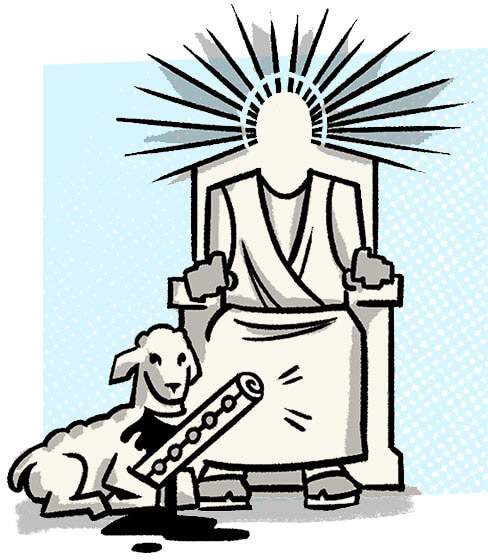
his throne in heaven; his kingdom extends over everything.”
Isaiah 40:17
“All the nations are insignificant before him; they are regarded
as absolutely nothing.”
Isaiah 40:15
“Look, the nations are like a drop in a bucket; they are regarded as dust on the scales. He lifts the coastlands as if they were dust.”
Habakkuk 2:14
“For recognition of the LORD’s
sovereign majesty will fill the earth just as the waters fill up the sea.”
Psalm 115:3
“Our God is in heaven! He does whatever he pleases!”
Deuteronomy 10:14
“The heavens – indeed the highest heavens – belong to the LORD your God, as does the earth and everything in it.”
Psalm 116:5
“The LORD is merciful and
fair; our God is compassionate.”
Lamentations 3:21-23
“But this I call to mind; therefore I have hope: The LORD’s loyal kindness never ceases; his
compassions never end. They are fresh every morning; your faithfulness is
abundant!
Deuteronomy 7:9
“So realize that the LORD your God is the true God, the faithful God who keeps covenant faithfully with those who love him and keep his commandments, to a thousand generations,”
1 Timothy 1:17
“Now to the eternal king, immortal, invisible, the only God, be
honor and glory forever and ever! Amen.”
1 Corinthians 8:6
“Yet for us there is one God, the Father, from whom are all
things and for whom we live, and one Lord, Jesus Christ, through whom are all
things and through whom we live.”
Romans 16:27
“To the only wise God, through Jesus Christ, be glory forever!
Amen.”
1 Timothy 6:15-16
“Whose appearing the blessed and only Sovereign, the King of
kings and Lord of lords, will reveal at the right time. He alone possesses
immortality and lives in unapproachable light, whom no human has ever seen or
is able to see. To him be honor and eternal power! Amen.”
Watch the summary video