33185 Finding Freedom from Divisiveness – A True Story

Zoe Marks was a decisive woman, one who made up her mind on the spot. She always said that if she married it would be to an equally decisive man.

She saw in Douglas Hill just such a man. They had time for only two dates before the close of the Bible conference where they met. Zoe went back to her job and Doug back to graduate studies in mine engineering. Each promised to write often.

Zoe liked the letters that came from Doug, letters that came oftener as fall led into winter and winter into spring. One day Doug’s letter asked pointedly, “Are you willing to be the wife of a mining engineer? If so, will you marry me?”

This is what she liked in Doug. How could he have put it more directly? By return mail, she told him yes.

After they were married, Zoe began to wonder about those decisive letters. To her surprise, she was finding Doug to be slow and methodical. Once he made a decision he was positive, but reaching the decision seemed a ponderous and painful process.

One day Doug recalled that in writing his marriage proposal he had torn up six letters before finally mailing the seventh. Appalled at the revelation, Zoe accused him of deceiving her. Doug denied any such thing.

After that Doug did all of his preliminary thinking in private.

Zoe would ask, “What are you thinking about, Doug?”

“Nothing,” he would say.

“Oh, yes, you are; you’re always thinking. Can’t you ever make up your mind about anything?”

“It beats deciding by that roulette method of yours,” he retorted.

By the time they went for a counseling session with Henry Brandt, each had hardened their minds against the other’s life-long habit of making decisions. Henry asked them to turn the light of 1 Corinthians 1:10 on themselves, “Now I beseech you … that you speak the same thing, and that there be no divisions among you; but that you be perfectly joined together in the same mind and in the same judgment.”

“You want to speak the same thing,” Henry said, “but you’re divided in your approach. There is no like-mindedness, only annoyance and impatience. Zoe, you are wrong in resenting Doug’s nature.”

Zoe was open to Henry’s assessment and repented of her critical spirit. As the two of them continued to study God’s Word and apply it to their lives, they were able to work out a mutual solution. Zoe now helps Doug sort out more quickly the alternatives involved in making a decision, and he helps her to consider more carefully the consequences of a decision.

When faced with divisive situations, it is important to ask God for insight as to what is really causing your conflict. Be open to the Spirit’s leading and direction as to how to restore harmony to your relationships.

[Dr. Henry Brandt shares insights from his counseling sessions. The names and certain details in these true case histories have been changed to protect each person’s identity and privacy.]

33186 Bible Verses Related to Divisiveness

Decisiveness

I appeal to you, brothers, in the name of our Lord Jesus Christ, that all of you agree with one another so that there may be no divisions among you and that you may be perfectly united in mind and thought. (1 Corinthians 1:10, NIV)

Do all that you can to live in peace with everyone. (Romans 12:18, NLT2)

You are still controlled by your sinful nature. You are jealous of one another and quarrel with each other. Doesn’t that prove you are controlled by your sinful nature? Aren’t you living like people of the world? (1 Corinthians 3:3, NLT2)

If possible, so far as it depends on you, be at peace with all men. (Romans 12:18, NASB95)

If you keep on biting and devouring each other, watch out or you will be destroyed by each other. (Galatians 5:15, NIV)

Let us not become boastful, challenging one another, envying one another. (Galatians 5:26, NASB95)

Live in harmony with one another. (Romans 12:16, NIV)

A troublemaker plants seeds of strife. (Proverbs 16:28, NLT2)

A hot-tempered man stirs up strife, But the slow to anger calms a dispute. (Proverbs 15:18, NASB95)

A quarrelsome person starts fights as easily as hot embers light charcoal or fire lights wood. (Proverbs 26:21, NLT2)

An angry person starts fights; a hot-tempered person commits all kinds of sin. (Proverbs 29:22, NLT2)

Starting a quarrel is like opening a floodgate, so stop before a dispute breaks out. (Proverbs 17:14, NLT2)

Gossip

The words of a gossip are like choice morsels; they go down to a man’s inmost parts. (Proverbs 18:8, NIV)

A gossip betrays a confidence; so avoid a man who talks too much. (Proverbs 20:19, NIV)

A gossip goes around telling secrets, but those who are trustworthy can keep a confidence. (Proverbs 11:13, NLT2)

Gossip separates the best of friends. (Proverbs 16:28, NLT2)

Slander

Slandering others makes you a fool. (Proverbs 10:18, NLT2)

Do not spread slanderous gossip among your people. Do not stand idly by when your neighbor’s life is threatened. I am the LORD. (Leviticus 19:16, NLT2)

I will not tolerate people who slander their neighbors. (Psalm 101:5, NLT2)

Thieves nor the greedy nor drunkards nor slanderers nor swindlers will inherit the kingdom of God. (1 Corinthians 6:10, NIV)

Do not slander one another. (James 4:11, NIV)

Rid yourselves of all malice and all deceit, hypocrisy, envy, and slander of every kind. (1 Peter 2:1, NIV)

Get rid of all bitterness, rage, anger, harsh words, and slander, as well as all types of evil behavior. (Ephesians 4:31, NLT2)

Teach the older women to be reverent in the way they live, not to be slanderers … but to teach what is good. (Titus 2:3, NIV)

Arguing

A gentle answer deflects anger, but harsh words make tempers flare. (Proverbs 15:1, NLT2)

People can tame all kinds of animals, birds, reptiles, and fish, but no one can tame the tongue. It is restless and evil, full of deadly poison. Sometimes it praises our Lord and Father, and sometimes it curses those who have been made in the image of God. And so blessing and cursing come pouring out of the same mouth. Surely, my brothers and sisters, this is not right! (James 3:7-10, NLT2)

Anyone who loves to quarrel loves sin. (Proverbs 17:19, NLT2)

When arguing with your neighbor, don’t betray another person’s secret. (Proverbs 25:9, NLT2)

What ails you that you keep on arguing? (Job 16:3, NIV)

Criticism

And I tell you this, you must give an account on judgment day for every idle word you speak. The words you say will either acquit you or condemn you. (Matthew 12:36-37, NLT2)

Do not let any unwholesome talk come out of your mouths, but only what is helpful for building others up according to their needs, that it may benefit those who listen. (Ephesians 4:29, NIV)

Don’t speak evil against each other, dear brothers and sisters. If you criticize and judge each other, then you are criticizing and judging God’s law. But your job is to obey the law, not to judge whether it applies to you. (James 4:11, NLT2)

Judgmentalism

Judge not, that you be not judged. For with what judgment you judge, you will be judged; and with the measure you use, it will be measured back to you. (Matthew 7:1-2, NKJV)

Why worry about a speck in your friend’s eye when you have a log in your own? How can you think of saying to your friend, “Let me help you get rid of that speck in your eye,” when you can’t see past the log in your own eye? Hypocrite! First get rid of the log in your own eye; then you will see well enough to deal with the speck in your friend’s eye. (Matthew 7:3-5, NLT2)

Do not judge, and you will not be judged. Do not condemn, and you will not be condemned. (Luke 6:37, NIV)

Therefore you have no excuse, everyone of you who passes judgment, for in that which you judge another, you condemn yourself; for you who judge practice the same things. (Romans 2:1, NASB95)

Why do you condemn another believer? Why do you look down on another believer? Remember, we will all stand before the judgment seat of God. (Romans 14:10, NLT2)

Let us stop passing judgment on one another. Instead, make up your mind not to put any stumbling-block or obstacle in your brother’s way. (Romans 14:13, NIV)

So let’s stop condemning each other. Decide instead to live in such a way that you will not cause another believer to stumble and fall. (Romans 14:13, NLT2)

So don’t make judgments about anyone ahead of time–before the Lord returns. For he will bring our darkest secrets to light and will reveal our private motives. (1 Corinthians 4:5, NLT2)

Don’t speak evil against each other, dear brothers and sisters. If you criticize and judge each other, then you are criticizing and judging God’s law. But your job is to obey the law, not to judge whether it applies to you. (James 4:11, NLT2)

God alone, who gave the law, is the Judge. He alone has the power to save or to destroy. So what right do you have to judge your neighbor? (James 4:12, NLT2)

Harmony

I appeal to you, brothers, in the name of our Lord Jesus Christ, that all of you agree with one another so that there may be no divisions among you and that you may be perfectly united in mind and thought. (1 Corinthians 1:10, NIV)

Do all that you can to live in peace with everyone. (Romans 12:18, NLT2)

Get rid of all bitterness, rage, anger, harsh words, and slander, as well as all types of evil behavior. Instead, be kind to each other, tenderhearted, forgiving one another, just as God through Christ has forgiven you. (Ephesians 4:31-32, NLT2)

He who covers over an offense promotes love, but whoever repeats the matter separates close friends. (Proverbs 17:9, NIV)

Do not let any unwholesome talk come out of your mouths, but only what is helpful for building others up according to their needs, that it may benefit those who listen. (Ephesians 4:29, NIV)

Make every effort to keep yourselves united in the Spirit, binding yourselves together with peace. (Ephesians 4:3, NLT2)

Live in harmony with each other. Don’t be too proud to enjoy the company of ordinary people.  And don’t think you know it all! (Romans 12:16, NLT2)

But we don’t need to write to you about the importance of loving each other, for God himself has taught you to love one another. (1 Thessalonians 4:9, NLT2)

Be completely humble and gentle; be patient, bearing with one another in love. Make every effort to keep the unity of the Spirit through the bond of peace. (Ephesians 4:2-3, NIV)

Always be humble and gentle. Be patient with each other, making allowance for each other’s faults because of your love. Make every effort to keep yourselves united in the Spirit, binding yourselves together with peace. (Ephesians 4:2-3, NLT2)

Starting a quarrel is like opening a floodgate, so stop before a dispute breaks out. (Proverbs 17:14, NLT2)

How wonderful and pleasant it is when brothers live together in harmony! (Psalm 133:1, NASB95)
33190 Rebellion vs. Obedience

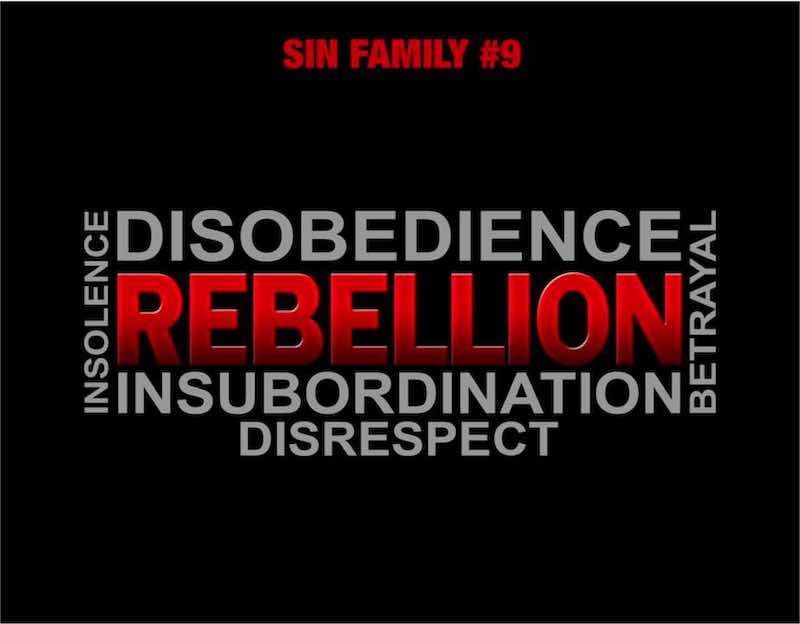
Do you have a hard time submitting to the authority over you at work, in your family, at church, or in other situations? Do you disrespect authority figures by refusing to comply, or doing a poor job? Rebellion’s family of behaviors includes disobedience, insubordination, insolence, betrayal, and disrespect. These can be replaced by obedience.

Discover how to overcome rebellion in its various forms through time-tested insights that really work!

Self-Test

Are You Rebellious?

The following self-evaluation quiz will help you determine whether you have a tendency toward rebellion.

  • If your parents are still living, do they resent your attitude toward them?
  • If you are a wife, does your husband feel that you work against him instead of with him?
  • As a husband, do you expect compliance from your wife but resist those who have authority over you?
  • Do you refuse to pursue the vision for your local church established by the church leaders?
  • If you have a job, does your boss look upon you as an obstacle to getting the company where it is hoping to go?
  • Do you set a poor example for your coworkers, bringing down morale?
  • Do you disobey laws when you think you can get away with it?
  • Do the people you know ever use words like disloyal, disrespectful, or scornful to describe your attitude toward people in authority?

Rebellion: Playing Against Your Own Team

The fact is that in life there are authority structures. In governments, in businesses, in churches, in homes, some people are leaders over others. In different situations, indeed, each of us is a follower and a leader. Except in certain limited situations, to reject or undermine properly instituted authority is to rebel against the order God has established in human society.

Some people seem to be rebels and dissenters by nature. Using either passive or aggressive tactics (maybe both), they seek to overthrow the authority that others have over them. Obeying rankles with them, and so they do it as little as possible. (read more)

Five Steps to Overcome Rebellion

Are you struggling with a form of rebellion against authority? We have outlined a five-step process to help you change and heal in this area of your life. Take all the time you need with each of the steps included in this process. (read more)

Finding Freedom – A True Story

Richard’s wife had a firm, unshakable conviction that it was the duty and responsibility of the man of the house to take out the garbage. So, every morning after he kissed her goodbye, she would hand him a bag or two of garbage. His normal routine was to grab the bags, storm out of the house, and slam the garbage into the can.

“That takes care of your old garbage,” he would mutter to no one as he got into his car and squealed around the corner. This was a twenty-year battle. (read more)

Related Verses

Evil people are eager for rebellion. (Proverbs 17:11, NLT2)

Everyone must submit himself to the governing authorities, for there is no authority except that which God has established. The authorities that exist have been established by God. Consequently, he who rebels against the authority is rebelling against what God has instituted, and those who do so will bring judgment on themselves. (Romans 13:1-2, NIV)

To obey is better than sacrifice. (1 Samuel 15:22, NIV)

Children, obey your parents because you belong to the Lord, for this is the right thing to do. Honor your father and mother. This is the first commandment with a promise: If you honor your father and mother, things will go well for you, and you will have a long life on the earth. (Ephesians 6:1-3, NLT2)

Obey your spiritual leaders, and do what they say. Their work is to watch over your souls, and they are accountable to God. Give them reason to do this with joy and not with sorrow. That would certainly not be for your benefit. (Hebrews 13:17, NLT2)

We must obey God rather than any human authority. (Acts 5:29, NLT2)

And we can be sure that we know him if we obey his commandments. If someone claims, “I know God,” but doesn’t obey God’s commandments, that person is a liar and is not living in the truth. But those who obey God’s word truly show how completely they love him. That is how we know we are living in him. Those who say they live in God should live their lives as Jesus did. (1 John 2:3-6, NLT2)

Read more Bible verses.

33191 Rebellion: Playing Against Your Own Team

The fact is that in life there are authority structures. In governments, in businesses, in churches, in homes, some people are leaders over others. In different situations, indeed, each of us is a follower and a leader. Except in certain limited situations, to reject or undermine properly instituted authority is to rebel against the order God has established in human society.

Some people seem to be rebels and dissenters by nature. Using either passive or aggressive tactics (maybe both), they seek to overthrow the authority that others have over them. Obeying rankles with them, and so they do it as little as possible.

Rebellion against human authority figures is always rebellion against God in an indirect sense because it means refusing to accept the order He has established. But there is also such a thing as direct rebellion against God. Some people refuse to obey His commands in Scripture or His individual leading in their lives.

The truth is, the most unhappy people in the world are not unbelievers, many of whom are ignorantly and blissfully happy in their sin, albeit temporarily; the most unhappy people in the world are Christians who resist the will of God for their lives.

If obedience is a virtue that does not come easily to you, you can learn it with God’s help. Even though Jesus was God’s Son, “He learned obedience from the things He suffered” (Hebrews 5:8). Seek the Holy Spirit for the ability to eliminate the ugliness of rebellion from your life and replace it with the beauty of obedience.

[The above article is an extract from Chapter 17 of Soul Prescription by Bill Bright and Henry Brandt.]

33192 Five Steps to Overcome Rebellion

Are you struggling with a form of rebellion against authority? We have outlined a five-step process to help you change and heal in this area of your life. Take all the time you need with each of the steps below.

Step 1:  Adopt a Correct View of God

If you have a tendency toward rebellion, chances are good that your view of God has become skewed in some way. Perhaps you see God as a tyrant, selfishly wanting everything His own way. Your reaction to Him, then, could spill over to your relationships with other authority figures. Consider these points:

God’s commandments are fair and good.

He is the Rock; His deeds are perfect. Everything He does is just and fair. He is a faithful God who does no wrong; how just and upright He is! (Deuteronomy 32:4)

God will hold us accountable for our rebellion.

The LORD is slow to anger and filled with unfailing love, forgiving every kind of sin and rebellion. But He does not excuse the guilty. He lays the sins of the parents upon their children; the entire family is affected—even children in the third and fourth generations. (Numbers 14:18)

Embark on a study of the justice and sovereignty of God as reflected in Scripture. Keep an open mind as you encounter biblical truth, asking God to change your view of Him to make it more nearly conformed to the truth.

Step 2:  Revise Your False Beliefs

If you have mistaken ideas about people and the world, you will rebel against authority figures and especially the greatest Authority Figure of them all–God. Evaluate your beliefs with the following questions:

Do you believe you are not subject to properly instituted authorities?

Those in positions of authority have been placed there by God. (Romans 13:1)

Do you believe you can defy authority without consequences?

You will say, “How I hated discipline! If only I had not ignored all the warnings!” (Proverbs 5:12)

Do you believe God’s commandments and will are unreasonable?

I will walk in freedom, for I have devoted myself to Your commandments. (Psalm 119:45)

Trace the theme of obedience through Scripture. In the process, test your beliefs about how families, businesses, churches, and society should operate. Choose to accept the principle of obedience to proper authority.

Step 3:  Repent of Your Sin

Where does your rebellion usually manifest itself? At home? In church? At work? In society at large? Toward God? Is your problem disobedience, insubordination, lawlessness, insolence, scoffing, or disrespect? Pinpoint your sin habit. Admit it to yourself. Own it.

When you are ready, pray the following prayer in faith, trusting that God will forgive your sin and empower your obedience.

God, You have established structures of authority to make things work better for Your children. Yet I have sometimes strived not to support but to break down those structures. In particular, I am guilty of _________. It is a sin, and I am sorry for it. Please forgive me now. Cleanse me entirely of my sin of __________. Then fill me with Holy Spirit power to enable me to resist the temptation of rebellion from now on. In the name of Christ the King, amen.

If you have harmed others with your sin, apologize to them. Seek reconciliation and offer restitution where appropriate.

Step 4:  Defend against Spiritual Attacks

Don’t breathe too big a sigh of relief after repenting of rebellion. Attacks from the world, the flesh, and the Devil are all but inevitable now. These spiritual enemies want to draw you back into disobedience to God.

  • The world system tells us, “The way to a good life is to have total freedom and do whatever you want.” Would God agree? Of course not. He says, “True freedom comes from submitting to proper authorities, especially Mine.” Overcome the world by rejecting its values and embracing God’s.
  • Your flesh, or sinful nature, has always enjoyed the sense of power and autonomy that comes from rebelling against authority. It craves to get that feeling back. What you need to do is remember that your flesh is already dead; you have no need to obey its dictates. Obey the Spirit and not the flesh.
  • The Devil is hatching schemes to tempt you to rebel again, doing damage to you and others in the process. Among the other pieces of spiritual armor listed in Ephesians 6, put on the helmet of salvation to protect your mind from Satan’s poisonous thoughts.

The attacks of the world, the flesh, and the Devil are formidable, but not impossible to defeat. With God acting in your life, you are more than able to repel each assault thrown at you.

Step 5:  Flee Temptation

Take practical steps to avoid sliding back into rebellion and to cement an attitude of obedience in your heart.

Focus on your relationship with God.

In your devotional and worship times, focus on God as King over all the universe. Learning to be obedient to this Sovereign will help you be obedient in all areas of life.

Latch on to God’s promises.

Find helpful verses in Scripture and then commit them to memory to help you in your struggles against the temptation to rebel. One such verse for you may be the following:

The commandments of the Lord are right, bringing joy to the heart. The commands of the Lord are clear, giving insight for living. (Psalm 19:8)

Establish safeguards.

Think about the usual sources of temptation for you to rebel. Identify precautions you can take to protect yourself from those sources. Let the following examples spark your imagination:

  • If you tend to be insubordinate to your boss, start calling this person “sir” or “ma’am” as a reminder of the respect you owe.
  • If you are inclined to scoff at church leaders’ direction, take the lowliest position of service in the church you can find—and fulfill it without complaint.
  • If you tend to be critical of government officials, send a card of thanks to your congressional representative the next time he or she does something honorable.
  • Ask a trusted Christian friend to hold you accountable in your commitment to not rebel against authority.

Expect victory.

Developing a submissive spirit is not easy, but you have the Holy Spirit living in you and producing in you a spirit of obedience. Be confident and rejoice in every sign of progress.

33195 Finding Freedom from Rebellion – A True Story

Richard’s wife had a firm, unshakable conviction that it was the duty and responsibility of the man of the house to take out the garbage. So, every morning after he kissed her goodbye, she would hand him a bag or two of garbage. His normal routine was to grab the bags, storm out of the house, and slam the garbage into the can.

“That takes care of your old garbage,” he would mutter to no one as he got into his car and squealed around the corner. This was a twenty-year battle.

Then Richard discovered the love of God, and that God’s love is always kind. It startled him to realize what an unkind act and rebellious attitude he had when he was taking out the garbage every morning. God convicted him of his sin and Richard repented. He still carries out the garbage, it is still a concession, but now Richard does it with a kindly spirit toward his wife.

Upon further reflection, Richard discovered that he carried out many of his other daily duties with the same rebellious attitude. He was actually the architect of a lot of unhappiness in his life. Each time God brought a rebellious action or attitude to his attention, Richard repented of it and let the love of God heal his miserable spirit. Without changing a single detail in his life, he began enjoying the responsibilities of his life instead of seeing them as distasteful chores and duties.

In what way has rebellion weaseled its way into your life? Are you willing to allow God to heal you of this destructive attitude and bring joy and peace into your life?

[Dr. Henry Brandt shares insights from his counseling sessions. The names and certain details in these true case histories have been changed to protect each person’s identity and privacy.]

33200 Irresponsibility vs. Diligence

Are you often late for appointments no matter how hard you try to change? Do you leave work, school, or other projects to the last minute? Are you always stressed out because you can’t find things? Irresponsibility’s family of behaviors includes laziness, apathy, procrastination, negligence, and disorderliness. These can be replaced by diligence. 

Discover how to overcome irresponsibility in its various forms through time-tested insights that really work!

Self-Test

Are You Irresponsible?

The following self-evaluation quiz will help you determine whether you have a tendency toward irresponsibility.

  • Do you sleep more than you need to?
  • At work, do you watch the clock and worry more about looking busy than about being productive?
  • Does your boss feel that he or she must keep an eye on you?
  • Do you often forget appointments or show up late without any good reason for it?
  • Do you put things off that you know you need to do?
  • Do you start projects and then leave them undone?
  • Do you have trouble finding what you need in your home or workspace?
  • Do other people criticize you for carelessness?
  • At night, do you ever look back on your day and wonder what you accomplished?
  • Has it been a while since you were excited about anything you were doing?

Irresponsibility:  The Undisciplined Life

Irresponsibility manifests itself in many ways. Some people are irresponsible with time. They are habitually late for engagements, causing other people inconvenience as a result. Or they procrastinate, putting off doing what they know they ought to do. Others are irresponsible with material objects. They borrow things from others and either forget to return them or else let them become damaged while in their possession. Or they may take poor care of their own possessions, letting their homes and workplaces get messy or run down. They forget that “God is not a God of disorder but of peace” and that we are to “be sure that everything is done properly and in order” (1 Corinthians 14:33, 40).

Some people seem to be negligent, careless, and inconsistent in every area of life. Should you depend on them to fulfill what they promised? You had better not. Should you trust them to help you out if you are not keeping an eye on them? Certainly not. (read more)

Five Steps to Overcome Irresponsibility

Are you struggling with being irresponsible? We have outlined a five-step process to help you change and heal in this area of your life. Take all the time you need with each of the steps included in this process. (read more)

Finding Freedom – A True Story

I can remember how when I was a teenager I tried to talk my mother into letting me go out after she said I could not go. I approached her with something like this, “Awe, come on Mom, won’t you please let me go out? Please, Mom?”

I tried to make myself look and sound as pathetic as possible, appealing to her sympathy and her motherly instinct. Surely she would concede to someone who was pleading as much as I was. (read more)

Related Verses

If someone has enough money to live well and sees a brother or sister in need but shows no compassion — how can God’s love be in that person? (1 John 3:17, NLT2)

Never be lazy, but work hard and serve the Lord enthusiastically. (Romans 12:11, NLT2)

“Those unwilling to work will not get to eat.” Yet we hear that some of you are living idle lives, refusing to work and meddling in other people’s business. We command such people and urge them in the name of the Lord Jesus Christ to settle down and work to earn their own living. (2 Thessalonians 3:10-12, NLT2)

I delight in your decrees; I will not neglect your word. (Psalm 119:16, NIV)

In the name of the Lord Jesus Christ, we command you, brothers, to keep away from every brother who is idle and does not live according to the teaching you received from us. (2 Thessalonians 3:6, NIV)

Do not neglect your gift … Be diligent in these matters; give yourself wholly to them, so that everyone may see your progress. (1 Timothy 4:14-15, NIV)

Read more Bible verse.

33201 Irresponsibility: The Undisciplined Life

Irresponsibility manifests itself in many ways. Some people are irresponsible with time. They are habitually late for engagements, causing other people inconvenience as a result. Or they procrastinate, putting off doing what they know they ought to do. Others are irresponsible with material objects. They borrow things from others and either forget to return them or else let them become damaged while in their possession. Or they may take poor care of their own possessions, letting their homes and workplaces get messy or run down. They forget that “God is not a God of disorder but of peace” and that we are to “be sure that everything is done properly and in order” (1 Corinthians 14:33, 40).

Some people seem to be negligent, careless, and inconsistent in every area of life. Should you depend on them to fulfill what they promised? You had better not. Should you trust them to help you out if you are not keeping an eye on them? Certainly not.

What’s behind all this is usually an attitude problem, whether it goes by the name of apathy, boredom, or lethargy.

We need to sense that our lives are a part of the great story God is writing in history! We need to understand that by obeying Him in our duties and relationships we are helping to build an everlasting kingdom! With the right perspective, our attitudes can change from apathy to enthusiasm. And our sin habits of irresponsibility can be replaced by the virtue of diligence.

If you have an ongoing problem with some type of irresponsibility, what we are not asking of you is some type of resolution to do better. We are not asking you to force yourself to do better on the job, at home, or wherever you tend to be irresponsible. If we asked this kind of self-effort from you, you would likely be no more successful than the people who show up at the gym with brand-new exercise clothes in January hoping that this is the year they will finally get in shape, only to discover in a month or two that they have lost their motivation, discipline, or desire.

What we are asking of you is that you begin praying for help and committing yourself, in the grace of God, to fulfill the responsibilities He has laid on your heart. Seek the Lord, repent of your sin, and rely on the Spirit’s empowering. Only in this way will you be able to acquire the virtue of diligence—and keep it. Begin the healing process by embodying the virtue of diligence in every responsibility the Lord gives you. It is a privilege to serve Him with all that lies within us.

______________________________________________

[The above article is an extract from Chapter 18 of Soul Prescription by Bill Bright and Henry Brandt.]

33202 5 Steps to Overcome Irresponsibility

Are you struggling with being irresponsible? We have outlined a five-step process to help you change and heal in this area of your life. Take all the time you need with each of the steps below.

Step 1:  Adopt a Correct View of God

A poor conception of God may well lie behind your problem with irresponsibility. For example, if you see God as an uncaring and detached deity, you will likely have the same attitude toward life. Are the following points ones you need to take to heart?

God is absolutely concerned about every aspect of our lives.

What shall we say about such wonderful things as these? If God is for us, who can ever be against us? (Romans 8:31)

God uses His power on our behalf.

The eyes of the LORD search the whole earth in order to strengthen those whose hearts are fully committed to Him. (2 Chronicles 16:9)

In your Bible, read a sampling of some of the key events in salvation history, such as creation, the call of Abram, the exodus, and so on. Examine these events from the perspective of God’s activity in the world. Begin to develop a picture of God as a deity who is far from apathetic or irresponsible toward His creation.

Step 2:  Revise Your False Beliefs

Irresponsibility is fed by erroneous beliefs about life and one’s place in it. How might your false views have helped to make you irresponsible? Ask yourself the following questions:

Do you believe you cannot make any real changes in your world?

I can do everything through Christ, who gives me strength. (Philippians 4:13)

Do you believe that the needs of others are none of your concern?

Suppose you see a brother or sister who has no food or clothing, and you say, “Goodbye and have a good day; stay warm and eat well”—but then you don’t give that person any food or clothing. What good does that do? (James 2:15–16)

Use a concordance to help you trace the themes of laziness and diligence through the Scriptures. Seek God’s help to correct your unbiblical views of life as they apply to irresponsibility.

Step 3:  Repent of Your Sin

What type of irresponsibility is your downfall? Name it and disclaim it. Pray a simple prayer of repentance, and ask God to supernaturally motivate you into action.

God, I have been guilty of __________. I know it is sinful, and I am sorry for the way I have let You down. Forgive me now, I pray. Wash away the stain of this sin. Make me over into a person who uses Your power to reject irresponsibility and embrace a diligent lifestyle—one that pleases You. I ask these things in Christ’s name, amen.

If you have harmed others with your sin, apologize to them. Seek reconciliation and offer restitution where appropriate.

Step 4:  Defend against Spiritual Attacks

Now that you have repented, watch out for demotivating spiritual attacks. They are certain to occur.

  • In the world system, responsibility is not a high value in itself. The world would tell you to only do what you need to in order to get by—everything else is a waste. But God’s values in this area are quite different. He wants diligence to be a regular part of your nature. You can overcome the world by rejecting its values and embracing God’s values instead.
  • Laziness and other types of irresponsibility are pleasurable to your flesh (sinful nature)—they are easy and comfortable. The flesh will desire to get that kind of pleasure back. But you must recall that your flesh is really dead now, because of Christ. You are a new person and are to obey the Spirit and not the flesh.
  • The Devil is scheming to draw you back to your old ways of irresponsibility. Put on all the armor of God to defend against him (Ephesians 6:10–18). If you will resist the Devil in God’s power, you can defeat him.

The quickest way to become irresponsible in life again is to be irresponsible about defending against spiritual attacks. Such attacks will come, and you should be ready for them. But remember that God will be empowering you and helping you be successful every time.

Step 5:  Flee Temptation

The best way to avoid being tempted to lie on the couch and watch the world go by is to just do something. Take these active steps to be a more active person.

Focus on your relationship with God.

Begin your new, more disciplined life by maintaining your spiritual disciplines with God. He has something for you to do; ask Him what it is.

Latch on to God’s promises.

Find Bible verses that speak encouragement to you in your struggle against irresponsibility. Commit the verses to memory and use them when temptation arises. Here is one you may find valuable:

He gives power to the weak and strength to the powerless. (Isaiah 40:29)

Establish safeguards.

What inspires you to be irresponsible? Do whatever it takes to block such influences from your life. These are examples of the kinds of things you can do:

  • If you are lazy, make a “to-do” list of the things you ought to accomplish.
  • If you tend to procrastinate, create a calendar with all the deadlines for the things you are supposed to do.
  • If you typically leave your bedroom a mess, set your alarm a few minutes earlier so you can straighten it up every morning.
  • Ask a trusted Christian friend to hold you accountable in your commitment to not be irresponsible any longer.

Expect victory.

The Holy Spirit will motivate you into action if you will yield your heart to Him. Trust Him to make you a diligent person. Look forward to the victory He will give.

33205 Finding Freedom from Irresponsibility – A True Story

It takes diligence and perseverance to be a parent! Dr. Brandt relates this story from his childhood:

I can remember how when I was a teenager I tried to talk my mother into letting me go out after she said I could not go. I approached her with something like this, “Awe, come on Mom, won’t you please let me go out? Please, Mom?”

I tried to make myself look and sound as pathetic as possible, appealing to her sympathy and her motherly instinct. Surely she would concede to someone who was pleading as much as I was.

What do you do with a child who is playing the martyr, one who tries to put on a sincere act and tries to cajole something out of you that is against the limits?

She said no.

“Please, Mom, please let me go out?” I asked again.

She said no.

I decided there was no use being decent. It was necessary for me to try something else.

“So you say you love me, huh? How could any mother who loved her child treat me the way you are treating me? Can I go?”

She said no.

“But, Mom, everyone else but me is going. You wouldn’t want to make a freak out of me, would you? Can I go?”

Once more, the same answer.

What else could I think of? You see, my objective was to get out of the house any way possible – whether through lying, flattery, or whatever.

But my best line was always playing the role of the victim. I figured my trump card was always this line, “So you call yourself a Christian. How could any Christian mother treat her child like this? Can’t I please go?”

She did not burst into self-defense. She had respect for my attempts to resist her plan. All she said was no.

That used to make me so angry! I would retaliate by using all the ingenuity and creativity I could come up with to make life miserable for my mother until I went to bed.

When I was defeated, I would go to bed thinking, “How does a guy get saddled with a parent like that? Boy, if only I would die, then she’d be sorry.” I pictured myself in a coffin, my mother looking down at my dead body. In my imagination, I fired this thought off to my grieving mother: Serves you right!

There was no point in appealing to Dad. He would just back Mom up. Yet in my better moments, I was aware that they loved me. I sense that they had an attitude of approval and a real affection for me.

Children sometimes fervently want something they should not have. Yes, parents must respect their children and take their wants into consideration, but the decisions must finally be based on what is in the best interests of their children.

After I grew up, married, and had children of my own, I was amazed when I heard some of the same reasoning come out of the mouths of my kids!

Are you willing to parent your children, really parent them? Seek God and ask for his guidance in helping you to diligently discipline your children in a loving way. Repent of the times you have not been the parent you know you should have been. Focus on God’s plan for your life as a parent and for the development of your children. He will help you to experience joy!

[Dr. Henry Brandt shares insights from his counseling sessions. The names and certain details in these true case histories have been changed to protect each person’s identity and privacy.]