32621 Finding a Church

How to Avoid Church-Shopping but Still Decide on a Church

“What’s the most I can get for my money?” Whether it’s a return on an investment or looking for the best deal on a product, this question is central to a consumer mindset. Not a bad question to avoid wasting resources, but it’s a terrible question to ask when searching for a church!

So what’s wrong with shopping for a church? Why not simply attend the church we like best?

Picking a church based on simple preference creates a decision-making process centered on us instead of on God. One very basic assumption about the church is that while we are part of the church, church is not primarily about us. When we gather as Christians, it is God—Father, Son, and Holy Spirit—who is our focus.

The shopping metaphor also sets us up to view a church as an object or a product. But a church is not a thing—it is the particular Christian people, the community of believers with whom we are in relationship. Thus a better, though surprising, metaphor for figuring out which church to commit to would be dating!

At its best, dating is a process of discernment whereby two people, often with input from family and friends, try and figure out how committed they want to be to each other. While some people certainly approach relationships with self-centered wish-lists for the perfect match, we don’t often talk about “shopping for a boyfriend” or “choosing a wife.” The language of consumers thankfully hasn’t crossed over too much into how speak about committed relationships.

So if we don’t shop for a church, what do we do? What is a way to approach the decision-making process without being self-focused and acting like consumers? Discernment. What if we said to each other, when we’re in a transition time and without a church family, “I’m trying to discern a church” or “we’re still in the church discernment process.” Discernment has two important connotations. First, it is a wisdom word. It suggests more than the simplistic “I like this” / “I don’t like that” responses. Rather, it suggests intentionally seeking depth of  understanding before coming to a decision.

Discerning a church also suggests that listening is a part of the decision-making. We listen to what is being said and what isn’t being said when we worship at different churches. We listen to others who know us well. We listen to our own thoughts, responses, and reactions and, if applicable, to those of our families. Primarily, however, discerning a church involves listening to God. [Read Discernment in Finding a Church]

If we cut off a relationship every time our needs aren’t being met, or there is conflict, or something isn’t comfortable then it’s a good bet that we also won’t experience intimacy or grow in our emotional maturity.

God uses the hard work of perseverance, self-sacrifice, and daily dependence on His provision as the means by which we grow. Staying in an imperfect church (i.e. every church!) is about our growth in becoming more like Jesus.[1] When aspects of our community become uncomfortable and frustrating, God begins to form our motivations and desires to reflect his and away from focusing only on ours. We are also more willing to work toward a peaceful, effective, and healthy church if we’re committed to that particular Christian family for more than our individual benefit.

But not every relationship is a good one to really commit to, and neither should we commit to a church on a whim. We need discernment to understand the culture, beliefs, and priorities of a particular church. We need discernment to value compatibility without making it all about us. We need discernment when we listen for God’s direction so we don’t simply hear our own preferences.

If we begin at a church because we sense God drawing us there, we’ll be more likely to stick around to see why He has us there! Let’s get the most for our wisdom and the biggest bang for our discernment. Let’s drop the shopping and go worship with fellow Christians until God draws us to a particular church family.

32612 Why Church?

Paul Simon sang in “I am a Rock”: “I have no need of friendship; friendship causes pain…If I never loved I never would have cried. I am a rock, I am an island.”

The Church, at its heart is about relationships—relationships with others and relationship with God. But relationships are hard and being truly open in a relationship involves the risk of getting hurt. It’s safer to avoid vulnerability—to be an unfeeling rock.

Or why not be an island, why not go it alone? Many of us desire spiritual experiences, want to connect with God, or even sincerely desire to follow Jesus, but we’re skeptical and suspicious of church.

The church, after all, has been guilty of all sorts of terrible things: the crusades, the inquisition, witch trials, siding with oppression, not to mention how individuals have been hurt by judgmentalism, abuse, scandal, and just plain old meanness. Being an invulnerable rock seems pretty appealing in the face of this kind of church. Or for others of us, church seems like a club that requires thoughtless adherence to rules and prescribed ways of thinking. Wouldn’t it just be easier to follow Jesus as a blissfully independent island and forget other Christians? For many of us, Jesus is inspiring and intriguing but Christians are petty and hurtful. [Read “Being the Church to One Another”]

One of the primary ways the Bible talks about God’s people is as a family. Indeed for the entire history of God’s people, up until Jesus, God’s people were a family—a nation proud of having descended from Abraham. With Jesus, this literal, blood-related family was expanded to include those of other races. This inclusion had been the point all along—it was the fulfillment of God’s ancient promise to Abraham, “Through your offspring all nations on earth will be blessed, because you have obeyed me.” (Genesis 22:18)

In Jesus, anyone can receive the blessing of being saved from sin. But even though the Church doesn’t exclude all non-Jewish people, the family metaphor hasn’t changed. Non-Jewish Christians are described as: children of Abraham (Romans 9:8), children of God (Luke 20:36, John 1:12-13, Romans 8:16-17), and adopted children (Romans 8:14-15, Galatians 4:5, Ephesians 1:5).[1] So if we follow Jesus, we’re family.

Family is the place where we learn, grow, are loved, and form our identity and foundation for experiencing the world. As Christians it seems easier and less risky to avoid other Christians or at least those not like ourselves.[2] So the only way it makes sense to do the hard work of paddling off our islands or breaking our rocky shells is if we see the Church as a network of relationships—that, like a family, give us life and growth precisely because they occur in the nitty-gritty of life. If, however, we see the Church as a product to be used for our individual benefit, we begin to desire the benefits without the messy and difficult work of connecting to imperfect people as part of an imperfect church. This disconnection can happen even when attending a church, if we aren’t also vulnerably connecting with real people at that church!  [Read “Discernment in Finding a Church”]

The church plays an additional role apart from its family role of providing identity, growth, love, and learning. The church also connects us to God’s work in the world and the part we play in that work. It’s through the church (that network of relationships extending around the globe) that we get glimpses of the work of God that is so much bigger than us as individuals. [Read “God’s Call to Reach Out”]

Family and purpose. Christianity is not an individualistic religion. That’s what makes it different than a philosophy or ideology. Take relationship out of the doctrines and practices and it’s not Christianity. We are meant to grow together, to pursue God’s purposes in the world together. For this reason it says in Hebrews 10:24-25, “And let us consider how we may spur one another on toward love and good deeds, not giving up meeting together, as some are in the habit of doing, but encouraging one another—and all the more as you see the Day approaching.”

We are not islands or rocks. We are a family—vulnerable in our openness, obviously imperfect, but given the incredible opportunity to love God and love others together.

32570 Visions and Dreams

Throughout the history of the people of Israel, there were occasions when God spoke in visions and dreams as documented in the Scriptures.

God appeared to Abraham in a vision and repeated his promise to make him great (Genesis 15:1).

Prophets like Daniel, Ezekiel, Hosea, Nahum and others recorded in their writing that they received instructions, warnings, exhortation, and other oracles from the Lord in visions.

In the New Testament, the Lord appeared to Paul in a vision to encourage him (Acts 10:17). It was the vision of a Macedonian man that directed Paul and his missionary company to Macedonia (Acts 16:10). 

The Lord spoke to Ananias in a vision and instructed him to go see Paul (Acts 9:10). At the same time, Paul was also visited by the Lord in a vision concerning Ananias so that Paul might expect Ananias (Acts 9:12). The Lord brought them together through visions. In the similar way, Cornelius and Peter met because God gave them instructions in separate visions (Acts 10:3; 10:17). 

God also spoke to people in dreams.

In the Old Testament, the angel of the Lord appeared to Jacob in a dream (Genesis 31:11). Joseph had a dream which foretold his future (Genesis 37:5-11). In Gibeon, the Lord appeared to Solomon in a dream and exchanged a conversation with him.

It is interesting to realize that God spoke through dreams not only to the people of Israel but also to the peoples of other nations. In the life of Joseph, for example, you read that the cupbearer and the baker of the king of Egypt both had a dream in the prison where Joseph was also kept (Genesis 40:5). Later, Pharaoh also received a message from God in a dream, which Joseph was able to interpret (Genesis 41:15). Joseph explained to Pharaoh that God revealed to the king what the Lord was about to do.

In the New Testament, perhaps, the most well-known are four dreams Joseph had concerning Jesus. God gave him insights in his difficult and uncertain situations.

The first insight through a dream was concerning his marriage with Mary.

“When he had contemplated this, an angel of the Lord appeared to him in a dream and said, “Joseph, son of David, do not be afraid to take Mary as your wife, because the child conceived in her is from the Holy Spirit… 

When Joseph awoke from sleep he did what the angel of the Lord told him. He took his wife.” – Matthew 1:20, 24

Then he had another dream when King Herod sought the life of Jesus.

“After they had gone, an angel of the Lord appeared to Joseph in a dream and said, “Get up, take the child and his mother and flee to Egypt, and stay there until I tell you, for Herod is going to look for the child to kill him.” – Matthew 1:13

Without an insight from God in this dream, Joseph would not have known to flee from Herod and endangered the life of Jesus.

Later, Joseph was instructed in two dreams to return from Egypt. In a dream, Joseph learned Herod’s death and that they were safe to return to Israel.

“After Herod had died, an angel of the Lord appeared in a dream to Joseph in Egypt saying, “Get up, take the child and his mother, and go to the land of Israel, for those who were seeking the child’s life are dead… But when he heard that Archelaus was reigning over Judea in place of his father Herod, he was afraid to go there. After being warned in a dream, he went to the regions of Galilee.” – Matthew 2:19-20, 22

Because of God’s warning in another dream, Joseph settled his family in Nazareth. This fulfilled a prophecy concerning Jesus that he would be called a Nazarene. God’s insight to Joseph, in this case, accomplished the words which he had spoken long ago.

32560 Parallel Examples

We can glean insights from God through parallel examples. 

There are two kinds of parallel examples. 

The Bible is written as an example for us. The stories and characters in the Bible give us insights into life as it is and as it should or could be. The power of the Biblical narratives is the presence and intimate interactions of the Lord with people. 

The Biblical stories show us that God always enters our life and meets us where we are. He guides and instructs us “on the go” while we live our everyday life. He uses what is available in our life at the time and brings resources that we are not aware of. 

As you read the stories of Abraham, Moses, Esther, prophets, the stories from Judges and 1 and 2 Kings, and many others, you may find parallels in your current situation. When you do, pay closer attention to those stories. 

What are some similarities between their situations and yours? What did they do? What was the result? What are some principles you see at work in the lives of Biblical characters? How was God at work in their life?

Keep in mind that the Biblical stories are descriptive, meaning they are telling you what happened. They may be examples of what NOT to do, examples not to be followed.

Another parallel examples that can bring insights from God are testimonies. 

Testimonies are your sharing with others your first-hand experience with God. It can be as simple as how a Scriptural passage you read spoke to you and as large as how God brought healing to your body or to your relationship. Testimonies glorify God by telling others how wonderful God is.

You may find parallel examples in the testimonies others give. Just like the stories and characters in the Bible, these testimonies may give you valuable insights into who God is and what he does. As you witness to how God has worked in other people’s situation and circumstance similar to yours, you can ask the Holy Spirit for insights into your situation and align your reality to his truth.

32550 Spirit-Inspired People

God speaks through others who are filled and led by the Holy Spirit.

They are spiritually mature and have known and walked with Jesus through the ups and downs of life. They have trained themselves in righteousness and discernment (Hebrews 5:14), handling the Word of truth rightly (1 Timothy 3:15).

God designed us to live in a community. Just as God exists in three Persons in perfect harmony and fellowship, we are designed to function as unique members of a single body of Christ. For this reason, God delights to use other believers in your life for encouragement, training, and guidance. God uses others to show his goodness, love, and wisdom.

Asking Spirit-filled believers in Jesus, you can receive insights from God through them.

It is sometimes wise to seek more than one person for counsel. When two or more people tell you a similar thing or the same thing, that is weightier for you to consider more carefully.

32540 Divine Flashes of Insight

“After the earthquake, there was a fire, but the LORD was not in the fire. After the fire, there was a soft whisper. When Elijah heard it, he covered his face with his robe and went out and stood at the entrance to the cave. All of a sudden a voice asked him, “Why are you here, Elijah?” – 1 Kings 19:12-13

When you believe in Jesus as your Savior and Lord, you are spiritually born again and have become a new creation. You have the mind of Christ (1 Corinthians 2:16). The Holy Spirit now resides in you.

When the Holy Spirit speaks, he speaks softly. It sounds like your inner voice. You must learn to distinguish between your own thoughts and the soft whisper of the Holy Spirit.

Divine flashes of insight are when the Holy Spirit is speaking to you softly. You have an “aha!” moment.

You may experience this when you are reading the Bible. The Scripture verses that did not make much sense to you before all of a sudden become clear. Some passages of the Word jump out and penetrate your heart with a conviction or comfort.

According to Ephesians 1:17, the key to having spiritual wisdom and revelation is to know Jesus more intimately. Make Jesus the center of your life evermore. Bring Jesus into your every situation. Open and invite Jesus into every room in your heart. The deeper your relationship with Jesus becomes, the more clearly you will know God’s heart and thoughts.

32530 Christ’s Incarnation

“Now the Word became flesh and took up residence among us. We saw his glory—the glory of the one and only, full of grace and truth, who came from the Father.” – John 1:14

Insights from God come through Christ’s incarnation. Jesus is the power of God and the wisdom of God (1 Corinthians 1:24), the radiance of his glory and the representation of his essence (Hebrews 1:3). In Jesus all the fullness of deity lives in bodily form (Colossians 2:9). 

As Jesus commands us, we must remain in him to gain insights from his incarnate presence. When we are close to him with our mind fixed on him, the Holy Spirit will open the eyes of our hearts.

One key way to remain in Jesus is to have his words remain in us (John 15:7). 

The four Gospels (Matthew, Mark, Luke, and John) are the proclamation of who Jesus really is. They are “making a convincing case” for the true identity of Jesus in a historical narrative. In other words, the Gospels are showing you Jesus in action in the real historical context. You are invited to enter the story and to be with Jesus for yourself. 

When you enter the story of Jesus by spending time in the Word, particularly, in the Gospels, you begin to see who Jesus really is. At the same time, the Holy Spirit will give you insights you need through the life, words, and deeds of Jesus.

You also find many different encounters people of the New Testament had with Jesus recorded in the Gospels. Jesus interacted with all kinds of people. He healed some, rebuked others, and encouraged those who needed the words of affirmation only He could speak. Some reached out to him, while He simply knew how to respond to others who possibly were unaware of what they needed most. Rich, poor, young, old … Jesus knows and cares for us all; no one is beyond his love and compassion! The stories of his encounters with the people of His day are also our stories. As you identify yourself with these Biblical characters, your encounter with Jesus will give you a new insight into who He is and make you more like Him.

32454 Be Filled with the Holy Spirit

“I tell you the solemn truth, the person who believes in me will perform the miraculous deeds that I am doing, and will perform greater deeds than these, because I am going to the Father.” – John 14:12

When Jesus became human to be with His twelve disciples, He was full of the Holy Spirit (Luke 4:1). Jesus healed the sick, cast out demons, raised the dead, fed thousands, walked on water, and performed other miracles in the power of the Holy Spirit.

When Jesus was filled with the Holy Spirit, it was a life fully submitted to and directed by the Father. When we are filled with the Holy Spirit, it is a life fully submitted to and directed by Christ. Just as the Son is one with the Father, and the Son does nothing except for what he sees the Father do, the Spirit-filled life is the Christ-directed life by which Christ lives His life in and through us in the power of the Holy Spirit (John 15).

The Holy Spirit plays a critical role in the life of a believer from the beginning to the end. One becomes a Christian through the ministry of the Holy Spirit (John 3:1-8). From the moment of spiritual birth, the Christian is indwelt by the Holy Spirit at all times (John 1:12; Colossians 2:9, 10; John 14:16, 17). He guides us into all the truth. The Holy Spirit is the source of the overflowing life (John 7:37-39). His “job” is to glorify Christ (John 16:1-15) and to intercede on our behalf (Romans 8:27). In His last command before His ascension, Jesus promised the power of the Holy Spirit to enable us to be witnesses for Him (Acts 1:1-9).

The indwelling of the Holy Spirit is the proof that a person truly belongs to Christ (Romans 8:9). But the fullness of the Spirit enables a person to live the supernatural and abundant life as Jesus did (see Acts 2:5; 4:8, 31; 9:17; 13:9, 52)

Meditate on the following Bible passages and ask the Holy Spirit to empower you to live a supernatural life!

Bible Verses on Our New Life in the Holy Spirit

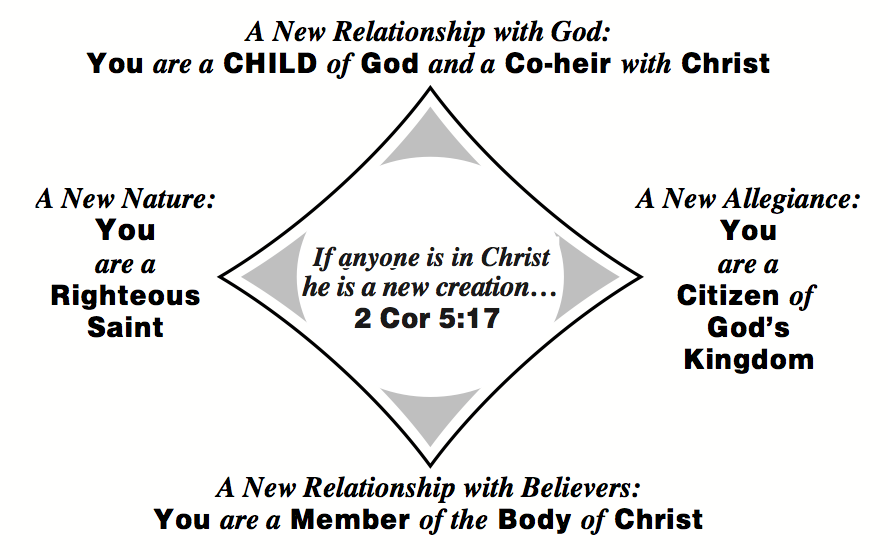
“So then, if anyone is in Christ, he is a new creation; what is old has passed away—look, what is new has come!” – 2 Corinthians 5:17

“I pray that according to the wealth of his glory he will grant you to be strengthened with power through his Spirit in the inner person, that Christ will dwell in your hearts through faith, so that, because you have been rooted and grounded in love.” – Ephesians 3:16-17

“Now to him who by the power that is working within us is able to do far beyond all that we ask or think, to him be the glory in the church and in Christ Jesus to all generations, forever and ever. Amen.” – Ephesians 3:20-21

“—since the eyes of your heart have been enlightened—so that you can know what is the hope of his calling, what is the wealth of his glorious inheritance in the saints, and what is the incomparable greatness of his power toward us who believe, as displayed in the exercise of his immense strength. This power he exercised in Christ when he raised him from the dead and seated him at his right hand in the heavenly realms.” – Ephesians 1:18-20

“I can pray this because his divine power has bestowed on us everything necessary for life and godliness through the rich knowledge of the one who called us by his own glory and excellence.” – 2 Peter 1:3

“I am able to do all things through the one who strengthens.” – Philippians 4:13

“But you will receive power when the Holy Spirit has come upon you, and you will be my witnesses in Jerusalem, and in all Judea and Samaria, and to the farthest parts of the earth.” – Acts 1:8

“For in him we live and move about and exist, as even some of your own poets have said, ‘For we too are his offspring.'” – Acts 17:28

“For we are his creative work, having been created in Christ Jesus for good works that God prepared beforehand so we can do them.” – Ephesians 2:10

“For the one bringing forth in you both the desire and the effort—for the sake of his good pleasure—is God.” – Philippians 2:13

“And this is the confidence that we have before him: that whenever we ask anything according to his will, he hears us. And if we know that he hears us in regard to whatever we ask, then we know that we have the requests that we have asked from him.” – 1 John 5:14-15

32453 Abide in Jesus Christ

At the very moment that you received Jesus as your Savior and Lord, you stepped across a threshold to begin an exciting adventure. You took the first step in fulfilling the purpose for which you were created — to glorify God by loving Him, doing His will, and enjoying Him forever.

God’s goal is to transform us into the likeness of Jesus so our character reflects the fruit of His Spirit — “love, joy, peace, patience, kindness, goodness, faithfulness, gentleness, and self-control” (Galatians 5:22, 23).

God is glorified as our lives bear this spiritual fruit. The apostle Paul explained, “For we are his creative work, having been created in Christ Jesus for good works that God prepared beforehand so we can do them” (Ephesians 2:10). As our character takes on the likeness of Christ, we become capable, through the power of the Holy Spirit, to accomplish all God has planned for us.

Shortly before Jesus was to be crucified, He explained to His disciples how they could live victorious fruitful lives after His ascension into Heaven. Jesus used the Parable of the Vine to illustrate the importance of continuing to “abide in Christ.” The word “abide” means “to remain” or “to stay.”

Jesus explained, “I am the true vine and my Father is the gardener. Remain in me, and I will remain in you. Just as the branch cannot bear fruit by itself, unless it remains in the vine, so neither can you unless you remain in me. I am the vine; you are the branches. The one who remains in me—and I in him—bears much fruit, because apart from me you can accomplish nothing” (John 15:1, 4, 5).

It is only by abiding in Christ that we are able to fulfill God’s purpose for our life.

The Parable of the Vine reveals how we, as believers, are to remain in Jesus, vitally connected to Him, in order to accomplish all God intends for us. The branches can only produce fruit as long as they are connected to the vine and receiving nourishment. They live in complete dependence upon the resources the vine provides.

It is the same for followers of Christ. The fruitfulness God expects cannot be produced through our striving and self-effort. God does not want our focus to be doing good things for Him but rather to focus on our connection to Jesus. This will result in our becoming the people He wants us to be and in us doing the things He has designed for us.

Abiding in Christ involves allowing the Bible to transform our thinking so we see life from God’s point of view. Jesus promised, “If you remain in me and my words remain in you, ask whatever you want, and it will be done for you” (John 15:7). Once our thinking conforms to God’s point of view, we will desire what He desires. And as a result, He will grant our requests.

Abiding in Christ also involves a continual awareness of Christ’s enormous love for us. Jesus told His disciples, “Just as the Father has loved me, I have also loved you; remain in my love” (John 15:9). He went on to explain, “If you obey my commandments, you will remain in my love, just as I have obeyed my Father’s commandments and remain in his love” (John 15:10).

Jesus reveals the result of abiding in Him: “My Father is honored by this, that you bear much fruit and show that you are my disciples….I have told you these things so that my joy may be in you, and your joy may be complete” (John 15:8, 11).

In essence, the Parable of the Vine stresses the importance of living in union with Christ with a total dependence upon His empowering Spirit, renewing our minds with the Word of God, and loving Jesus as demonstrated by faithful obedience. That is the only path to the fruitful, fulfilling life for which you were created. Are you abiding in Christ?

Read “Abiding Room“.

32452 Submit to God the Father

“The person who has my commandments and obeys them is the one who loves me. The one who loves me will be loved by my Father, and I will love him and will reveal myself to him.” – John 14:21

“If you obey my commandments, you will remain in my love, just as I have obeyed my Father’s commandments and remain in his love.” – John 15:10

Walking with God means to trust and submit to the Father. Active (willing) obedience to the Father is an expression of our love for God and faith in Him. It is also the way to remain in His love. The Father does not love us more because we are obedient to Him. He does not love us less when we are disobedient. Obedience to the Father helps us experience His love by becoming more aware of it.

Another amazing promise of God is that when we are obedient to the Father, Jesus will manifest himself to us. The fullness of His presence in our life is life-giving and life-changing. The rule and reign (Kingdom) of God accompanies the presence of Jesus.

When Jesus proclaimed the Kingdom of God, He demonstrated it by His own life of complete submission to the Father. When we, as His beloved children, willingly submit to His authority and obey His will, our obedience to God helps make His Kingdom a reality wherever we are.

Now how does obedience fit in to a love-based relationship with God?

We get to know who God really is through living a daily life He tells us to live. And the incredible part? How He tells us to live makes it possible for us to experience a purpose-filled life with peace, contentment, and joy, as well as His love, goodness, and greater intimacy with Him.

There are more reasons than love when we try to submit to the Father’s will. Sometimes we are motivated by a blessing or benefit of obeying Him. Sometimes, our motive is the sense of duty. Sometimes, it is fear of the consequence of disobedience.

Each of these motivations for obedience are related to a particular relational metaphor, and are not altogether bad. The one who obeys to receive a blessing, acknowledges the goodness of our heavenly Father who rewards faithfulness. The one who obeys out of duty, rightly acknowledges God as the sovereign Ruler of the universe who gives the marching orders. The one who obeys out of fear of punishment rightly acknowledges God as the only true Judge, whose justice includes punishing sin.

Jesus says, “If you love me, you will keep my commandment” (John 14:15). We ultimately follow a Person, not a rule book. A purer motivation for obedience flows naturally out of the security of being loved by Him and our desire to please the One we love.