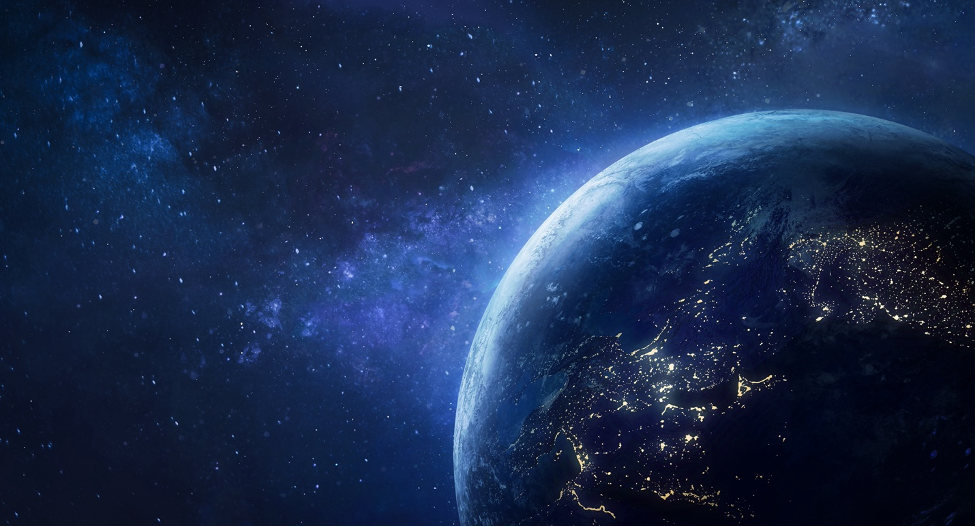
Scientists are rethinking the origin of the universe and its physical laws which make life possible. As cosmologists study our universe, they are in awe of the precise fine-tuning which makes life possible. What they have discovered is that life couldn’t exist unless dozens of physical laws and characteristics in our universe met precise conditions. Cosmologists call this remarkable accommodation for life, fine-tuning.
If the explosion that began our universe was just like an enormous nuclear explosion, it could never have resulted in the life we have today on Earth. What was so different about the creation event that started our universe?
A JUST-RIGHT UNIVERSE
Dr. Robin Collins states in The Case for a Creator,
Over the past thirty years or so, scientists have discovered that just about everything about the basic structure of the universe is balanced on a razor’s edge.1
Collins is referring to the fact that over 35 different characteristics of the universe and its physical laws needed to be precisely fine-tuned for physical life to be possible.2 Following are just six of those 35 characteristics:
- A large enough expansion rate: The birth of the universe had to begin with enough force, or life couldn’t exist. Stephen Hawking states, “If the rate of expansion one second after the big bang had been smaller by even one part in a hundred thousand million million, the universe would have recollapsed before it ever reached its present size.”3
- A controlled expansion rate: Although the expansion rate had to be great enough for the universe to avoid a big crunch, if its outward force had been even a fraction greater, that would have been too much for gravity to form stars and planets. Life could never have been possible.4
- A Precise Force of gravity: If the gravitational force were altered by 0.0000000000000000000000000000000000001 percent, neither Earth nor our Sun would exist—and you would not be here reading this.5
- A Precise balance of matter and antimatter: In the formation of the universe, the balance between matter and antimatter, and the excess of matter over antimatter, needed to be accurate to one part in ten billion for the universe to arise.
- Precise mass density of the universe: For physical life to exist, the mass density of the universe must be fine-tuned to better than one part in a trillion trillion trillion trillion trillion (1060).6 Thus, the mass contained in all dark and visible matter, including stars, is essential for the existence of our universe.
- Precise space-energy density: The space-energy density of the universe requires much greater precision than even its mass density. For physical life to be possible, it must be fine-tuned to one part in 10120.7 Such fine-tuning is virtually impossible.
At the very moment of creation, the rate and ratios of expansion, mass, density, antimatter, matter, etc., were set in place, eventually leading to a habitable planet called Earth.
In addition to the 35 different characteristics of our universe that must be just right for life to exist, our galaxy, solar system, and planet also needed to be exceptionally fine-tuned, or we would not be here.8
A JUST-RIGHT GALAXY
It’s estimated that there are approximately 2 trillion galaxies in the universe, including our own Milky Way galaxy, which contains 100-400 billion stars like our own Sun.
Movies like Star Wars and Star Trek give the impression that life exists in many galaxies throughout the universe.
Surprisingly, given the great number of these star groups, most galaxies are incompatible with life. Let’s look at why.
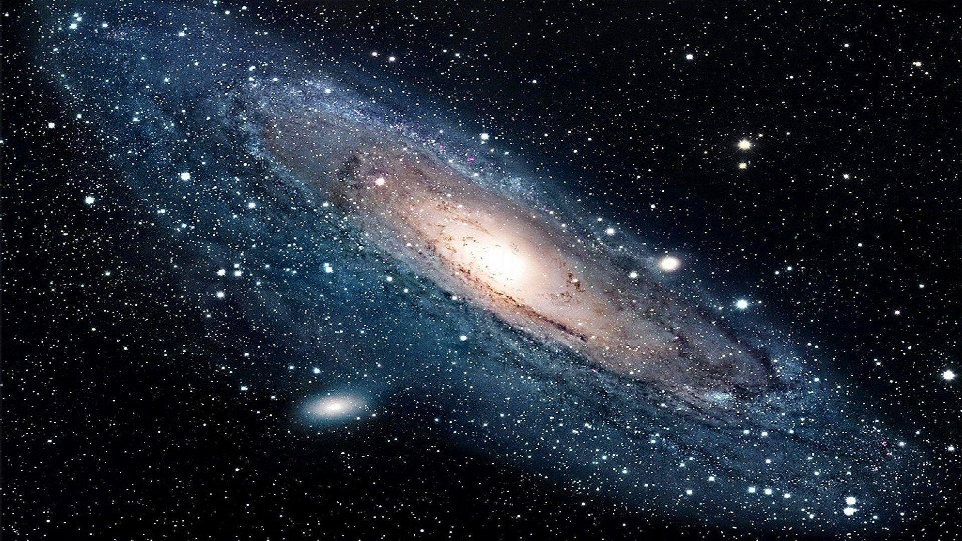
To accommodate life, a galaxy needs to meet several criteria.
Following are just three of the finely tuned characteristics a galaxy needs to support life:
- Shape of the galaxy:Of the three types of galaxies, elliptical, irregular, and spiral— the spiral type is most capable of hosting human life. Our Milky Way galaxy accommodates life because of its spiral shape.
- Not too large a galaxy: Our Milky Way is enormous, measuring 100,000 light years from end to end. However, if it were just a bit larger, too much radiation and too many gravitational disturbances would prohibit life like ours.
- Not too small a galaxy:On the other hand, a stable Earth orbit that is necessary for life could not exist if our galaxy were slightly smaller. And a smaller galaxy would result in inadequate heavy elements, such as iron and carbon, essential to life.
Our Milky Way galaxy meets these and many other conditions essential for life. Most of the other galaxies in the universe can’t accommodate life.
Not only does the universe and characteristics of our galaxy need to be precisely fine-tuned for life to exist, but so does our solar system.
A JUST-RIGHT SOLAR SYSTEM
For our existence to be possible, Earth needs to revolve around a sun that is precisely the right size, has the perfect location and life-accommodating conditions as ours does.9
Earth also needs other planets such as Jupiter and Mars to act as defense shields, protecting us from a potential catastrophic bombardment of comets and meteors. Our moon also shields us and is just the right size and location to help impact our tides and seasons. Let’s look at just a few of the many conditions in our solar system that are just right for life.
- The Sun’s distance from the center of the galaxy:Our Sun is positioned thousands of light years from the center of the Milky Way, near one of its spiral arms.10 This is the safest part of the galaxy, away from its highly radioactive center.
- The Sun’s mass not too large:If the mass of the Sun were a small percentage greater, it would burn too quickly and erratically to support life.
- The Sun’s mass not too small:On the other hand, if it were smaller, its greater flaring would disrupt Earth’s rotation rate.
- The Sun’s metal content: Only two percent of all stars have enough metal content to form planets. Too much metal in a star will allow too many planets to form, creating chaos. Our Sun has just the right amount of metal for planets to form safely.
- Effect of the Moon: The Moon stabilizes the Earth’s tilt and is responsible for our seasons. If it weren’t there, our tilt could swing widely over a large range, making our winters a hundred degrees colder and our summers a hundred degrees warmer.
When astronomers consider our remarkable solar system, they acknowledge that if it was slightly different, advanced biological life would be impossible.
But it is not enough to have the right universe, galaxy, and solar system for human life to be possible. The conditions of our home planet must also be fine-tuned to a razor’s edge.
A JUST-RIGHT PLANET
In the past century, movies and TV shows have popularized the idea that extraterrestrials from other planets exist in our universe. Many have come to believe that thousands of other planets like Earth are abundant in our galaxy and others scattered throughout the universe.
This desire to find intelligent life elsewhere in the universe has led to an all-out effort by scientists to search for radio signs of intelligence throughout the galaxy. In 1961, astrobiologist Frank Drake calculated the probability that other intelligent life could exist in the Milky Way. If so, we would presumably discover their radio signals.
Since 1984, over 100 researchers from SETI (Search for Extraterrestrial Intelligence) have explored the galaxy with an array of telescopes searching for planets that could harbor life.
Since then, only a few potential planets have been located, but no radio signals or other evidence of life have been discovered. The silence from space is discouraging for those who want to find life elsewhere in the universe.
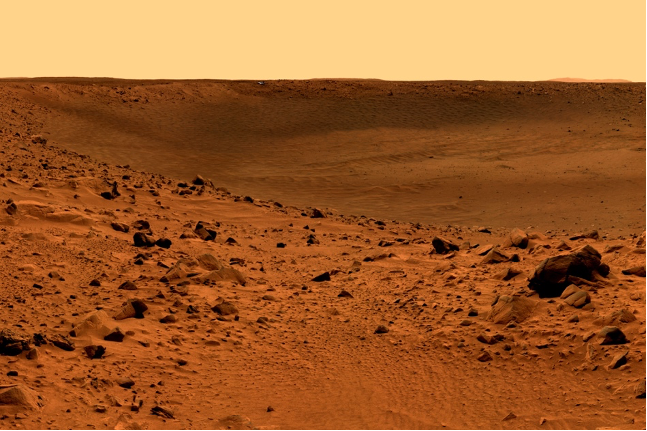
In our own solar system, NASA’s images of Mars, Venus, Mercury, Jupiter, and other planets in our solar system show no evidence of life. Just lots of rocks and barren volcanic material. A look at the surface of Mars reminds us of what barrenness looks like. Although it appears Mars had water in the past, no evidence of microbial life has yet been discovered.
Life on Earth exists because we live on a planet perfect for life, in a rare solar system, located in an extremely rare galaxy, within a finely tuned universe.
The reality is that there are no other planets astronomers have discovered that are like planet Earth. They are all just gas giants or a surface of rocks similar to this image of Mars.
Here are just a few reasons that make life on Earth possible.
- Water: Earth has an abundance of water, which is essential for life. In fact, most of Earth’s surface (70%) is covered by its vast oceans, which help moderate its weather and provide rain necessary for animal and plant life. But water is only one of many requirements for life.
- Oxygen: Earth is the only planet in our solar system in which we can breathe. Attempting to breathe on other planets, such as Mars or Venus, would be instantly fatal, Mars having virtually no atmosphere and Venus having mostly carbon dioxide and almost no oxygen. That’s true with the other planets as well.
- Earth’s distance from the Sun: If the Earth were merely one percent closer to the Sun, the oceans would vaporize, preventing the existence of life. On the other hand, if our planet were just two percent farther from the Sun, the oceans would freeze and the rain that enables life would be nonexistent.
- Plate tectonic activity on Earth: Scientists have determined that if the plate tectonic activity were greater, human life could not be sustained, and greenhouse-gas reduction would overcompensate for increasing solar luminosity. Yet, if the activity was smaller, life-essential nutrients would not be recycled adequately, and greenhouse-gas reduction would not compensate for increasing solar luminosity.
- Ozone level in the atmosphere: Life on Earth survives because the ozone level is within the safe range for habitation. However, if the ozone level were either much less or much greater, plant growth would be inadequate for human life to exist.
- Twenty-six elements essential for life: Human life couldn’t exist unless Earth had the perfect balance of essential chemical elements.11
These and other conditions make Earth unique, not only in our solar system, but throughout the universe. Regardless of what science fiction books and movies like Star Trek and Star Wars depict, life on Earth is unique and extremely improbable.
ARE WE ALONE?

So, what are scientists saying about life on Earth being so improbable?
University of Washington professors Peter Ward and Donald Brownlee conclude in their book, Rare Earth, that life must be so rare in the universe that “not only intelligent life, but even the simplest of animal life is exceedingly rare in our galaxy and in the universe.”12
The big question the book raises is, “Are we alone?”
The New York Times reviewer of Rare Earth concludes:
“Maybe we are alone in the universe, after all.”13
Incredibly, Earth appears to sit alone in a hostile universe devoid of life, a reality described in a National Geographic article:
If life sprang up through natural processes on the Earth, then the same thing could presumably happen on other worlds. And yet when we look at outer space, we do not see an environment teeming with life. We see planets and moons where no life as we know it could possibly survive. In fact, we see all sorts of wildly different planets and moons—hot places, murky places, ice worlds, gas worlds—and it seems that there are far more ways to be a dead world than a live one.14
The incredibly precise numerical values required for life confront scientists with obvious implications. Stephen Hawking observed,
The remarkable fact is that the values of these numbers seem to have been very finely adjusted to make possible the development of life.15
Although it’s possible intelligent life will be discovered elsewhere in the universe, the odds against it are so overwhelming that scientists have concluded that any intelligent life in our vast universe defies all probability. In other words, we shouldn’t even be here.
COSMIC LUCK OR DESIGN?
Once scientists were convinced that the universe had a one-time beginning, they began asking how a random explosion in the distant past could result in the complexity of life we see today. Where did these laws come from? Is there a scientific theory that can explain everything from a materialistic perspective?
An article in U.S. News & World Report summarizes the lack of a scientific answer to the question of why physical laws are so perfectly designed.
So far, no theory is even close to explaining why physical laws exist, much less why they take the form they do. Standard big bang theory, for example, essentially explains the propitious universe in this way:
“Well, we got lucky.”16
So, did we just get lucky to live in a universe, galaxy, solar system and planet that is perfectly fine-tuned for life, or is a superintelligent Creator behind all the precise laws and characteristics that led to life on Earth?
We will examine that intriguing question in the next chapter.