22002.12 God Responds to Prayer

Watch the summary video

It’s very common for Christians to know about prayer, study prayer, memorize prayer verses, read books about it, and still not believe that prayer makes any difference. when we don’t actually pray, we prove we don’t really believe what God says about it

In the Sermon on the Mount, Jesus reveals a simple but profound three-step process to help us pray:

“Ask and it will be given to you; seek and you will find; knock and the door will be opened for you. For everyone who asks receives, and the one who seeks finds, and to the one who knocks, the door will be opened.” (Matthew 7:7-8)

In the Sermon on the Mount, Jesus reveals a simple but profound three-step process to help us: ask, seek, and knock.

When we are looking for something, we usually change this sequence. First, we begin by seeking. Then we knock on various doors to see if any will open. And then finally, we ask a person hoping to get the answer we desire.

Did Jesus make a mistake with this sequence? Why did he begin with “ask”? The answer is actually quite obvious. Jesus is not talking about asking a person. He is telling us to ask God before we even begin seeking and knocking.

Ask

Have you ever asked someone you didn’t know for something significant? If so, deep down you probably doubted you would get what you wanted. That’s because the depth of the relationship needs to be in proportion to the size of the request.

Jesus tells us to ask our heavenly Father (see Matthew 7:9–11). We begin by asking him for the things we desire. We go to him because we know he cares. We go to him because he wants to be involved in our lives.

Prayer changes things in the spiritual realm when we ask according to God’s guidelines (see 1 John 5:14–15; Matthew 21:22; James 4:3; 1 John 3:21–22; John 15:7; John 15:16; Luke 18:1, 6–8).

However, it may take time before that change becomes noticeable in the physical realm. By faith, make it a habit to thank God for his answer while you wait for its manifestation.

Seek

Why does God want us to seek after asking him for what we desire? Seeking implies faith and expectation. Do you believe in God’s ability to fulfill your desire? Are you trusting that he cares enough about you to follow through? Are your motives for the request according to God’s standards?

Work through whatever issues you may have so that you can actively watch and expect God to act on your behalf. The apostle Paul tells us, “Devote yourselves to prayer, being watchful and thankful” (Colossians 4:2, NIV).

Look for possible ways through which God may answer your prayer. With an attitude of expectation and anticipation, be sensitive to the Holy Spirit. Stay alert; if you believe God has answered your prayer, you will be looking for its manifestation.

Knock

God doesn’t just want you to watch for opportunities expectantly, he also wants you to put feet to your faith. As the Holy Spirit makes you aware of possibilities, be faithful to pursue them. Knock on the door of a possibility to see if it will open wide or slam shut.

What God doesn’t answer immediately he will answer eventually. As you walk by faith, continue to thank God for his answer. Although you do not know when it will arrive, it will be on schedule according to his timetable. Keep on thanking him for his promise: “For everyone who asks receives, he who seeks finds; and to him who knocks, the door will be opened” (Matthew 7:8, NIV).

As we ask, seek, and knock for God’s next steps for us, here is how we can be ready to receive his guidance.

Receive God’s Guidance

1. Prepare your heart to hear God.

By getting right with God

“If we confess our sins, he is faithful and just and will forgive us our sins and purify us from all unrighteousness.” —1 John 1:9, NIV

By surrendering your will to God

“We know that God does not listen to sinners. He listens to the godly man who does his will.” —John 9:31, NIV

By humbling yourself before God

“And what does the LORD require of you? To act justly and to love mercy and to walk humbly with your God.” —Micah 6:8, NIV

By renewing your mind with biblical truth

“Be transformed by the renewing of your mind. Then you will be able to test and approve what God’s will is—his good, pleasing and perfect will.” —Romans 12:2, NIV

By having a mindset of faith, trust, and expectancy toward God

“We live by faith, not by sight.” —2 Corinthians 5:7, NIV

By being patient and willing to wait on God

“Wait for the LORD; be strong and take heart and wait for the LORD.” —Psalm 27:14

2. Monitor God’s channels of communication.

God directs our steps through his Word, the Bible.

“Your word is a lamp to my feet and a light for my path.” —Psalm 119:105, NIV

God directs our steps through the prompting of the Holy Spirit.

“But when he, the Spirit of truth, comes, he will guide you into all truth.” —John 16:13, NIV

God directs our steps through other people.

“Make plans by seeking advice.” —Proverbs 20:18, NIV

God directs our steps through providential circumstances.

“But Joseph said…’You intended to harm me, but God intended it for good to accomplish what is now being done, the saving of many lives.'” —Genesis 50:19–20, NIV

3. Make sure the direction is from God.

Does it comply with the directions given in God’s written Word?

“Direct my footsteps according to your word; let no sin rule oversee.” —Psalm 119:133

Does it make sense when you use sanctified reasoning that is based on God’s truth?

“Do not conform any longer to the pattern of this world, but be transformed by the renewing of your mind. Then you will be able to test and approve what God’s will is—his good, pleasing and perfect will.” —Romans 12:2, NIV

Does it seem to fit with the surrounding circumstances?

“In him we were also chosen, having been predestined according to the plan of him who works out everything in conformity with the purpose of his will.” —Ephesians 1:11, NIV

Does it concur with the advice you have received from wise godly counselors?

“Plans fail for lack of counsel, but with many advisers they succeed.” —Proverbs 15:22, NIV

Does it generate a supernatural inner peace and calmness that cannot be attributed to your circumstances?

“Do not be anxious about anything, but in everything, by prayer and petition, with thanksgiving, present your requests to God. And the peace of God, which transcends all understanding, will guard your hearts and your minds in Christ Jesus.”—Philippians 4:6–7, NIV

You do not have to be able to answer “yes” to all of the preceding questions to confirm the direction as being from God. However, if you answer “no” to any of these questions, wait on God to give you more confirmation before taking action.

4. Trust God to guide you.

Believe God will give you the wisdom you need.

“If any of you lacks wisdom, he should ask God, who gives generously to all without finding fault, and it will be given to him.” —James 1:5, NIV

Rely on God to show you the right way.

“I will instruct you and teach you in the way you should go; I will counsel you and watch over you.” —Psalm 32:8, NIV

Expect God to confirm or redirect your steps.

“In his heart a man plans his course, but the LORD determines his steps.” Proverbs 16:9, NIV

Discovering God’s will and discerning his direction is more dependent on your relationship with him than a process of steps. He wants to guide you. Stay close to him. Hear his words. Notice his signs. He will reveal his plan to you at the right time.

Watch the summary video

22002.13 God’s Help Is On The Way

Watch the summary video

When you’re experiencing tough times, the last thing you want to do is to wait for relief. Don’t be discouraged! God knows what you are going through and wants the very best for you. He is the only One who knows what is truly best.

God’s timing is very different from our own. “Waiting on the Lord” is a strong theme throughout the Bible. Those waiting times can be some of our deepest, most meaningful times of fellowship with God. Jesus tells us to “seek first His kingdom and His righteousness” and to not be anxious.

Take advantage of this waiting time to get to know and trust God.  A.W. Tozer, in his book The Pursuit of God, says, “God is so vastly wonderful, so utterly and completely delightful that He can, without anything other than Himself, meet and overflow the deepest demands of our total nature, mysterious and deep as that nature is.” Have you experienced that yet? If not, I urge you to get to know Him better!

Be encouraged by the verses listed below and trust that God hasn’t forgotten you! He’s right here with you– listening to you, loving you, desiring a close relationship with you. Lean on His word and His understanding in times of seeming hopelessness and He will provide you with the love, strength, and encouragement you need.

Why are you downcast, O my soul? Why so disturbed within me? Put your hope in God, for I will yet praise Him, my Savior. (Psalm 42:5, NIV)

Hope in the LORD; for with the LORD there is unfailing love. His redemption overflows. (Psalm 130:7, NLT2)

Endurance develops strength of character, and character strengthens our confident hope of salvation. And this hope will not lead to disappointment. For we know how dearly God loves us, because he has given us the Holy Spirit to fill our hearts with his love. (Romans 5:4-5, NLT2)

Be strong and let your heart take courage, All you who hope in the LORD. (Psalm 31:24, NAS95)

You are my refuge and my shield; I have put my hope in your word. (Psalm 119:114, NIV)

Sustain me according to your promise, and I shall live; do not let my hopes be dashed. (Psalm 119:116, NIV)

But the eyes of the LORD are on those who fear him, on those whose hope is in his unfailing love. (Psalm 33:18, NIV)

Let your unfailing love surround us, LORD, for our hope is in you alone. (Psalm 33:22, NLT2)

Put your hope in the LORD both now and for evermore. (Psalm 131:3, NIV)

Such things were written in the Scriptures long ago to teach us. And the Scriptures give us hope and encouragement as we wait patiently for God’s promises to be fulfilled. (Romans 15:4, NLT2)

And so, Lord, where do I put my hope? My only hope is in You. (Psalm 39:7, NLT2)

O Lord, you alone are my hope. I’ve trusted you, O LORD, from childhood. (Psalm 71:5, NLT2)

I wait for the LORD, my soul waits, and in His word I put my hope. (Psalm 130:5, NIV)

Rejoice in our confident hope. Be patient in trouble, and keep on praying. (Romans 12:12, NLT2)

Watch the summary video

22002.14 God Offers Supernatural Power

Watch the summary video

God’s presence in your life is powerful. This is particularly assuring in a situation where your own power is totally inadequate. In his presence, you will experience the power of the Holy Spirit. It is the same presence and the same power that Jesus enjoyed when he was on earth because he remained in the Father.

In fact, the fullness of the Holy Spirit Jesus experienced moment by moment is God’s plan for you not only for a time like today but throughout your life!

The apostle Paul gives this directive:

“And do not get drunk with wine, which is debauchery, but be filled by the Spirit,” (Ephesians 5:18)

You come under the influence of alcohol when you get drunk. You come under the full control of the Holy Spirit when you are filled with Him. The Spirit-filled life is a lifestyle under the loving leading and righteous guidance of the Holy Spirit.

It is a lifestyle and a daily habit to be filled with the Holy Spirit. He is God’s supernatural power in your life! Just as you can submit to Christ and give the Holy Spirit control of your life, you can take it back and run your life with your own wisdom and strength. So, to be filled with the Holy Spirit is a choice you make moment by moment.

“Now without faith it is impossible to please him, for the one who approaches God must believe that he exists and that he rewards those who seek him.” (Hebrews 11:6)

To be filled with the Holy Spirit is also an act of faith.

“And this is the confidence that we have before him: that whenever we ask anything according to his will, he hears us. And if we know that he hears us in regard to whatever we ask, then we know that we have the requests that we have asked from him.” (1 John 5:14-15)

You can be sure that because being filled with the Holy Spirit is God’s will for you, God will hear you and you will have what you have asked from Him if you ask and trust Him to fill you with the Spirit.

Once you have asked God to fill you with the Holy Spirit and trust Him that He has answered your request, you can confidently go about your life that the Holy Spirit is now leading and guiding you. Since you do not feel anything different, you must know by faith that the Spirit is now in charge of your life.

The Holy Spirit will guide and direct you in many different ways. You need to be attentive to your thoughts, feelings, and surroundings.

Sometimes, you may think of a Scripture verse, or someone comes to your mind. Sometimes, you just “feel” like you need to do “this” or “that”. Your “gut” may tell you something. The Holy Spirit dwells in you; so, the chances are that you will not hear “a voice from above”. The gentle guidance of the Spirit will be coming from within you as your own thoughts, feelings, insights, and instinct. As long as these things are not contrary to the Word of God (Bible), you can wisely and prayerfully act on them. Because being filled with the Holy Spirit means being led and controlled by the Spirit, you must be willing to submit to His guidance and obey Him.

Your attitude should be one of being mindful of the Spirit throughout the day. Imagine that someone very important and you highly respect is following closely with you wherever you go. Knowing that He is with you, you can keep talking to the Spirit quietly, always rejoicing that He is leading you, and giving thanks in everything.

Now, if you are knowingly disobedient to God, you cannot be filled with the Holy Spirit. Because being filled with the Holy Spirit is to be obedient to God, you will not be filled with the Spirit if you are disobeying Him in some areas of your life. If you willfully sin, practice Spiritual Breathing. As long as you are living in harmony with God, you can be confident that God will be glad to fill you with His Holy Spirit.

Watch the summary video

22002.15 God Offers Supernatural Freedom

Watch the summary video

God wants to free us from the bondage of Satan’s lies through the truth of his Word. God’s truth frees us from the elaborate deceptions Satan uses to manipulate our thoughts, feelings, and decisions.

Jesus gave his disciples a remarkable promise: “You will know the truth, and the truth will set you free.” —John 8:32, HCSB

When God reveals the truth to us, those supernatural insights shatter the carefully crafted illusions of the evil one that prevents us from experiencing the full and meaningful life that Jesus offers.

In good times and hard times, in season and out of season, you are always the same new creation in Christ designed to flourish in a relationship with God.

This new life in Christ is a life of freedom grounded in the Father and the Son and the Holy Spirit. Nothing can change your true identity in Christ. When you walk in Christ, you live out of your new identity. Your life will be characterized by God’s freedom.

God’s Freedom 

In Christ, you have been set free from the bondage of sin and guilt, the spirit of rejection and condemnation, the yoke of demonic deception, worry and anxiety, and all fear – including the fear of men, evil, death, and hell.

“Above all, you are been set free from your old self – your old way of living, thinking, feeling, reacting, everything! You have been crucified with Christ. It is no longer you who live, but Christ who lives in you.” (Galatians 2:20)

God expects you to enjoy the freedom that you have been given in Christ regardless of the world around us. Imagine a life free from the bondage of sin and deception — a life where feelings of guilt and rejection are quickly handled as you apply God’s truth. Imagine being so secure in your relationship with God and in your dependence on His promises that your life is virtually free of worry and fear! No longer external circumstances will have control over you.

God’s Peace and Joy

One of the results of your freedom in Christ is his peace and joy. They, too, transcend our circumstances. God is even more committed to our happiness and well-being than we are because the Kingdom of God is righteousness, peace, and joy in the Holy Spirit (Romans 14:17). When we live from the perspective of God’s kingdom, we live free from worldly influence. The result is a life of peace and joy. 

God’s peace is more than the absence of disturbance or discord. It also refers to being whole and complete. God alone can make you whole. Your new self is complete in Christ. Its source is God, and it begins with your restored (harmonious and complete) relationship with God.

God’s joy is the joy of Jesus (John 15:11). It is in asking and receiving in His name that your joy may be full (John 16:24). Jesus’ heart was fully aligned with the Father’s heart. As our hearts become more like the heart of Jesus, we ask according to His will and receive what God has for us. In His goodness and grace, we rejoice.  

God’s Victory

Another result of your freedom in Christ is God’s victory.

In Christ, God has not only secured your freedom from the domain of darkness but also guaranteed His victory over death, evil, darkness, and Satan. In Christ, you have overcome the evil one (1 John 4:4) and will be able to overcome adversity. A supernatural lifestyle is not free of misery, pain, and suffering because we live in a fallen world and the spiritual enemy of God is determined to destroy you and His creation. But with the right perspective, in adverse situations, we finally grasp the truth of the exchanged life in freedom that our old self is dead with Christ and that our new life is Christ in us. 

Adverse circumstances also provide a showcase to demonstrate the quality of God’s workmanship in us to the watching hosts of both physical and spiritual universes. In other words, both human beings and spiritual beings are watching you closely during this crisis to see if your God is who you say he is.

Finally, adversity comes because we live in the universe at spiritual war. The doomed forces of evil are doing their worst to damage the unshakable kingdom of the invincible King.

God does not expect us to endure evil. He expects us to triumph over it. Against evils, we are commanded to resist and stand firm. Adversity can be brought about by natural causes such as pandemics, drought, earthquakes, and tsunamis. Spiritual enemies will take advantage of these natural disasters to spread fear and panic, stirring up in our hearts hatred or selfishness. Even in adversity that is caused by humans, people are not our enemies. The Word of God gives us a different (God’s) perspective. “We do not wrestle against flesh and blood, but against the rulers, against the authorities, against the cosmic powers over this present darkness, against the spiritual forces of evil in the heavenly places (Ephesians 6:12). So, our weapons of righteousness (2 Corinthians 6:7) against adversity are spiritual and wielded in genuine love (2 Corinthians 6:6).

Watch the summary video

22002.16 God Offers Supernatural Peace

Watch the summary video

We all want inner peace. Normally we associate the presence of peace with the absence of turmoil in our life. Under the right circumstances, we can temporarily experience this natural peace. However, the peace that Jesus offers is a peaceful state in the midst of turmoil.

The apostle Paul writes,

And God’s peace, which is far beyond human understanding, will keep your hearts and minds safe in union with Christ Jesus. (Philippians 4:7, GNT)

This is a supernatural peace — an inner calmness despite the fact we are surrounded by calamity. This peace stems from the confident assurance that the God who created the universe, and who resides within us, is in control of our circumstances and our future.

To experience Christ’s supernatural peace, you need to keep your eyes focused on him and not on the turbulent circumstances around you. Peter was able to walk on the water as long as his gaze was fixed on Jesus. The moment he focused his attention on the stormy waves, he began to sink. He lost his peace because he took his eyes off of Jesus, the peace giver.

The prophet Isaiah proclaimed,

You will keep in perfect peace all who trust in you, all whose thoughts are fixed on you! (Isaiah 26:3, NLT)

No matter how big the storm or how rough the waves may be in your life, God can empower you to face them with his perfect peace that surpasses human understanding.

Jesus told his disciples:

I am leaving you with a gift—peace of mind and heart. And the peace I give is a gift the world cannot give. So don’t be troubled or afraid. (John 14:27, NLT)

Jesus promises his peace to us. The kind of peace Jesus can give us is different from worldly peace. It will withstand the fiercest storms of life.

The supernatural peace only Jesus can give us is about being complete. The Hebrew word for peace is shalom which conveys the sense of wholeness.

God’s supernatural peace comes from the fact that your relationship with God is now whole in Jesus. There is no condemnation in Christ. God is your Father who is for you and not against you. He loves you with unchanging love and has the best for you in mind now and for all eternity. Throughout your life on earth, God is walking with you and training you to become more like Jesus in every way and to be a co-heir with Christ. He knows you completely, and you can know Him more and more forever.

Because of this relationship with God, you are a new creation in Christ. You are not only new but whole in Christ. Even though we will not experience the fullness of our new self until Jesus returns in power and glory, we can certainly begin to live out of our true selves now with the confident assurance that we are complete in Christ.

You are in good fellowship with Him, and He wants you on His team to accomplish His plan not only for humanity but also for all creation.

When you acknowledge and embrace the truth that your new self in Christ is complete, you can experience the supernatural peace Jesus is talking about.

Because the source of this peace is God and in your relationship with Him through Christ, you will not have to lose it but “let the peace of Christ be in control in your heart” (Colossians 3:15).

To have His peace be in control of you, you need to keep your eyes on Jesus and not on the situations around you. Peter was able to walk on the water as long as his gaze was fixed on Jesus. The moment he saw the waves, he began to sink. He lost peace because he took his eyes off Jesus. No matter how rough the waves may be in your life, God can empower you to face them with His perfect peace that surpasses all understanding.

Watch the summary video

22002.17 Journey Time with God

Life is a journey. When you are in a crisis situation or prolonged hardship, it seems more like a disruption to your journey. In reality, it is part of your journey.

When parents take their children on a trip, invariably they will hear the question, “Are we there yet?” In response, they encourage their kids to have patience and enjoy the ride.

We are like these children in our journey of life with God. We are impatient to get to our destination. God never seems to be in a hurry.

Go in peace. The LORD is watching over your journey. (Judges 18:6, BSB)

There are times in life when we find ourselves on a journey focused on a specific destination and experiencing obstacles along the way. Some journeys are about accomplishing a challenging goal. Other journeys are about overcoming trials and may involve suffering. These can be special times with God if we realize that he is traveling with us.

Whether the journey lasts days, months, or years, we need to embrace the adventure with God so we will experience the joys and hardships together. As a result, our relationship with God will be closer and deeper.

It’s natural to want to get to our destination as soon as possible. But that is not God’s priority. He is interested in the journey and what he will accomplish in us along the way. Even obstacles and delays serve in his ultimate purpose.

“My thoughts are nothing like your thoughts,” says the LORD. “And my ways are far beyond anything you could imagine.” (Isaiah 55:8, NLT)

Why is the journey so important to God?

Relationships take time and they deepen as we share experiences along the way. God uses our journey time with him to deepen his relationship with us individually. Things happen which cause us to share our thoughts, hopes, and feelings with him.

God also uses the journey time to develop our character. It’s the potholes, detours, and difficulties along the way that provide opportunities to reshape and refine our attitudes and actions. When we finally arrive at our destination, God wants us to be thinking with his mindset. This takes time and it’s his goal we not become derailed from his plan, but champions of endurance.

We can rejoice, too, when we run into problems and trials, for we know that they help us develop endurance. And endurance develops strength of character, and character strengthens our confident hope of salvation. (Romans 5:3–4, NLT)

God is using the journey time to prepare the right setting and circumstances for our arrival at his destination.  In his sovereignty, he is able to orchestrate events and arrange divine appointments. What seems like a delay or roadblock now may guarantee an exciting addition to the journey.

Don’t be in a hurry. Trust God’s pace for your journey. Along the way, he is accomplishing much more than you could ever imagine.

I will instruct you and teach you in the way you should go; I will counsel you with my loving eye on you. (Psalm 32:8, NIV)

22002.18 Growing in Tough Times

Watch the summary video

God uses tough times to develop Christ’s character in us. It is the potholes, detours, and difficulties along the journey that provide opportunities to reshape and refine our attitudes and actions. This takes time and it’s his goal we not get derailed from his plan, but become champions of endurance.

The apostle Paul explains:

We can rejoice, too, when we run into problems and trials, for we know that they help us develop endurance. And endurance develops strength of character, and character strengthens our confident hope of salvation. And this hope will not lead to disappointment. For we know how dearly God loves us, because he has given us the Holy Spirit to fill our hearts with his love. (Romans 5:3–5)

Usually, these trials dominate a day or a week, sometimes, they last for months. Then there are other times when we encounter a crisis that is life-altering. When that happens, we find ourselves walking through a valley so dark and deep we wonder if we will ever see sunshine again.

With every trial, we face the temptation to abandon God while the evil one whispers in our ear “Give up on God. After all, hasn’t he abandoned you?” But in reality, God is with us even in our darkest hours, regardless of what our emotions or demonic voices tell us. God knows what we are going through and reaches out his hand, not to save us from the situation but so we can walk through that valley with him.

When you go through deep waters, I will be with you. When you go through rivers of difficulty, you will not drown. When you walk through the fire of oppression, you will not be burned up; the flames will not consume you. (Isaiah 43:2)

“Our loving God uses difficulty in our lives to burn away the sin of self and build faith and spiritual power.” —Bill Bright

Adversity looks a whole lot better when you see it through your rear-view mirror. It is only when a crisis is far enough in your past that you can see the bigger picture and appreciate the good that God accomplished through fear, calamity, or suffering.

God uses adversity as a tool to refine us and increase our capacity for greatness.

James, the brother of Jesus, admonishes us,

Dear brothers and sisters, when troubles come your way, consider it an opportunity for great joy. For you know that when your faith is tested, your endurance has a chance to grow. So let it grow, for when your endurance is fully developed, you will be perfect and complete, needing nothing. (James 1:2–4)

Difficult life experiences shape us. Through those experiences, God allows us the opportunity to grow in our spiritual character so we reflect more of his values and strength. But it is our choice whether we allow that transformation to take place. If we harbor resentment toward God and others for our hardship, we will leave the valley of trials diminished instead of stronger.

Paul reminds us:

And we know that God causes everything to work together for the good of those who love God and are called according to his purpose for them. (Romans 8:28)

Trust God in tough times. Persevere in hardship and allow the Holy Spirit to transform you.

Watch the summary video

41311 Testimony Themes

Personal testimonies, particularly, testimonies of salvation, are powerful.

A salvation story is never simple, however. People reach the point of believing in Jesus over a period of months and even years. Usually many people are involved in the process. How they realized their need for Christ may not be just one in a single occasion.

So, if you try to tell all of your salvation story, it can be long, complicated and hard for listeners to follow. For this reason, it is important for you to take one theme in your story and follow it. It is okay not to cover every detail in your story.

The length of your personal salvation testimony should depend on your audience and various situations in which it is shared. It is helpful to have both a longer and a shorter version of your testimony, using the five main elements (and the closing) of a personal testimony.

Remember, your testimony is not about you. It’s all about Jesus and what he did for you.

Possible Personal Testimony Themes

THEMES/PROBLEMSHOW CHRIST ANSWERED THIS NEED 
EMOTIONAL THEME 
Worries/AnxietyInner Peace
GriefComfort and Joy
Stress/BurnoutPower & Energy for life
Lack of Emotional SupportFaith & Hope to face life
Bitterness/ResentmentForgiveness and love
Anger/TemperPatience and Love           
LonelinessGod’s contentment & peace
DepressionJoy and freedom
PSYCHOLOGICAL THEME 
Guilt and shameForgiveness and Freedom
Low Self EsteemFeeling valued to God; significance
Pain of RejectionSense of fulfillment
PURPOSE IN LIFE 
Lack of purpose/emptinessMeaning & Purpose in Life
Boredom with lifeSense of hope and purpose
Missing something in my lifeFulfilled and Adventure with God
PHYSICAL 
Poor HealthStrength for each day
MARRIAGE & FAMILY 
Marital problemsTransformed marriage
Broken familyBelonging to God’s family; adopted in His family
FEARS or FEARFUL 
Fear of Dying, etc.Lasting Peace and Contentment
FINANCIAL/WORK 
Stress, over workedTrust in God, Positive changes
ADDICTIONS 
Sexual, drugs, habitsVictory and Freedom
MISCELLANEOUS 
DiscontentConfidence & Security
Self-CenterednessServing in a local fellowship

63202 2. In the Image of God

In order to fix my broken life, God had to change the way I thought about Him and the way I thought about myself and others. He had to reintroduce Himself to me as a God of love. First John 4:16 tells us, “God is love, and he who abides in love abides in God, and God in him.” The trials in my life pushed me to Him; it was there I began to understand and accept His love for me. And as I accepted His love, I began to understand Scripture differently.

In the Garden of Eden, when God created man, He said, “Let Us make man in Our image, according to Our likeness; let them have dominion over the fish of the sea, over the birds of the air, and over the cattle, over all the earth and over every creeping thing that creeps upon the earth. So God created man in His own image; in the image of God He created him” (Genesis 1:26–27).

God made us like Him because He wanted someone to love and to share Himself with. Mankind is God’s most treasured of above all creation. We are uniquely designed to appreciate the fullness of God. He put Adam in the Garden to tend and care for the rivers, trees, birds and animals. Through Adam, He gave us dominion over the earth because He wanted us to share with Him in caring for the world He had made. God created man, and man onlynot animals, not angels—in His image.

God is Three in One. He is Father, Son and Holy Spirit. And mankind also is three in one: we are spirit, soul and body. First Thessalonians 5:23 says, “Now may the God of peace Himself sanctify you completely; and may your whole spirit, soul, and body be preserved blameless at the coming of our Lord Jesus Christ.”

Scripture tells us of God creating man: “And the LORD God formed man [1] of the dust of the ground, and [2] breathed into his nostrils the breath of life; and man [3] be- came a living being” (Genesis 2:7). God shaped Adam’s (1) body from the dust of the ground. Then He breathed into that body His Spirit-breath of life so that Adam’s (2) spirit came alive. And with that Spirit-breath from God, man became a living (3) soul. In God’s design, the soul receives life through the Spirit.

God gave us a body so we could live on earth. Our body is made up of our bones, muscle and organs. We interact with the physical world through our body. We see, smell, hear, touch and taste. Our body is like a house for the hidden parts of spirit and soul. “Your body is the temple of the Holy Spirit who is in you”(1 Corinthians 6:19).

After God shaped Adam’s body, He breathed into it His breath of life. Our spirit comes alive when God’s Spirit gives it life. When we believe that Jesus is the Son of God who died for our sins and rose from the dead, the Holy Spirit comes and lives in our spirit. By “accepting Jesus into our heart,” we let God have a home on earth—in our spirit. Our spirit connects us with God and is a resting place for His Spirit. Just as our body connects us to the physical world, our spirit connects us to God. “The Spirit Himself bears witness with our spirit that we are children of God”(Romans 8:16).

Upon receiving the breath of God’s Spirit into his body, Adam became a living soul. He became a living being with thoughts and feelings. The soul is the place of our mind, will and emotions. It is like a “bridge” between the spirit and the body. Our mind, will and emotions—not our spirit directly—determine the actions of our body. Our behaviors, speech and feelings are expression of our soul. The world sees the contents of our soul expressed out through our body.

The diagram below illustrates how God made us three in one.

Spirit and soul together form the hidden core of man—the heart. Hebrews 4:12 says, “For the word of God is living and powerful, and sharper than any two-edged sword, piercing even to the division of soul and spirit, and of joints and marrow, and is a discerner of the thoughts and intents of the heart.” God knows the heart, He knows what is of the Spirit (originating from Him) and what is of the soul (originating from us).

In God’s design, the soul is meant to be like the steering wheel of a car. How the wheel is turned determines the direction the car takes. But a wheel is not made to steer itself and our soul is not meant to steer us. God, in our spirit, is meant to be the driver. With His hand upon the wheel, all is well. His love directs us.

Each one of us is meant to receive God’s love in our spirit, know the reality of that love in our soul and then let that love flood out of our body to the world. In His great design, God planned that we would have dominion over the earth as guided by our love-relationship with Him.

But Satan had other plans.

Reflection Questions:

  • What do you think it means to be made “in the image of God”?
  • What does it mean to you to receive God in your spirit?
  • In what ways are you experiencing the reality of God’s love in your soul?
  • In what ways is God’s love expressing itself through your body to the world?
  • How do all three parts (spirit, soul and body) work together to express God’s love on earth?

63203 3. Adam and the Fall

Before the fall, Adam and Eve had a Spirit-to-spirit connection with God. God did not live in them, but He walked with them. In the Garden of Eden, everything for Adam and Eve’s full life—their perfect relationship with God, self, others and the world—came through their relationship with God. Adam and Eve’s spirit, soul and body were in perfect agreement with God. God gave; they received. God loved; they trusted.

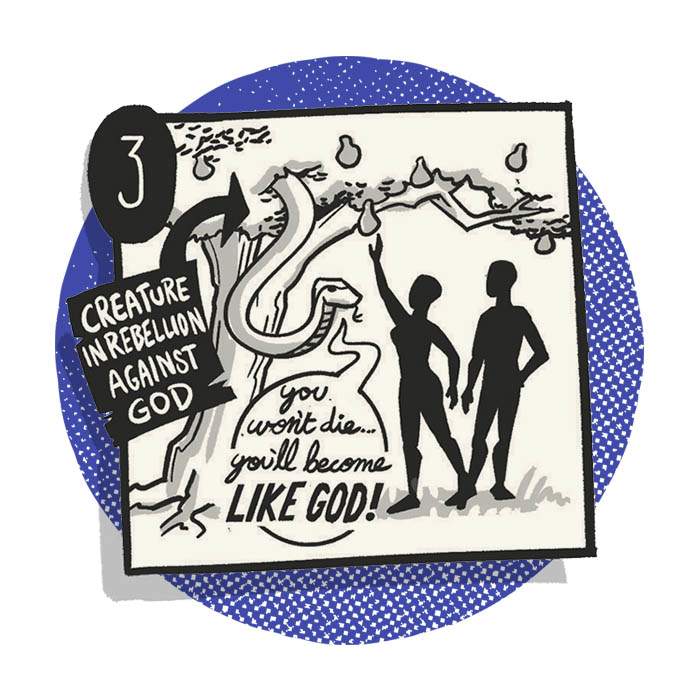
Satan hated Adam and his relationship with God. He hated that God had created humanity in His image to have dominion over the earth. He hated that Adam had been given authority “over every creeping thing that creeps on the earth” (Genesis 1:26)—for Satan was that creeping thing.So he plotted to destroy God’s most treasured creation. In the Garden of Eden, he tempted Eve to fall in the same way he had fallen—by relying on his own soul (his own mind, will and emotions).

Long ago, Satan had tried to become like God apart from God. By his own efforts—his own I will—Satan had tried to make himself like God.He had said, “I will ascend into heaven, I will exalt my throne above the stars of God; I will also sit on the mount of the congregation on the farthest sides of the north; I will ascend above the heights of the clouds; I will be like the Most High” (Isaiah 14:13–14). Satan fell because of pride; he was going to do it himself—by his own, independent I will. So he tempted Eve to act apart from her relationship with God, to rely on her independent soul and to express her own I will.

In the center of the Garden of Eden, God had planted two trees: the Tree of Life and the Tree of the Knowledge of Good and Evil. God warned Adam about the second tree, “Of every tree of the garden you may freely eat; but of the tree of the knowledge of good and evil you shall not eat, for in the day that you eat of it you shall surely die” (Genesis 2:16–17).

The fruit of the Tree of the Knowledge of Good and Evil was not good for humanity. So, like a loving father warning his child not to eat something poisonous, God warned Adam.

However, Satan reassured Eve that everything would be fine—even better than before. He told her, “You will not surely die. For God knows that in the day you eat of it your eyes will be opened, and you will be like God, knowing good and evil”(Genesis 3:4–5). “Don’t listen to God,” the serpent said. “You won’t really die; you’ll be like God.” The idea Satan planted in her mind was, “God doesn’t have your best interests at heart. If He really loved you, He wouldn’t withhold this good from you. So go ahead. Choose what is best for yourself.”

The fruit of tree seemed good to her, so Eve ate it. She gave some to Adam and he ate it too. In so doing, Adam made his own decision and acted apart from God. His soul—his mind, willand emotions—chose its own will over God’s. Thus, Adam broke his Spirit-to-spirit connection with God; he cut off the life-giving relationship. Now the soul had to make its own decisions using its new-found knowledge of good and evil.

When Adam ate the forbidden fruit, the effect rippled throughout the entire human race. When we are born into this world, we inherit Adam’s disconnection from God—the sin nature. Satan’s evil plot destroyed the perfect way God had created us to live—in Spirit-to-spirit connection with Him. Now the independent soul—cut off from continual intimate relationship with God—was in control.

After the fall, Adam and Eve’s minds became clouded by the knowledge of good and evil. When their “eyes were opened” they no longer saw God’s loving nature, but increasing viewed Him as a harsh father demanding good and punishing evil. The couple’s image of God, self and others was darkened by lies.

These lies changed their behavior. When God came to walk with Adam and Eve in the cool of the Garden, they were not there. The two had dressed themselves in fig leaves to cover their nakedness and were hiding from God.

But God searched out Adam, calling for the one he loved, “Where are you?”(Genesis 3:9).

Adam answered, “I heard Your voice in the garden, and I was afraid because I was naked; and I hid myself”(Genesis 3:10). Fear (“I was afraid”) is the first emotion expressed by Adam after the fall. The I will brought fear into their lives. There was no fear in Adam or Eve before the fall. Before the fall there was nothing to be afraid of; they knew the loving nature of God. The New Testament says, “There is no fear in love; but perfect love casts out fear” (1 John 4:18).

Adam and Eve had lost their connection with God. Their Spirit-to-spirit relationship was severed. Through people’s independent souls, Satan could now work evil in humanity and in the world God had designed for them to rule.

Reflection Questions:

  • Consider for a moment what it must have been like for Adam and Eve to “walk with God.” What do you think that perfect relationship may have been like?
  • In what ways were Adam and Eve’s experience of God’s love changed after the fall?
  • In what ways might you have bought into Satan’s lie, “God doesn’t have your best interests at heart”?
  • How is the soul (will) central to Satan’s scheme?
  • How is the soul (will) central to God’s full redemptive plan?